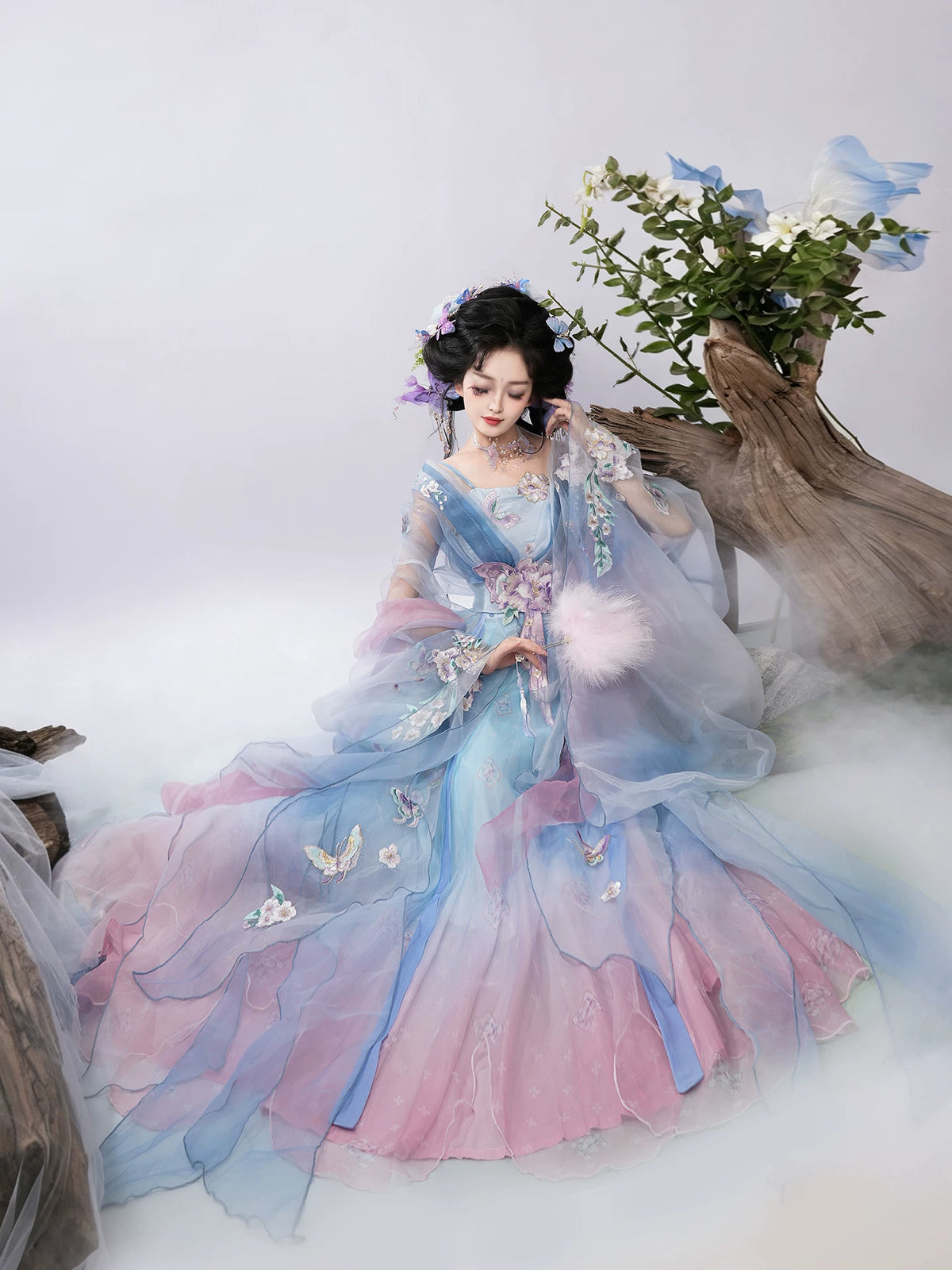
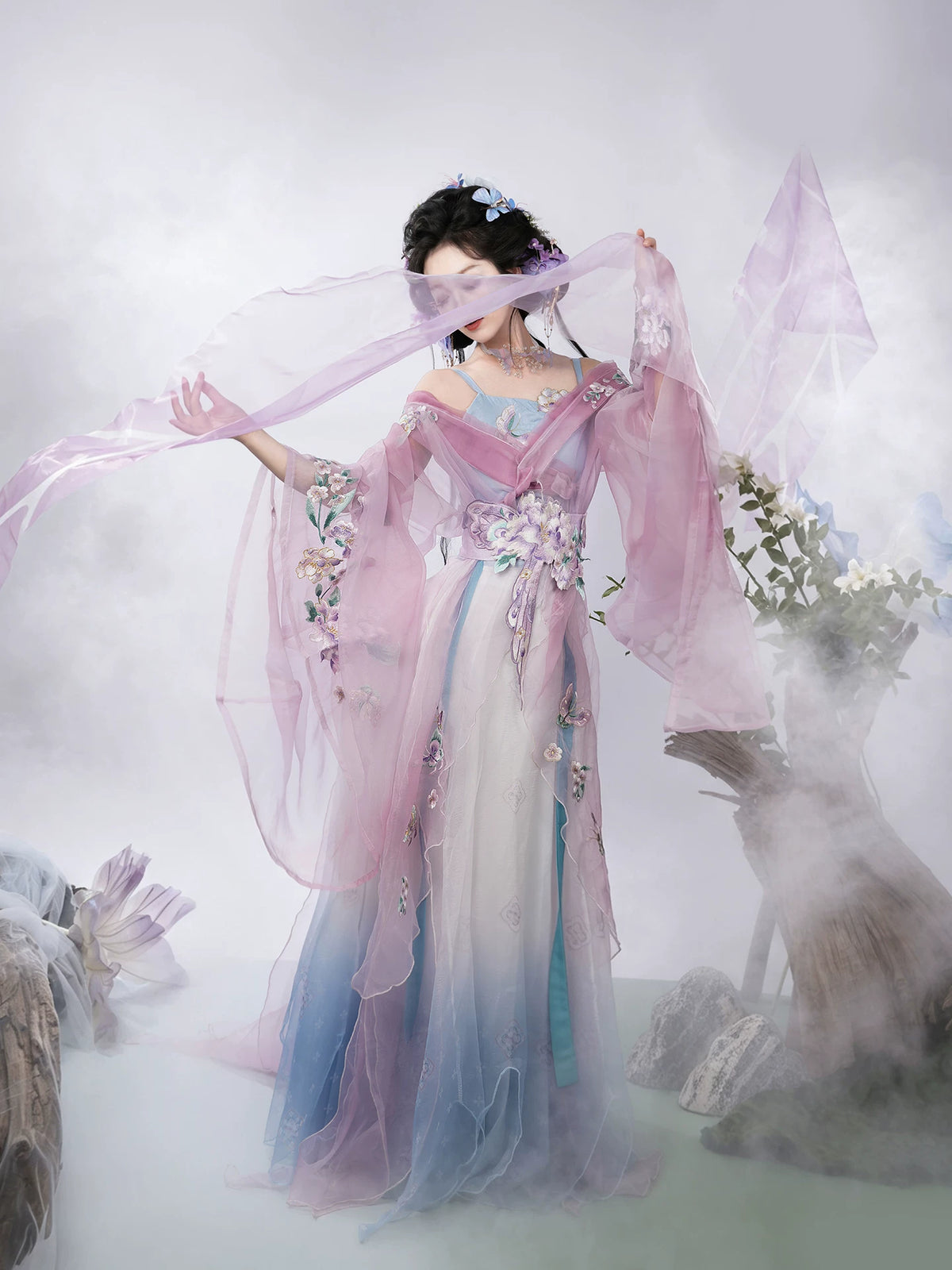
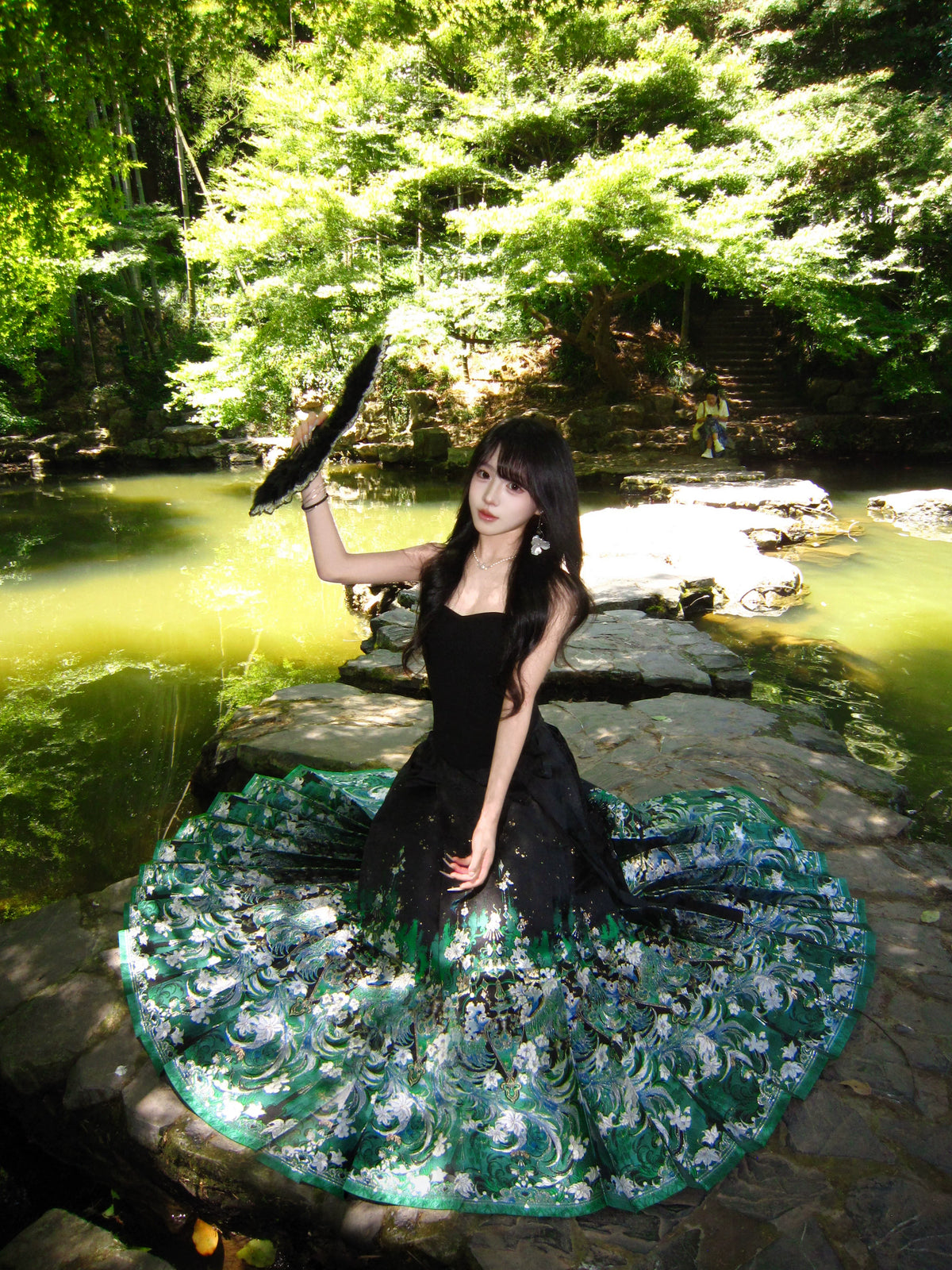
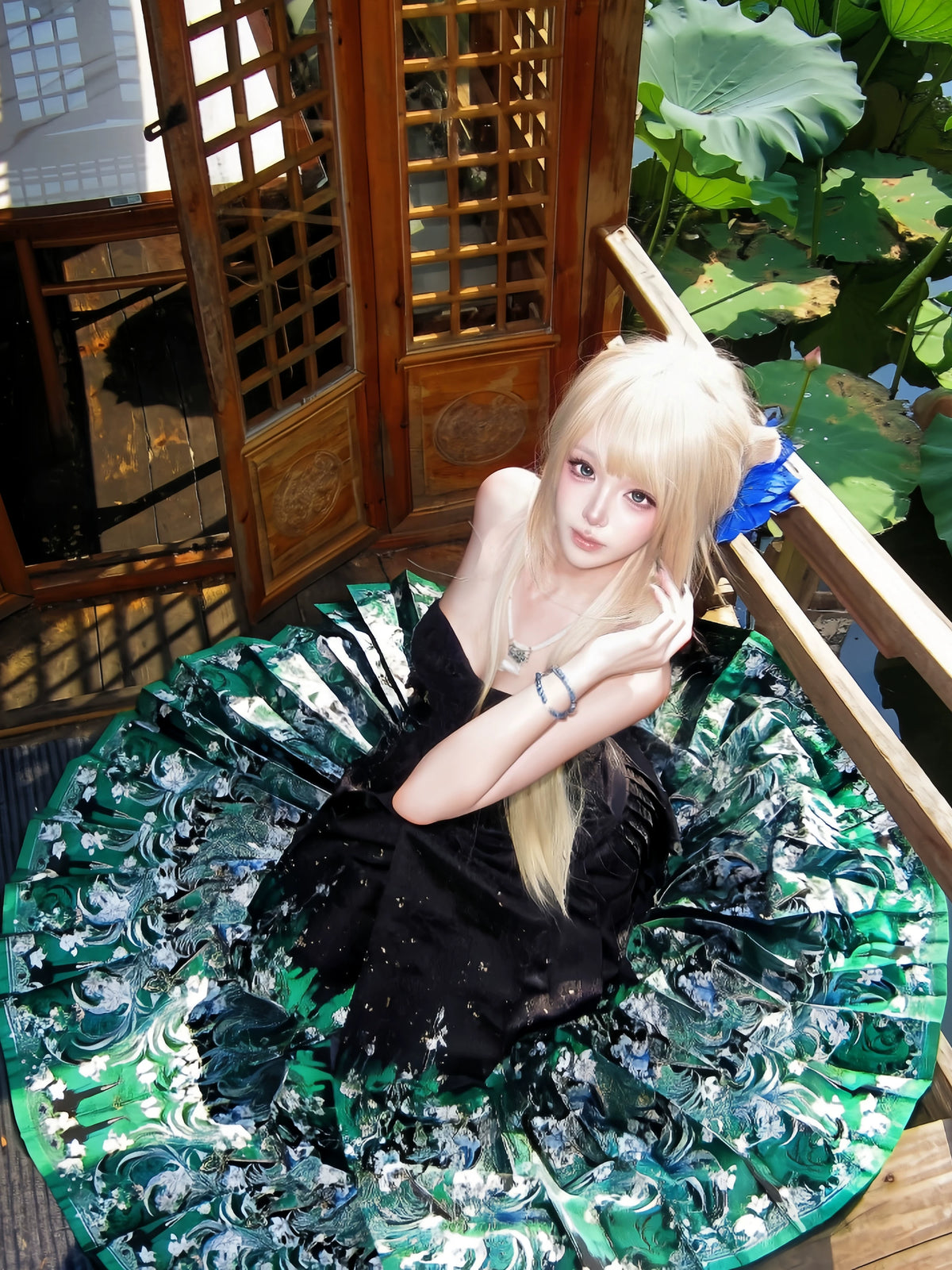
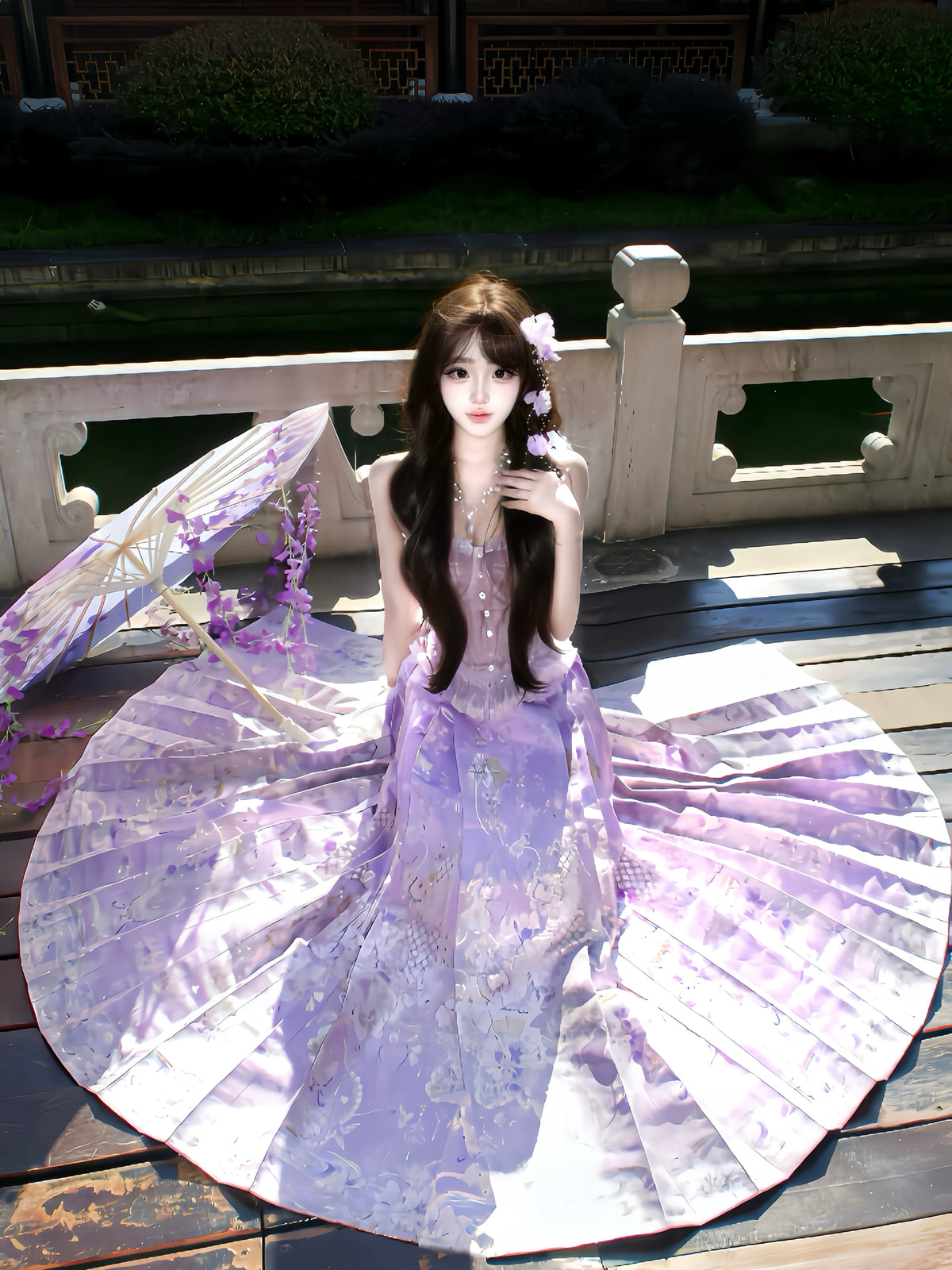
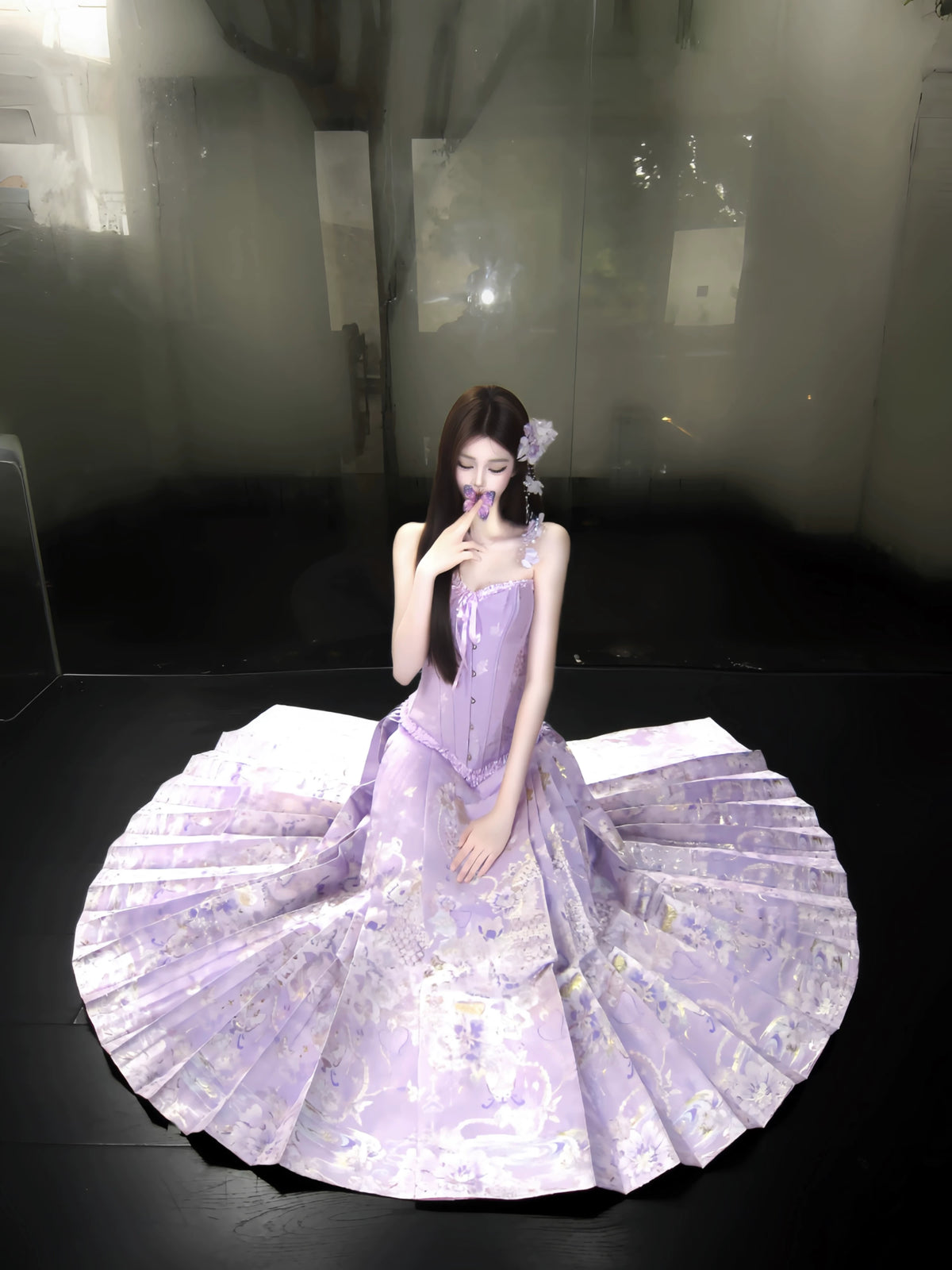
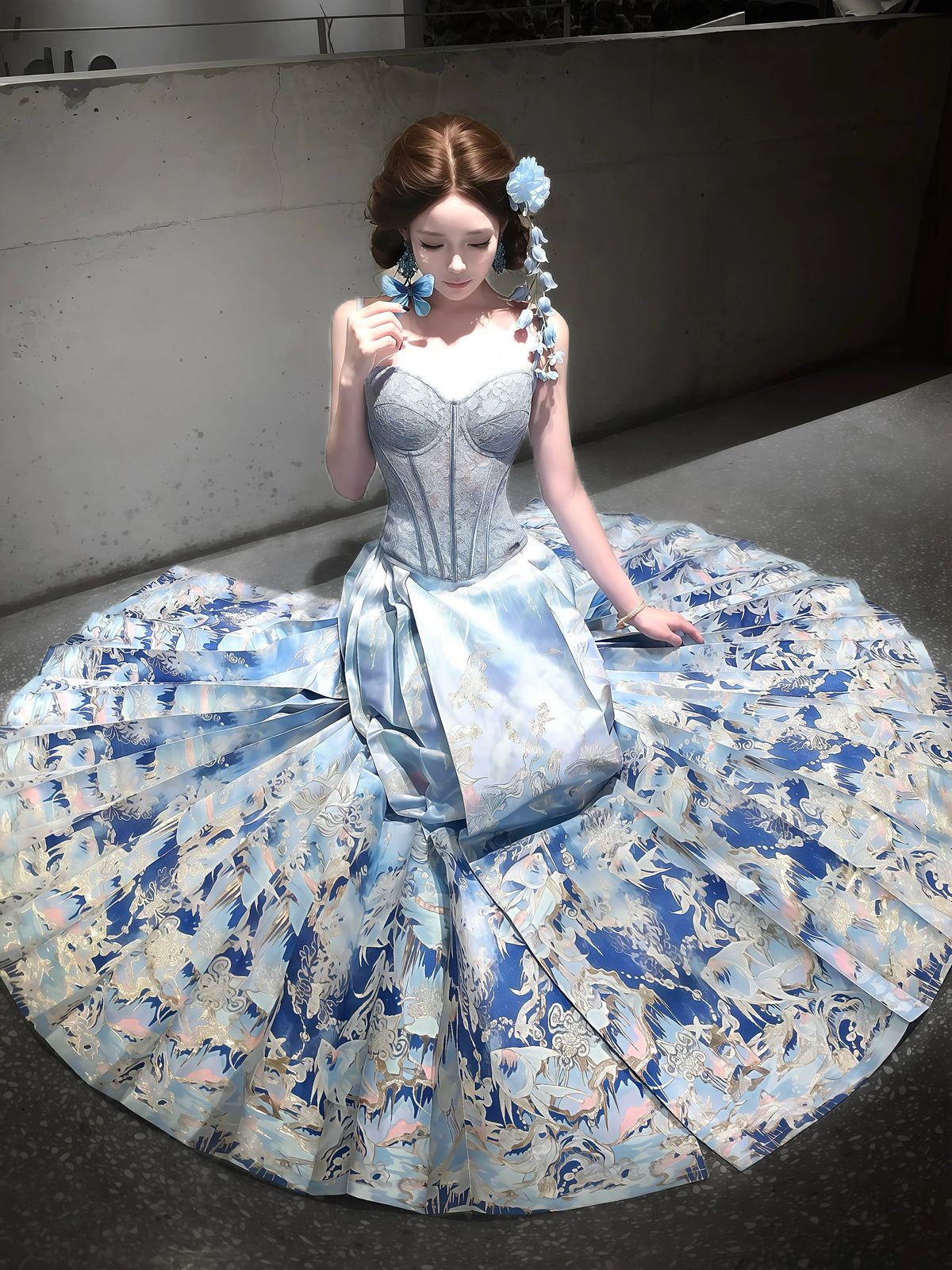
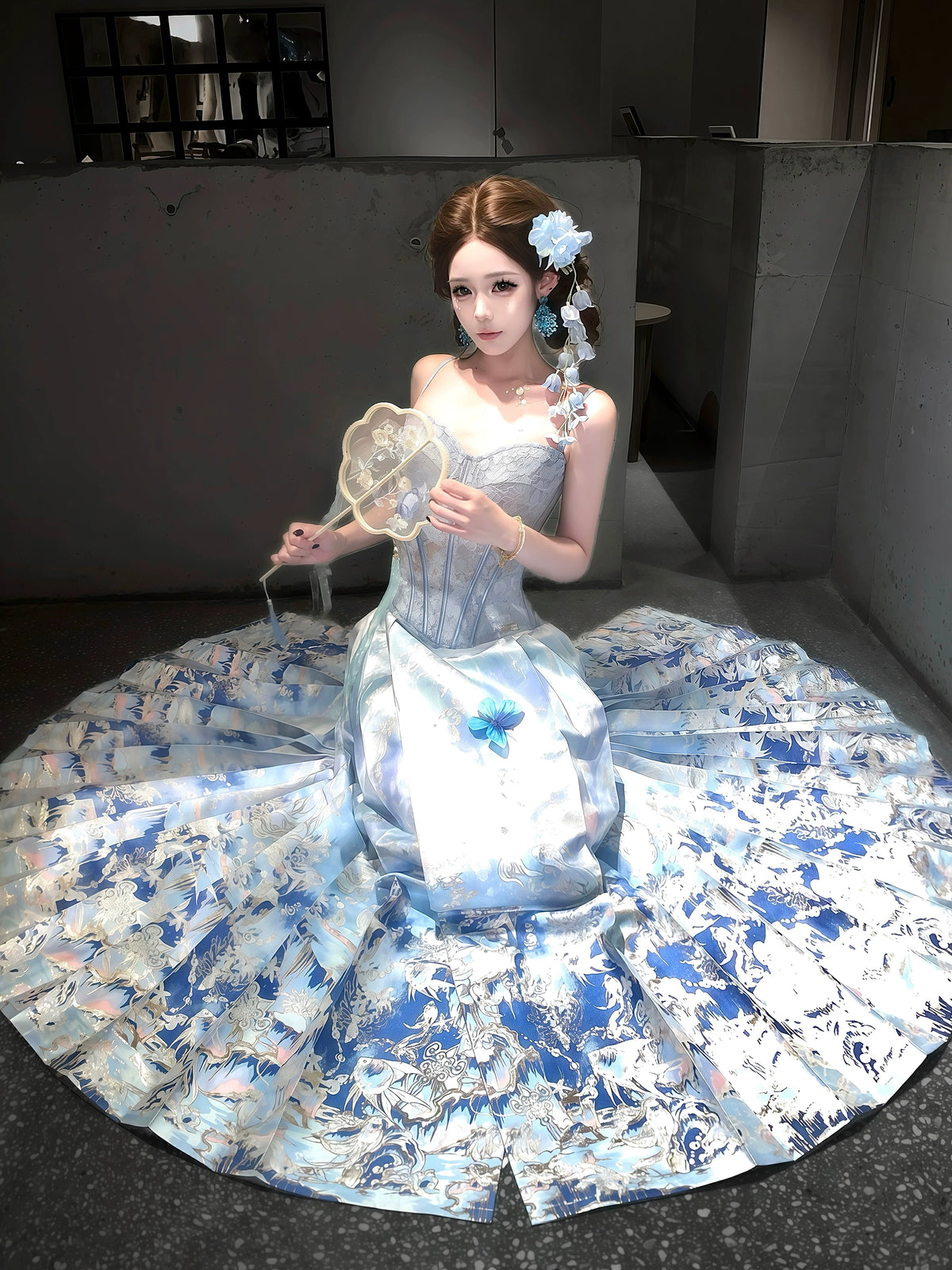
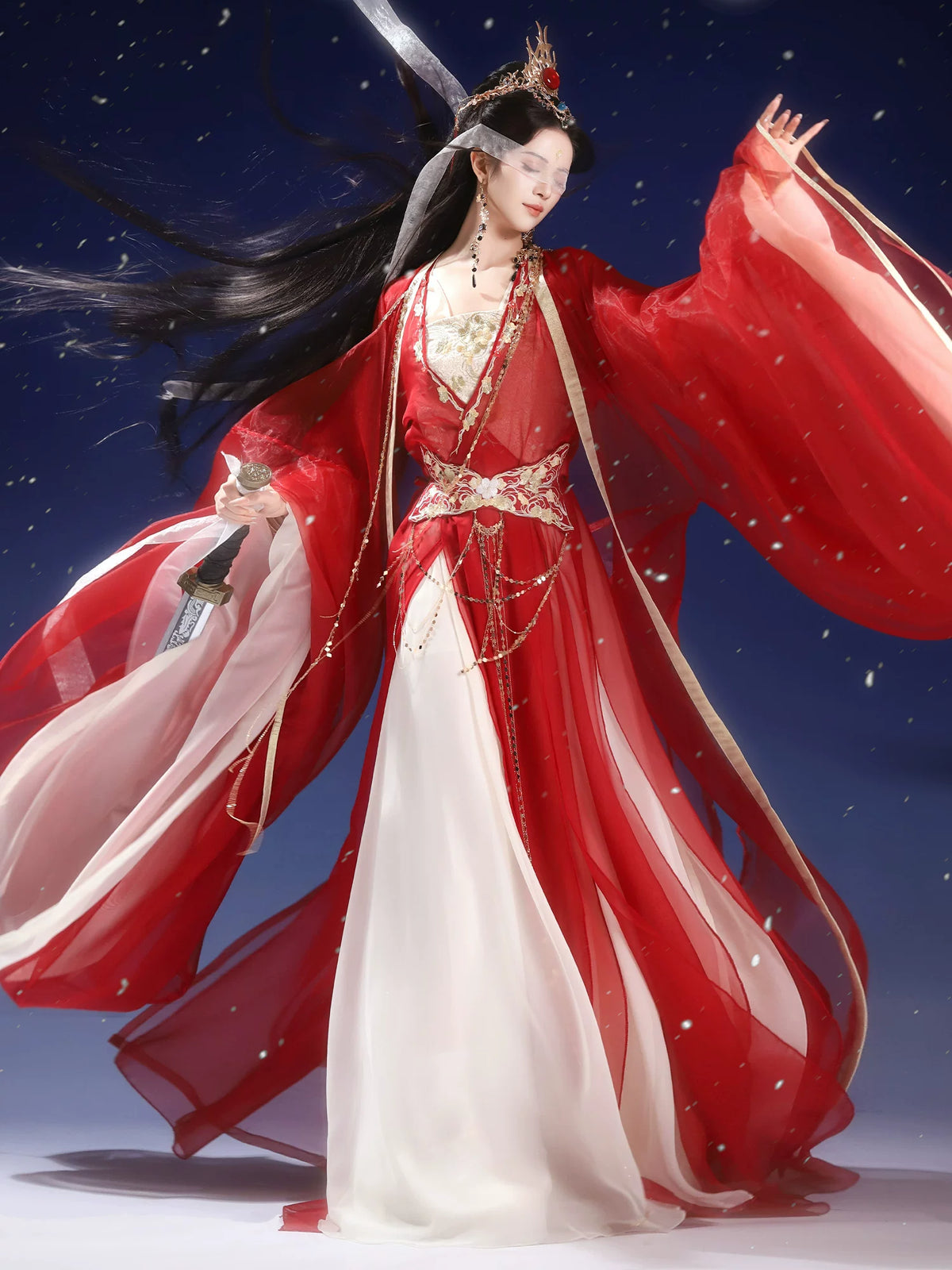
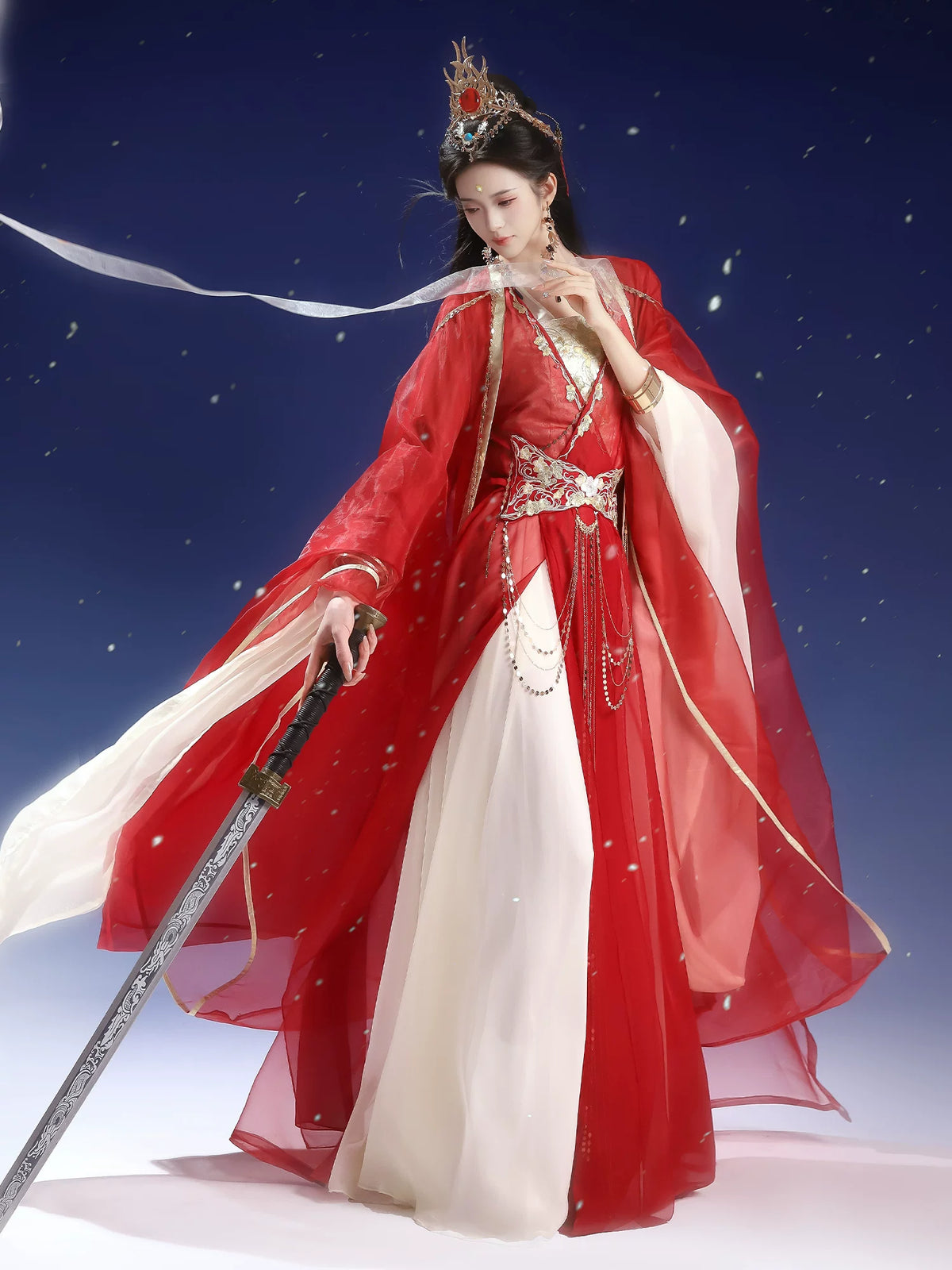
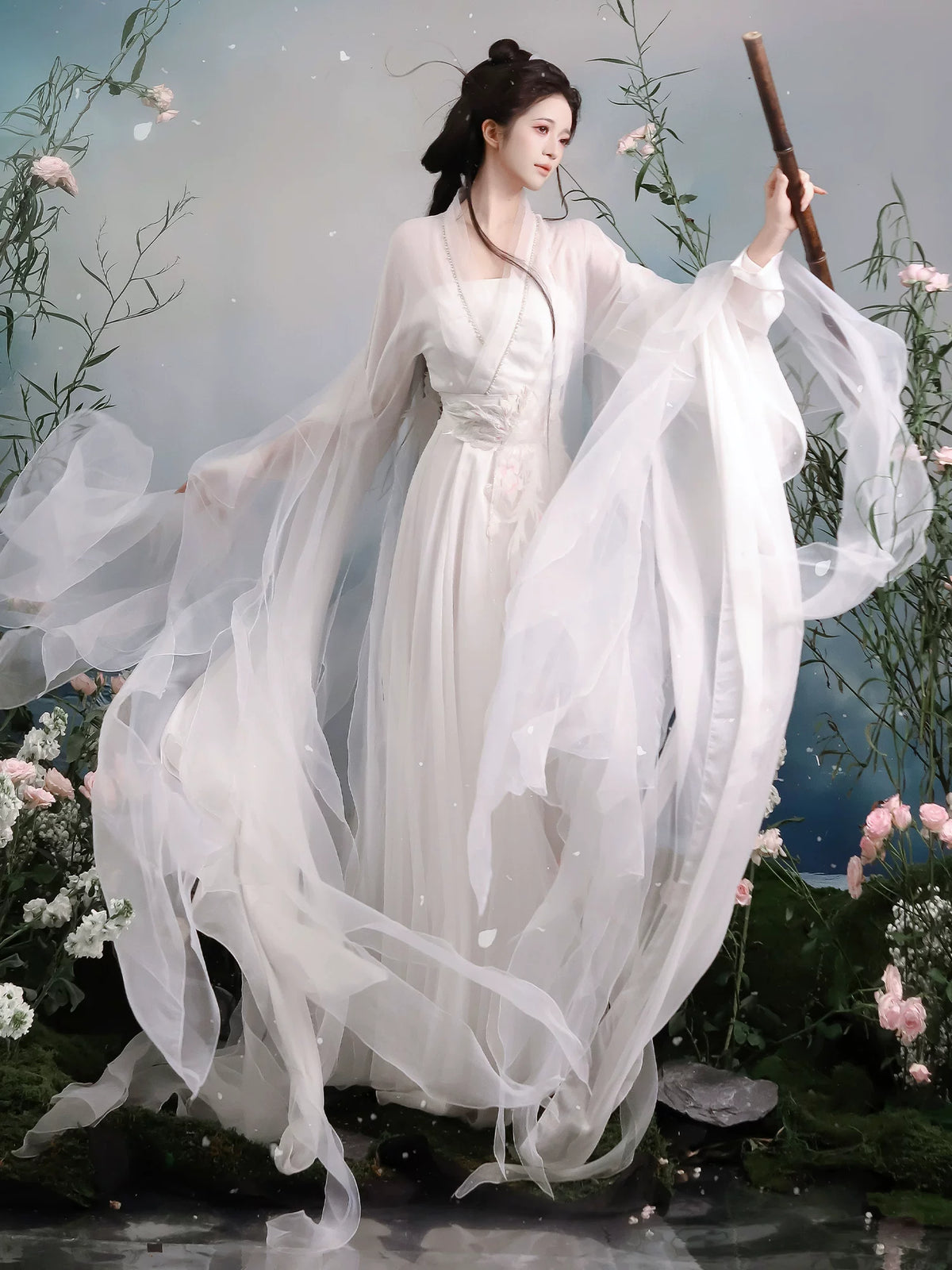
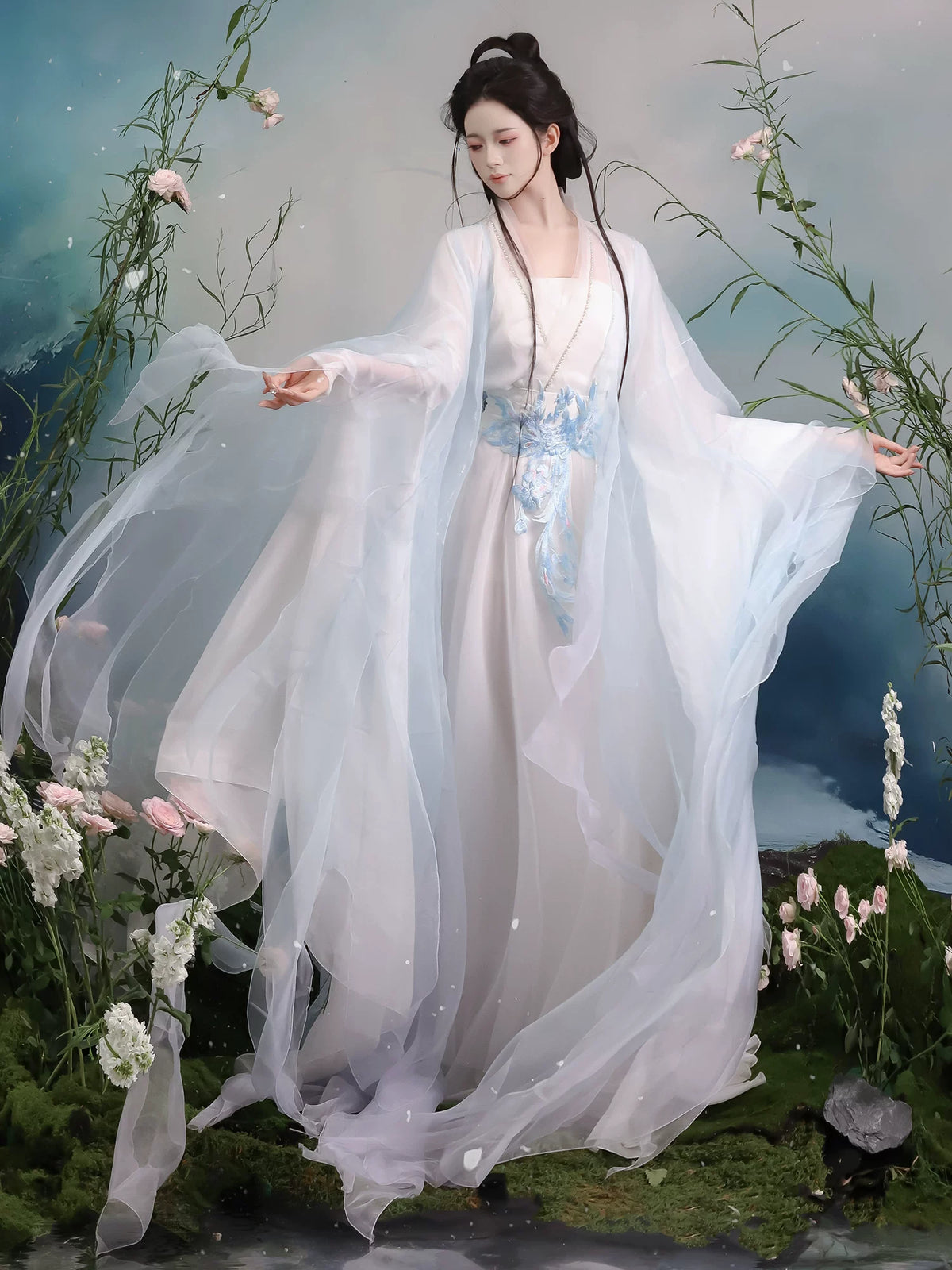
🔥 Part One: Why Han Dynasty Hanfu Feels Different From Everything Else
Wide sleeves, flowing ribbons, open sky — Han dynasty hanfu carries a quality that is difficult to name and impossible to ignore
Put two people side by side. One wearing a Han-dynasty qu ju — the deep-wrapped robe with its spiraling collar and floor-length hem. One wearing a Tang-dynasty qixiong ruqun — the high-waisted, wide-sleeved, luminous ensemble of the Tang court. Both are wearing hanfu. Both are wearing silk. Both are historically accurate.
But the feeling is completely different. The Tang wearer looks like a painting come to life — expressive, radiant, outward-facing. The Han wearer looks like something older and harder to name. Composed. Grounded. Like someone who has already decided who they are and does not need to announce it.
Clothing is never just fabric. It is always a projection of something deeper:
- 🏛️ The aesthetics of an era — what a civilization considered beautiful, and why
- 🧘 The temperament of a people — how they carried themselves, what they valued in a person
- 🌍 The worldview of a dynasty — how they understood the cosmos, their place in it, and their obligations to it
Today we are not going to talk about measurements, collar angles, or construction techniques. We are going to talk about the thing underneath all of that — the quality that makes Han dynasty hanfu feel, two thousand years later, like it still has something to say.
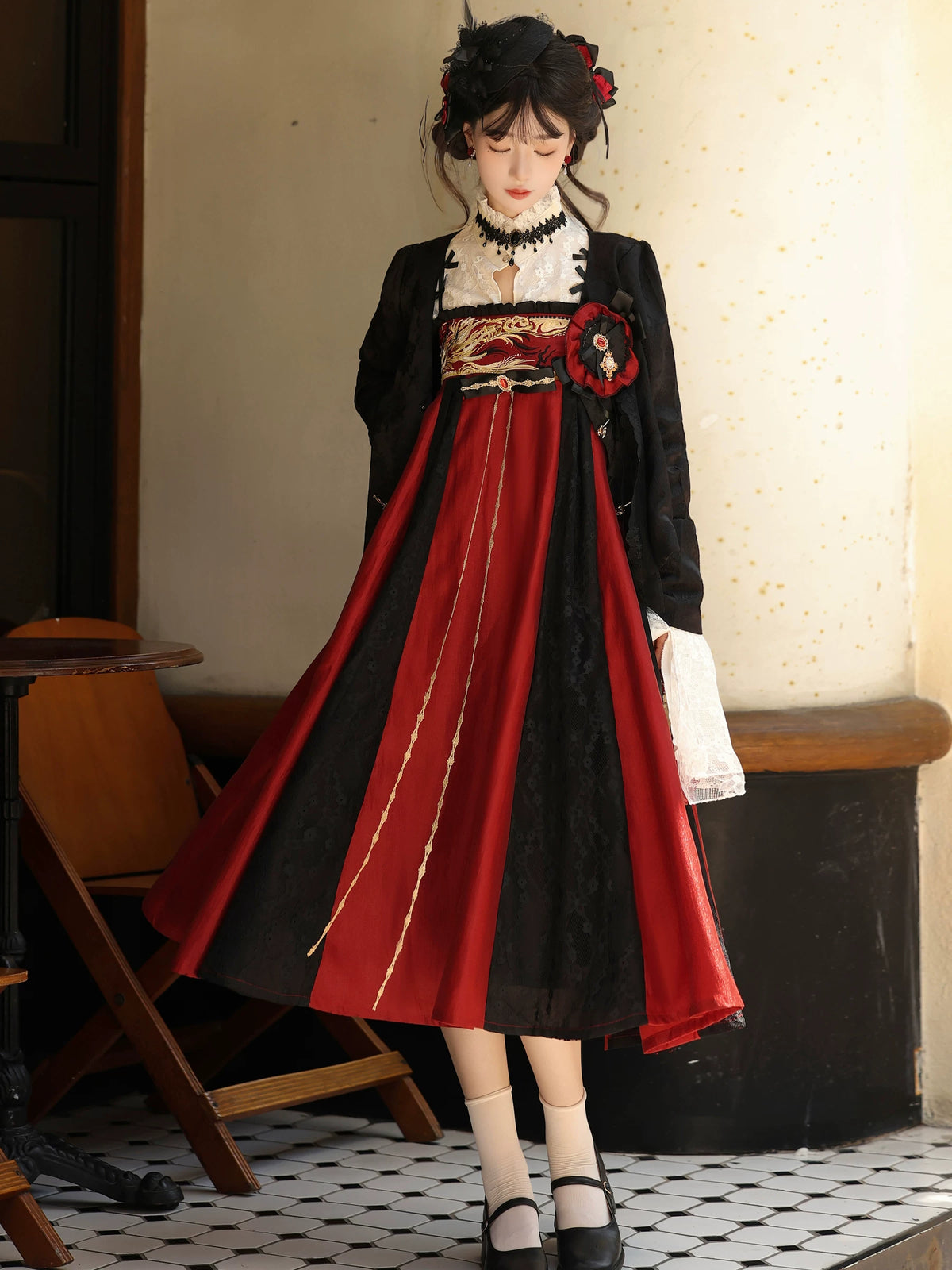
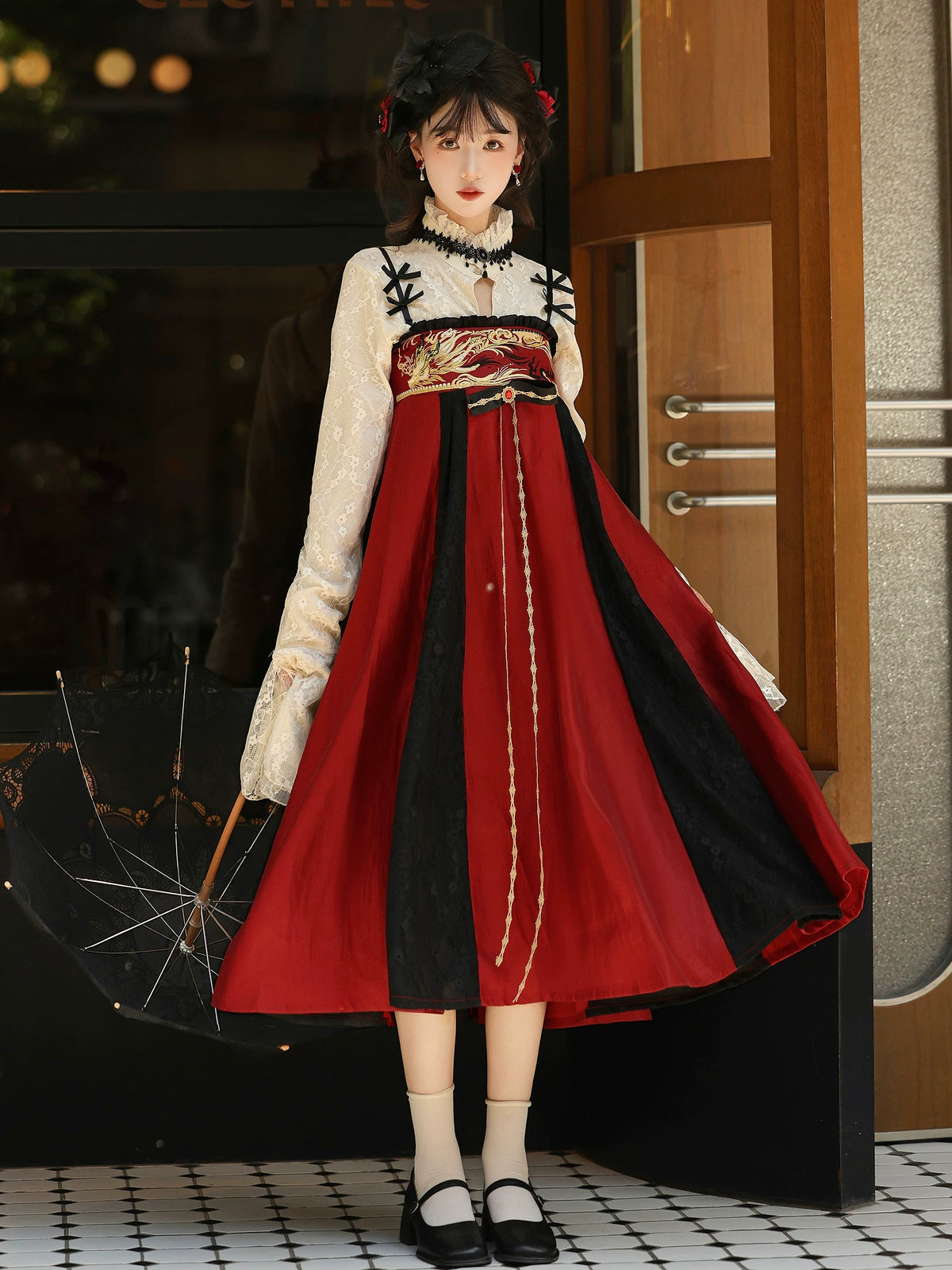
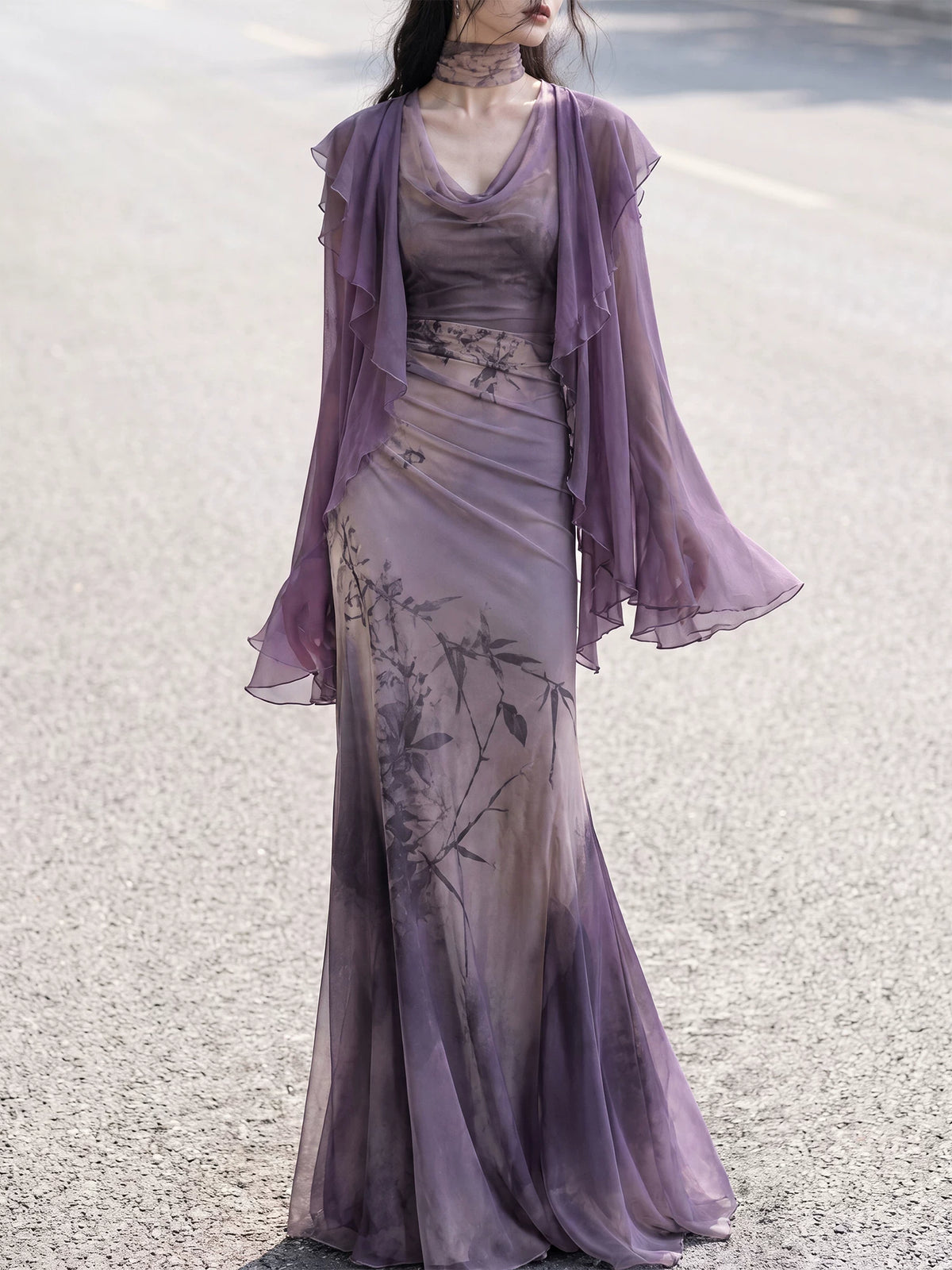
👉 The Prosperous Tang Dynasty Traditional Hanfu | Elegant Princess Dress Flower Daily Sweet Hanfu
⬛🔴 Part Two: Why Han Dynasty People Loved Black and Red — It Was Not Aesthetic Preference. It Was Cosmology.
The Qin dynasty, which preceded the Han, aligned itself with the Water element under the Five Phases system — and Water’s color is black. The Han dynasty, which overthrew the Qin, declared itself aligned with Fire — and Fire’s color is red. These were not branding decisions. They were cosmological claims. The dynasty’s right to rule was written into the color of its court robes.
⬛ Black — Water, Depth, Authority
The color of the cosmos before creation. Of deep water. Of the space between stars. In Han dynasty dress, black was not dark — it was profound. It communicated gravity, restraint, and the weight of responsibility.
🔴 Red — Fire, Vitality, Legitimacy
The color of the sun at its peak. Of blood, of harvest fire, of the hearth. In Han dynasty dress, red was not decorative — it was declarative. It announced the dynasty’s mandate, its energy, its right to exist.
⚖️ The Contrast With Later Dynasties
Ming and Qing dynasty dress embraced layered embroidery and complex color combinations. Tang dynasty dress celebrated luminous, expressive hues. Han dynasty black and red is something different: controlled, powerful, and deliberately restrained. The beauty is in what is held back.
One-line summary:
Han dynasty people were not wearing colors. They were wearing their understanding of the entire universe.
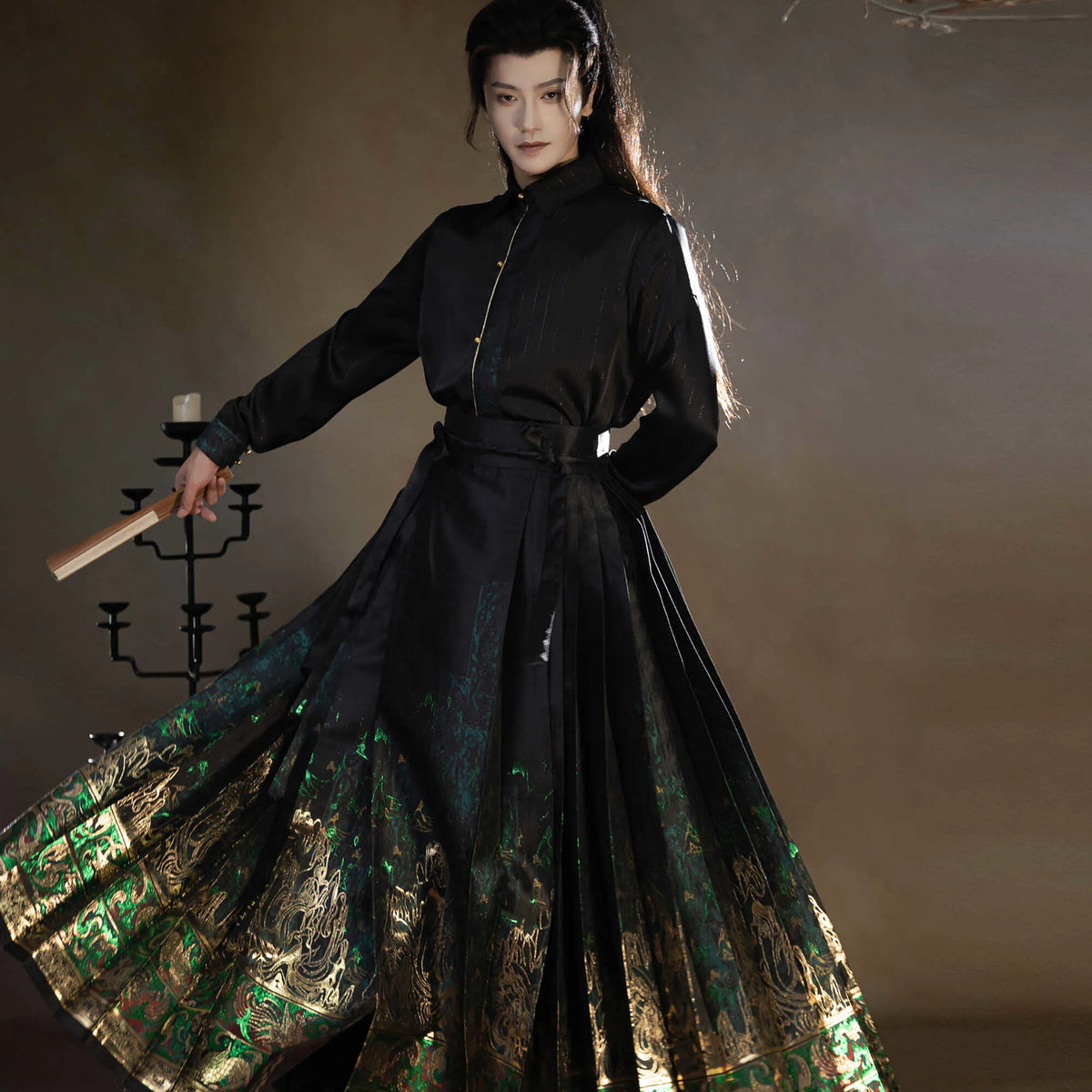
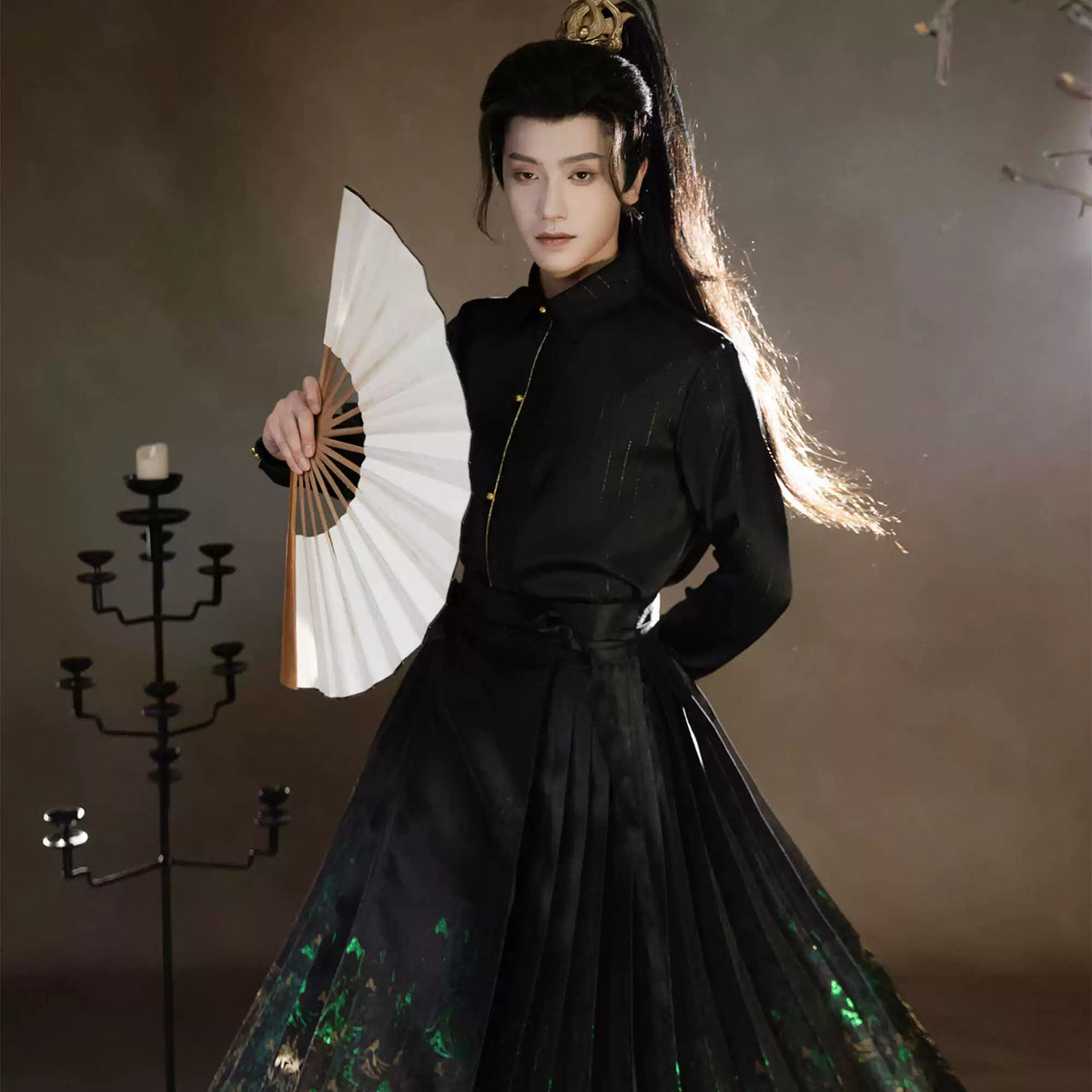
👉 Ming Dynasty Hanfu Wedding Dress — Red Imitation Flower Couple’s Style | Rain Dream Purple Smoked Hanfu
🌊 Part Three: Wide Sleeves and Wrapped Robes — Not for Beauty. For Bearing.
Blue and red qu ju — the triple-layered collar edge, the wide hanging sleeves, the waist sash. Every detail is a lesson in bearing.
The most immediately recognizable feature of Han dynasty hanfu is the qu ju — the deep-wrapped robe whose collar crosses the body in a diagonal spiral, layer over layer, before falling to the floor. It is one of the most structurally complex garments in the history of Chinese dress. And it was not designed to be beautiful. It was designed to teach the wearer how to move.
🌀 The Qu Ju Wrapped Collar
The spiraling collar of the qu ju is not a design flourish. It is a statement about the Han aesthetic of han xu — containment, restraint, the beauty of what is implied rather than displayed. The collar wraps inward, layer over layer, drawing the eye toward the center of the body rather than outward toward the world. It is the visual equivalent of composure.
👄 The Wide Hanging Sleeves
Why make sleeves this wide? Because wide sleeves require the wearer to move slowly, deliberately, with awareness of every gesture. You cannot rush in a qu ju. You cannot be careless. The sleeves enforce a kind of physical mindfulness — what the Han called ju zhi you du, “every movement within measure.” The garment was training the body in aristocratic bearing.
🧵 The Waist Sash
The Han saying goes: “A gentleman dies before his hat comes off.” The waist sash carried the same weight. It was not decoration. It was identity, dignity, and ritual obligation made visible. To loosen it carelessly was a social transgression. To wear it correctly was to announce, without words, that you understood your place in the order of things.
One-line summary:
Every design decision in Han dynasty hanfu was teaching the wearer how to stand, how to sit, how to move through the world with intention.
👉 Original Song Dynasty Hanfu — Trailing Large-Sleeved Shirt & Wedding Clothes | Ming Dynasty Purple Horse Dress Hanfu
💎 Part Four: The Most Refined Details Are the Ones Nobody Sees
Han dynasty hanfu does not announce itself. Compared to the embroidered splendor of Ming dynasty court dress, or the jewel-toned layering of Tang dynasty fashion, Han dynasty dress looks almost plain. This is not a limitation. It is the point.
👚 The Triple-Layered Collar Edge
The collar of a Han dynasty robe is finished with three distinct bands of contrasting fabric — each one slightly different in color or texture. This is not decoration. It is a ritual of layering, a visual metaphor for the Confucian principle of progressive refinement: each layer more considered than the last, each one visible only to those who look closely enough to deserve to see it.
✨ The Absence of Heavy Embroidery
Ming and Qing dynasty dress covered its surfaces with embroidered phoenixes, dragons, and peonies. Han dynasty dress left its surfaces largely unadorned. This restraint is not poverty of imagination — it is a different theory of beauty entirely. The fabric speaks for itself. The silhouette speaks for itself. Nothing competes for attention because nothing needs to.
💎 Jade as Character
The Han gentleman wore jade not as jewelry but as a moral statement. The Confucian text says: “The gentleman compares his virtue to jade.” Jade is warm but hard. Smooth but not slippery. It yields without breaking. These were the qualities a Han gentleman aspired to embody — and wearing jade was a daily reminder of that aspiration.
One-line summary:
Han dynasty refinement was not performed for an audience. It was practiced for the self. The most important details were the ones only the wearer would ever know were there.
👉 Tang Dynasty Embroidered Plus Size Hanfu Skirt — Super Fairy Spring and Summer | Women’s Plus Size Tang Dynasty Hanfu Set — Lightweight Summer Chinese Traditional Costume
💪 Part Five: Why People Who Wear Han Dynasty Hanfu Look So… Upright
The quality the Han called zheng — upright, aligned, morally grounded. It is in the posture. It is in the silhouette.
There is a quality that people notice when they see Han dynasty hanfu worn well. It is difficult to name precisely. “Dignified” is close. “Composed” is close. The Chinese word zheng — upright, correct, aligned — is probably closest. The garment seems to straighten the spine of whoever wears it.
⚔️ The Martial Spirit of the Han
The Han dynasty was not a peaceful, contemplative era. It was the dynasty of Zhang Qian opening the Silk Road, of Su Wu enduring nineteen years of captivity in the northern steppes rather than surrender his Han identity, of the poet’s line: “Why should a young man not carry a sword?” The Han aesthetic carries this martial backbone — not aggression, but the uprightness of someone who has decided what they stand for and will not be moved.
🌏 The Spirit of Homeland
The Han dynasty gave the Han people their name. It gave the Chinese script its classical form. It sent its envoys to the edges of the known world and brought back silk routes, new crops, and the knowledge that China was not alone in the universe. The people who wore this clothing understood themselves as part of something vast and consequential. That understanding is in the posture. It is in the silhouette.
📊 Three Dynasties, Three Spirits
- Tang dynasty hanfu — Expressive, outward-facing, celebratory. The spirit of a civilization at its most confident and cosmopolitan.
- Song dynasty hanfu — Restrained, scholarly, inward. The spirit of Neo-Confucian self-cultivation and literati refinement.
- Han dynasty hanfu — Upright, grounded, morally serious. The spirit of a people who believed that how you dressed was inseparable from who you were.
One-line summary:
When we wear Han dynasty hanfu today, what we are drawn to is not the fabric. It is that quality of standing straight, moving with intention, and knowing exactly who you are.
👉 Emissary of the Kingdom of Heaven Hanfu — Fairy National Style | Embroidery Gradual Change Flower Couple Hanfu — Spring Festival
❤️ Closing: Two Thousand Years Later, Why Does Han Dynasty Hanfu Still Move Us?
We are not drawn to Han dynasty hanfu because it is old. We are drawn to it because it represents something we recognize and miss — a relationship between clothing and character that modern fashion has largely abandoned.
Today’s clothing is designed to display the body, attract attention, signal status through brand names and price tags. Han dynasty hanfu was designed to express the person — their values, their discipline, their understanding of their place in the world. The garment was not worn to be seen. It was worn to be.
Three things the hanfu revival is really about:
- 🧵 Not nostalgia — We are not trying to return to the Han dynasty. We are trying to recover a way of thinking about dress that the Han dynasty understood better than we do.
- 💪 Not costume — Han dynasty hanfu is not a performance. It is a practice. The discipline of wearing it correctly is part of what it offers.
- 🌟 Aesthetic self-awareness — The idea that what you wear is an expression of who you are — not who you want others to think you are, but who you actually are.
We like to say that people wear clothes. Han dynasty hanfu reminds us that clothes can also wear people — and that the best garments are the ones that make you more yourself, not less.
When you wear hanfu, what do you feel? Is it beauty? Is it something harder to name? Tell me in the comments — I read every one. 💬