Beginner-Friendly · Step-by-Step · All Hanbok Types
How to Tie a Hanbok
Zero to Perfect Goreum, One Step at a Time
The precision of an entire hanbok look comes down to one detail: the goreum ribbon. Get it right, and the whole garment settles into place. This guide makes sure you get it right — every time.
🌸 Part One: Why the Goreum Ribbon Defines the Entire Look
White embroidered silk jeogori — the goreum ribbon tied at center chest, trailing ribbons falling with natural grace
There is a reason experienced hanbok wearers spend time on the goreum ribbon. It is not just a functional tie — it determines whether the jeogori sits correctly on the body, whether the silhouette is clean or collapsed, whether the overall look reads as polished or improvised.
👀 Common beginner problems:
- Ribbon drifts to one side — Inner cord not secured tightly enough before tying the outer bow.
- Bow is asymmetrical — Two loops not formed at equal tension before the final pull-through.
- Bow loosens within an hour — Silk ribbon requires a reinforced knot at the center.
- Collar gaps open — Crossing point placed too low, pulling the collar apart.
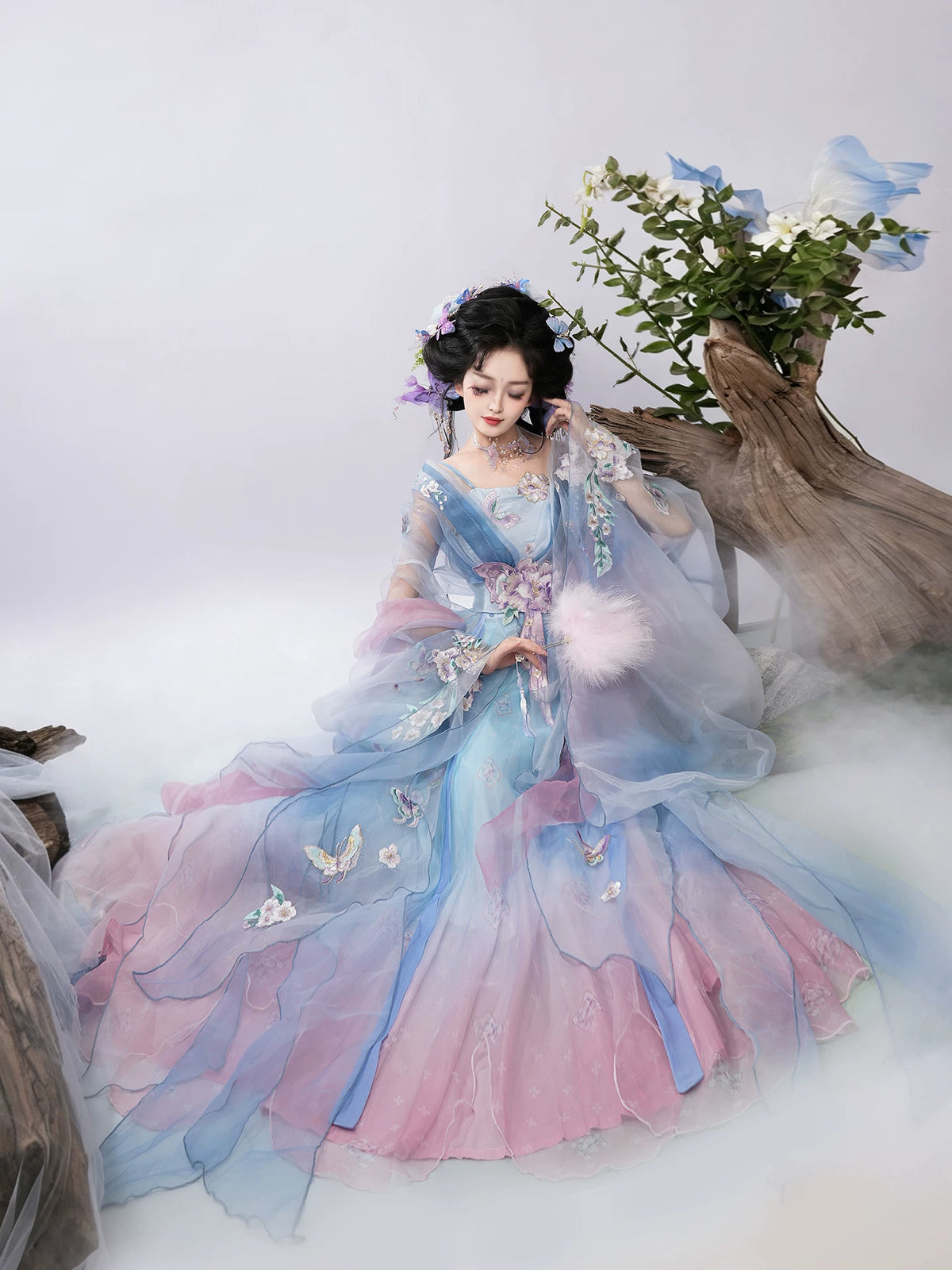
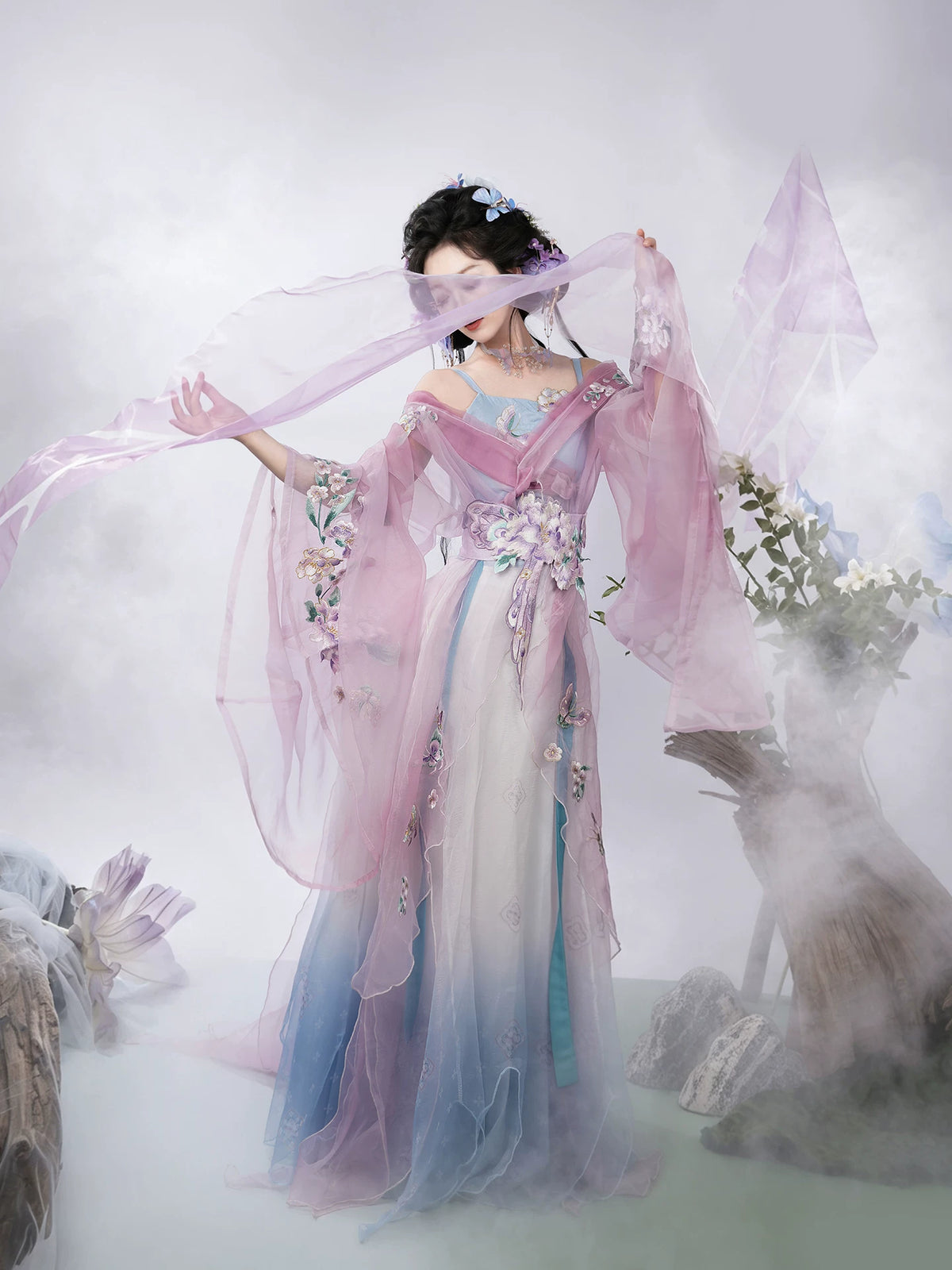
👉 Pastel Embroidered Korean Hanbok — Elegant Traditional Korean Dress | Red Hanbok with Floral Embroidery — Korean Traditional Dress
🧵 Part Two: Understanding the Goreum Structure
The hanbok goreum is a two-layer system. Each layer has a distinct function.
Layer 1: The Inner Cord
A short, narrow cord sewn to the inside of the jeogori. Its only job is structural: wrap around the body, cross at the back or side, and tie in a flat knot that will not shift. This is the foundation. If this layer is loose, nothing else will hold.
Layer 2: The Outer Decorative Ribbon
The long, wide silk ribbon that forms the visible butterfly bow. It crosses at the chest, wraps, and ties into the signature hanbok bow at the front of the jeogori.
🧵 Silk-Specific Note
Silk ribbon is smooth and has very low friction — it slides. A knot that holds in cotton will loosen in silk within minutes. Silk hanbok requires a reinforced center knot and slightly tighter tension throughout.
📍 Part Three: Before You Tie — Preparation
Golden hanbok worn for a traditional family occasion — the goreum tied correctly holds the jeogori perfectly in place all day
The quality of the final bow is determined before you tie a single knot. Preparation separates a bow that holds all day from one that loosens within the hour.
1. Settle the jeogori on the body
Align the front panels so the collar sits flat and symmetrical. The right panel crosses over the left. Smooth out any folds before touching the ribbon.
2. Untangle both ribbon lengths
Run your fingers along each ribbon from base to tip to remove any twists. A twisted ribbon will produce a twisted bow — no adjustment after the fact will fix it.
3. Find your waist anchor point
The goreum sits just below the bust line — not at the natural waist, not at the hip. This is where the inner cord will be tied.
4. Pre-measure ribbon length equality
Hold both ribbon ends together and check they are the same length. If one side is longer, the bow will be asymmetrical no matter how carefully you tie it.
👉 Timeless Korean Hanbok — Bold Yellow & Green with Hand-Embroidered Florals
🎀 Part Four: The Complete Tying Sequence — Six Steps
A perfectly tied goreum bow — symmetrical loops, even trailing ribbons, sitting flat at the center of the chest
Step 1 — Secure the Inner Foundation Cord
- Wrap the inner cord around the body at the anchor point
- Cross the two cord ends at the back or side
- Pull firmly and tie a flat knot — not a bow. This must not come undone.
- Check: the jeogori should feel stable. The collar should not shift when you move your arms.
Step 2 — Cross the Outer Ribbons at the Chest
- Bring both long ribbons to the front and let them hang naturally
- Take the right ribbon and cross it over the left at the center of the chest, just below the collar
- Adjust until the crossing point sits exactly at center. Use a mirror if needed.
Step 3 — Wrap and Thread Through
- Take the left ribbon and wrap it around the right ribbon once
- Thread it upward through the loop created by the wrap — this is the base knot
- Pull both ends to tighten. For silk: pull firmly and hold for three seconds.
Step 4 — Form the Butterfly Loop Wings
- Fold the right ribbon end inward to form the first loop — about one-third the ribbon length
- Hold the loop at its base with your left hand — do not let go
- Fold the left ribbon end inward to form the second loop, matching the first exactly
- Hold both loops simultaneously. Check they are the same size before proceeding.
Step 5 — Thread and Lock the Center
- Pass one trailing ribbon end through the space between the two loops at the center
- Pull slowly and evenly — do not yank. The center knot tightens gradually.
- Micro-adjust loops as you tighten, keeping them equal throughout
- For silk: hold the knot firmly for five seconds before releasing.
Step 6 — Dress the Trailing Ribbons
- Pull the bow center firmly to lock the final shape
- Let the two trailing ribbon ends fall naturally downward
- Adjust length and curve — they should fall at the same length and curve gently outward
- Final check in mirror: symmetrical, centered, flat against the jeogori.
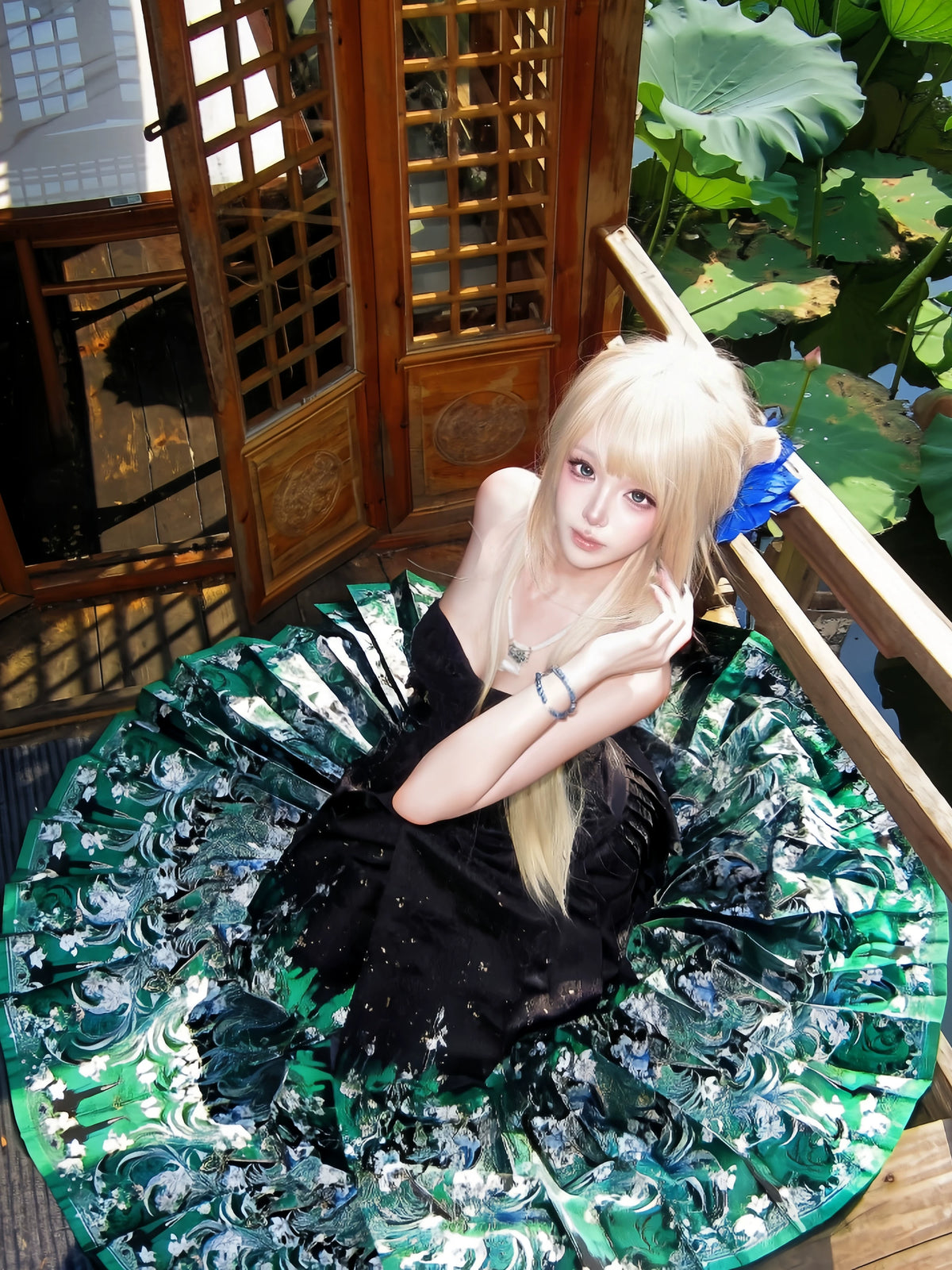
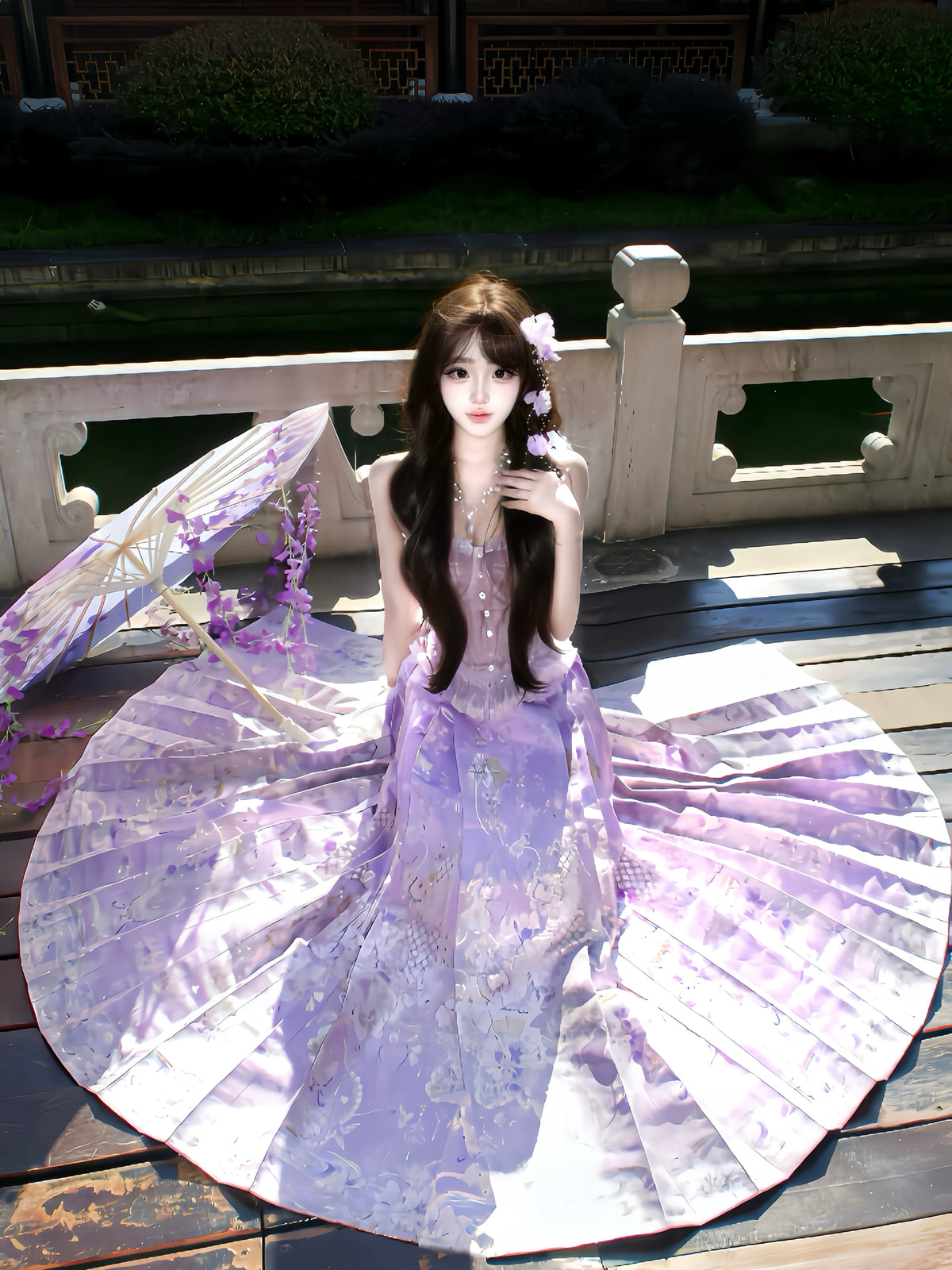
👉 Pastel Embroidered Korean Hanbok | Black & Pink Hanbok with Floral Patterns
🔍 Part Five: Troubleshooting Your Bow
| What you see | What went wrong | How to fix it |
| Bow drifts to one side | Inner cord not secured tightly | Retie inner cord first, then redo outer bow |
| One loop larger than the other | Loops formed at unequal tension | Reform both loops simultaneously before threading |
| Bow loosens within an hour | Silk center knot not held | Hold center knot for 5 seconds after tightening |
| Collar gaps open | Crossing point placed too low | Move crossing point up to just below the collar line |
| Trailing ribbons uneven | Ribbon lengths not pre-measured | Adjust ribbon at attachment point before starting |
🧵 Part Six: Fabric-Specific Adjustments
Heavily embroidered hanbok — the goreum ribbon and norigae tassel must be handled with care to protect the embroidery at the attachment point
Silk Hanbok — Smooth, Slippery, Luminous
Silk has almost no friction. Every knot must be pulled tighter than feels necessary and held for several seconds. Use a double flat knot for the inner cord. Hold the center bow knot for a full five seconds. If the bow loosens during wear, the center knot was not held long enough.
Heavily Embroidered Hanbok — Structured, Weighted, Precious
Embroidered ribbon is stiffer and heavier than plain silk. Form the loops slightly larger than necessary — the weight of the embroidery will compress them slightly after tying. Handle gently throughout; pulling too hard can distort the embroidery at the attachment point.
👉 Red Hanbok with Floral Embroidery — Korean Traditional Dress | Timeless Korean Hanbok — Bold Yellow & Green
🔄 Quick Reference — Six-Step Recap
- Secure the inner cord — Wrap, cross, tie flat knot. Check stability.
- Cross the outer ribbons — Right over left at chest center.
- Wrap and thread through — Form base knot. Hold 3 seconds (silk).
- Form the butterfly loops — Equal size, held simultaneously before threading.
- Thread and lock center — Pull slowly. Micro-adjust. Hold 5 seconds (silk).
- Dress the trailing ribbons — Equal length, natural curve. Mirror check.
❤️ Closing: The Bow That Holds Everything Together
The goreum ribbon is the smallest element of the hanbok. It is also the most consequential. A perfectly tied goreum does not call attention to itself — it simply makes everything else look right. The collar lies flat. The silhouette is clean. The bow sits symmetrically at the center of the chest, its trailing ribbons falling with natural grace.
Practice the goreum once before the day you need it. Practice it twice if the fabric is silk. The bow that holds all day is the bow that was tied with patience, not speed.
Questions about tying your specific hanbok? Leave them in the comments — I answer every one. 💬
🛍️ Shop the Hanbok Collection
- 🌸 Pastel Embroidered Korean Hanbok — Elegant Traditional Korean Dress — Soft silk goreum, pastel palette
- 🔥 Red Hanbok with Floral Embroidery — Korean Traditional Dress — Embroidered ribbon, ceremonial weight
- 🌿 Timeless Korean Hanbok — Bold Yellow & Green with Hand-Embroidered Florals — Structured ribbon, bold contrast
- 🖤 Black & Pink Hanbok with Floral Patterns — Korean Traditional Dress — Neutral palette, everyday versatility