Kimono for Men Called – What Is a Men's Kimono & How to Wear It
Filter
Sort by:
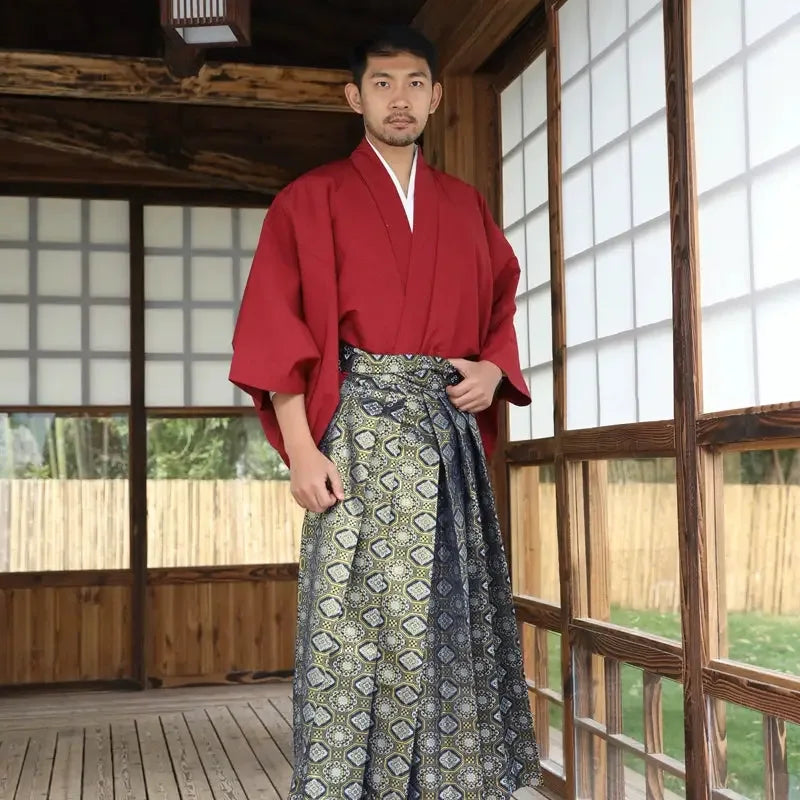
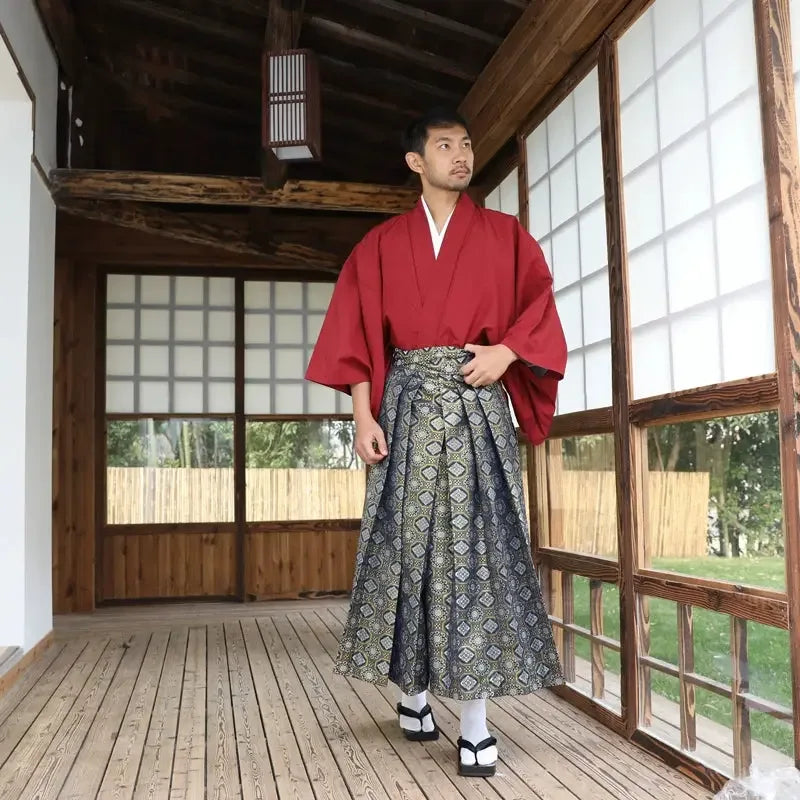


A kimono worn by a man is still called a kimono (着物). There is no separate universal word meaning “male kimono.” Terms such as yukata, haori, hakama and montsuki describe a particular garment, level of formality or part of an outfit; they are not interchangeable names for every men’s kimono.
Men’s kimono names: the short answer
- Kimono (着物): the general garment name. Men’s and women’s versions differ in styling, proportion, sleeve construction, colour and dressing conventions, but both are kimono.
- Yukata (浴衣): a lighter, unlined and relatively casual type of kimono associated with bathing traditions, warm weather, festivals and relaxed wear. A modern product called yukata should still be checked for its exact fabric and construction.
- Haori (羽織): an outer jacket worn over a kimono. A haori is one layer, not the name of the complete outfit.
- Hakama (袴): a pleated lower garment worn from the waist, often described in English as divided or skirt-like trousers. Hakama are worn with other garments; they are not a kimono.
- Montsuki (紋付): clothing bearing family crests. In formal men’s dress, the term often appears in an ensemble such as montsuki haori hakama: a crested kimono, crested haori and hakama.
What is a formal men’s kimono outfit called?
For a groom or another highly formal setting, you may encounter kuro-montsuki haori hakama or kuromonpuku. The outfit is assembled from several parts: a black crested kimono, a black crested haori and striped hakama, together with the appropriate sash, underlayers, footwear and accessories. This terminology describes a formal dressing system; it does not mean that any dark robe or samurai-inspired costume is automatically equivalent.
What can you currently shop on this page?
The current storefront selection is narrow and should not be read as a catalogue of every term above. One public listing is a men’s yukata-style robe offered in several pattern and size variants. The other is a samurai-inspired formal-costume listing with separate choices for a top, hakama only or a combined outfit. Use the exact selected variant to determine the component and price.
Some associated products are still drafts and cannot be purchased from the storefront. This page therefore does not promise montsuki, haori jackets, every fabric, every size, made-to-measure service or a complete accessory set. For the main current shopping route, visit Men’s Kimono & Traditional Japanese Kimono for Men. For a broader comparison that includes women’s and modified styles, see Traditional Japanese Kimono Clothing.
How to choose a men’s kimono or Japanese-style outfit
1. Decide whether you want traditional dressing, festival wear or costume styling
A yukata-style robe can suit relaxed summer or festival styling. A formal kimono ensemble requires more specific components and occasion knowledge. A samurai-inspired costume may be designed mainly for stage, role play or photography rather than for a formal Japanese ceremony. Choose the category that matches the intended use instead of relying on the word “kimono” alone.
2. Check every included component
Look for the kimono or top, haori, hakama, obi or kakuobi, underlayer, belt, socks and footwear separately. Photographs can show a complete styled outfit even when the chosen option contains only one part. On the current samurai-inspired listing, the single top, hakama-only option and combined set are different variants.
3. Use the product-specific size method
Men’s robes may be selected by height, garment length or letter size. Compare your height, chest, shoulder width, waist and intended hem position with the exact chart. If hakama are included, also check the waist and lower-garment length. Do not assume that the same M, L or XL measurement applies to every maker.
4. Verify fabric and care on the exact listing
General terminology does not prove fiber composition. Although traditional descriptions may associate yukata with cotton or formal garments with silk, a present-day product can use different materials. Follow the current product page and garment label for fabric, lining and care; visual sheen, brocade or pattern names are not enough to identify fiber content.
Men’s kimono FAQs
Is a men’s kimono called a yukata?
Not automatically. Yukata is one relatively casual type of kimono. A men’s kimono can also be part of a more formal or layered outfit.
Is a haori the same as a kimono?
No. A haori is an outer jacket normally worn over a kimono or adapted into contemporary layering.
Are hakama included with a men’s kimono?
Only when the selected product or variant explicitly includes them. Hakama can be sold separately.
Does this Collection sell authentic formal montsuki?
The current public assortment does not establish that claim. Use the individual product description and component list, and distinguish formal Japanese dressing from a modern robe or costume interpretation.
Shipping and order timing
Yandan Hanfu provides free worldwide shipping, and import duties are included. Ready-stock items are normally dispatched in 3–5 days. Made-to-order or preorder items typically need about 3–4 weeks before dispatch. Processing and carrier transit are separate, and arrival by a fixed date is not guaranteed.