✦ Color Guide ✦
The Art of Color Harmony
in Silk Hanbok
Color is not decoration. In the hanbok, it is meaning, memory, and identity.
There is a reason the first thing you notice about a silk hanbok is its color. Not the embroidery, not the silhouette, not the fabric — the color. It arrives before everything else. It sets the emotional register of the entire garment before a single detail has been seen.
But hanbok color is not chosen the way a paint chip is chosen. It is a system — one that Korean culture has been refining for over a thousand years — built on the relationship between color, fabric, silhouette, and the occasion for which the garment is worn. Understanding this system makes the result more meaningful. And more beautiful.
🎯 Part One: The Philosophy Behind Hanbok Color
In traditional Korean aesthetics, color is never purely visual. It is always also symbolic, relational, and contextual. The color of a hanbok communicates who you are, what occasion you are marking, and what you wish for the people around you. It is a language spoken in silk.
🌟 Obangsaek: The Five Sacred Colors of Korea
The foundation of traditional Korean color philosophy is Obangsaek (오방색) — the system of five directional colors that has governed Korean visual culture for millennia:
| Color | Direction / Element | Symbolic Meaning |
| 🔴 Red | South / Fire | Passion, protection, warding off evil |
| 🔵 Blue / Green | East / Wood | Growth, vitality, new beginnings |
| 🟡 Yellow | Centre / Earth | Abundance, imperial dignity, the centre of all things |
| ⚪ White | West / Metal | Purity, clarity, the brightness of an open mind |
| ⚫ Black | North / Water | Wisdom, depth, the unknown |
🧵 The Three Classical Color Rules of Hanbok
- Light above, deep below — The jeogori (top) is traditionally lighter than the chima (skirt). A pale blush jeogori over a deep burgundy chima. The rule is ancient, and it works.
- Contrast at the collar and cuffs — The white dongjeong inner collar and sleeve cuffs are structural color decisions — the precise note of contrast that frames the face and hands.
- The goreum ribbon as accent — The long tie ribbon is the one place where a strong accent color is permitted. It is the punctuation mark of the entire color composition.
🌈 Part Two: Four Hanbok Color Series
The traditional Obangsaek system is the foundation. But the contemporary silk hanbok palette has evolved far beyond five colors. Here are the four color series that define the modern hanbok aesthetic.
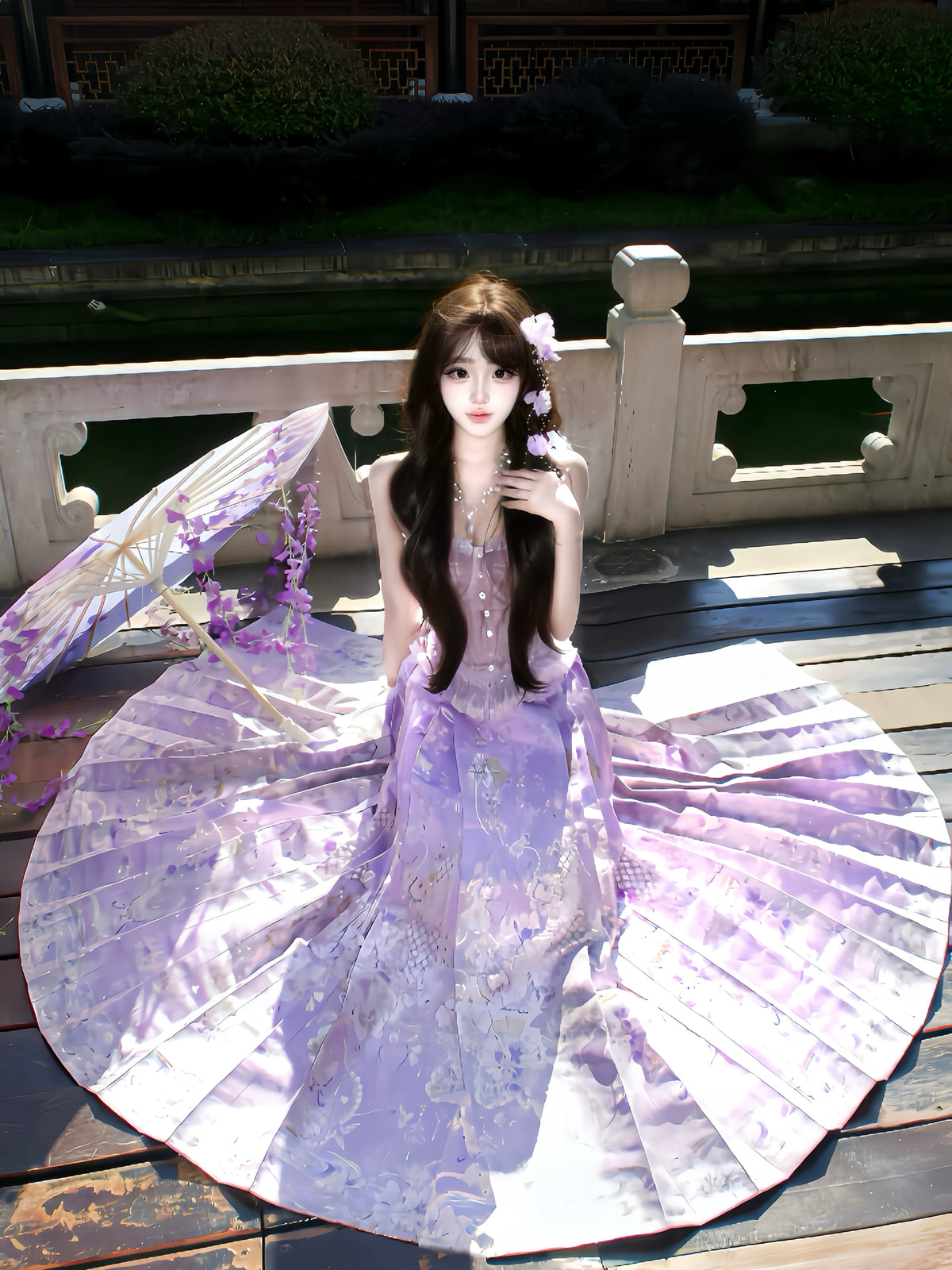
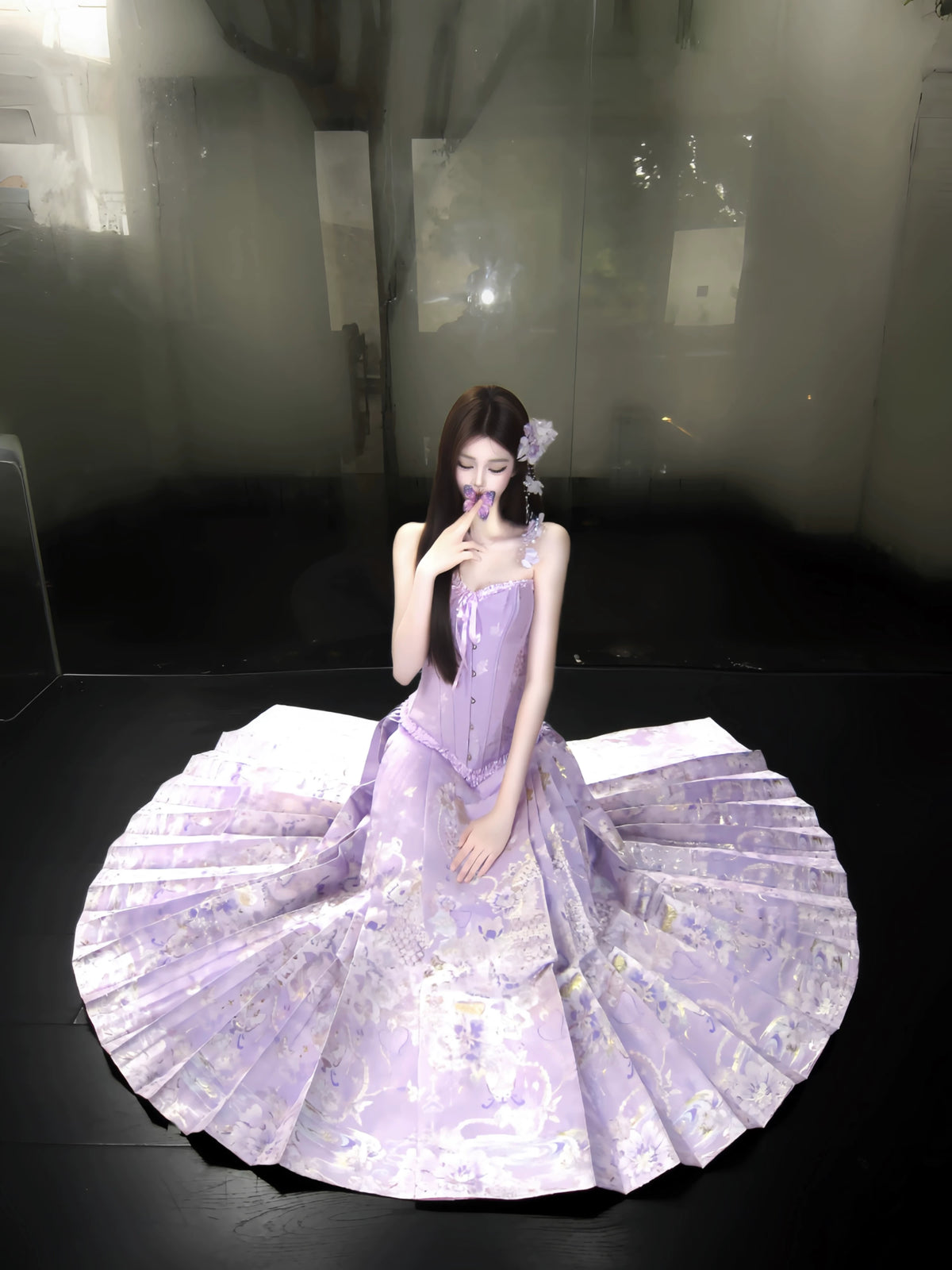
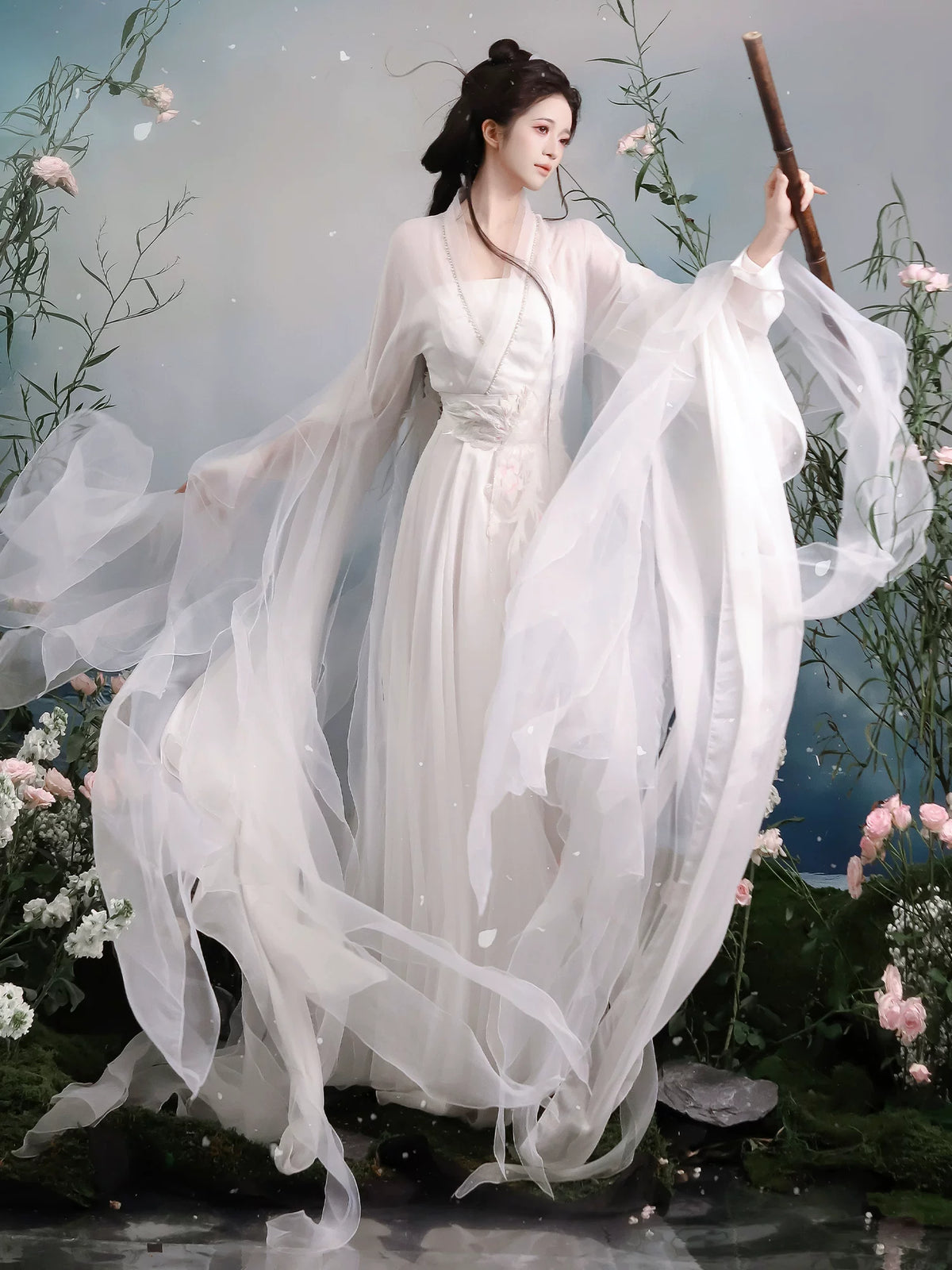
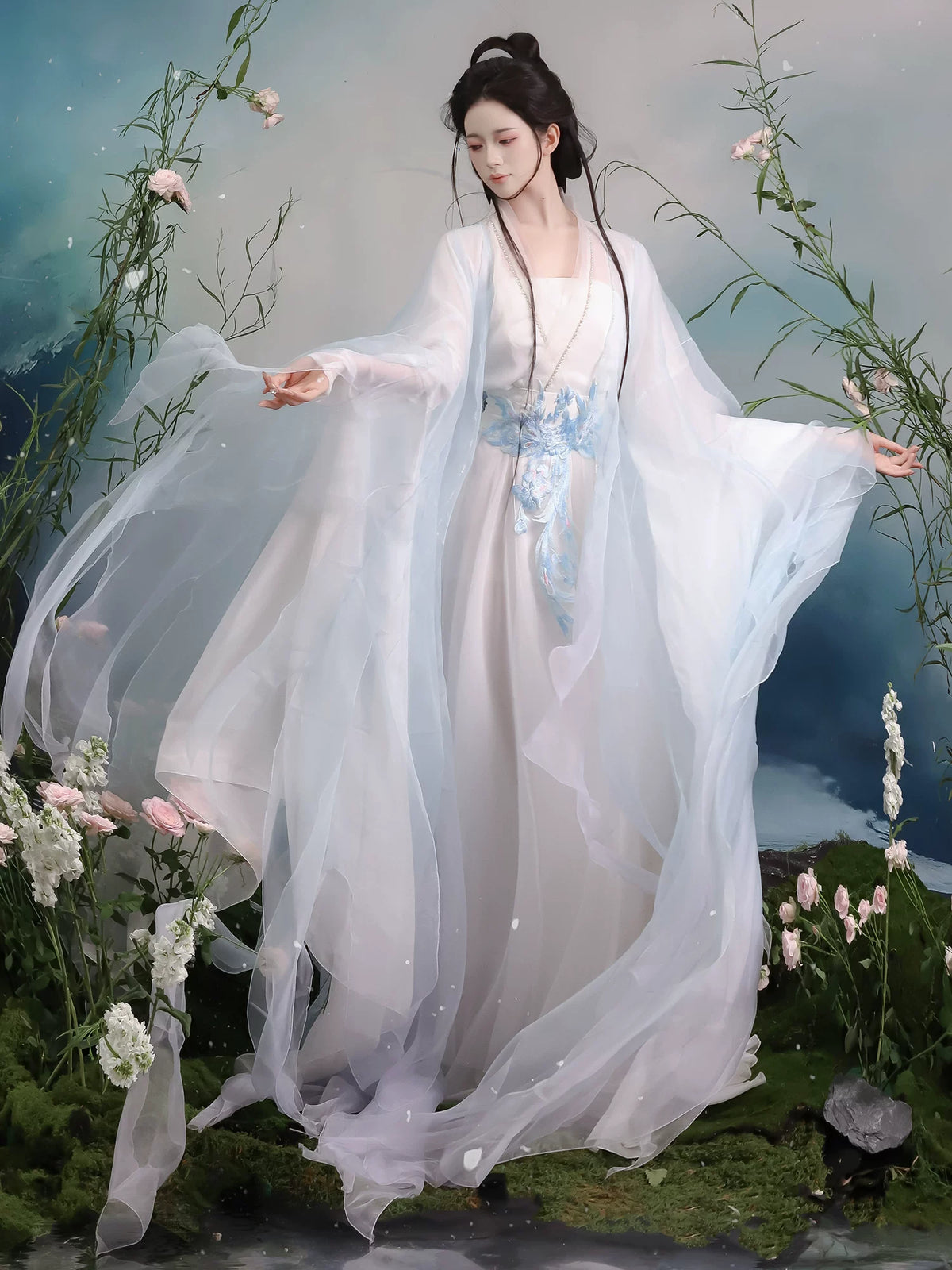
🌸 3.1 Soft Pastel & Gradient Color Series
Tender, romantic, luminous. The color of things that are beautiful precisely because they do not try to last.
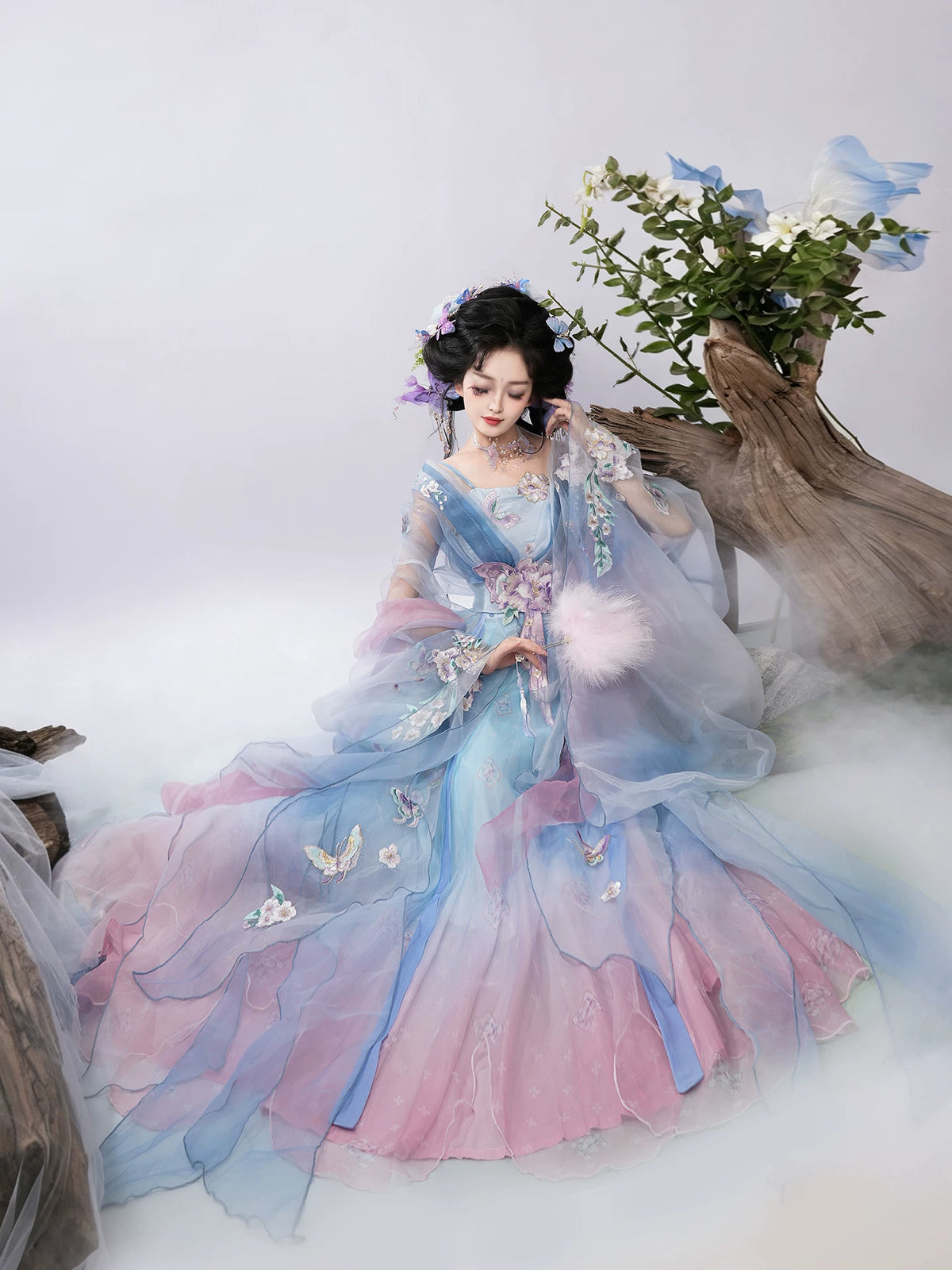
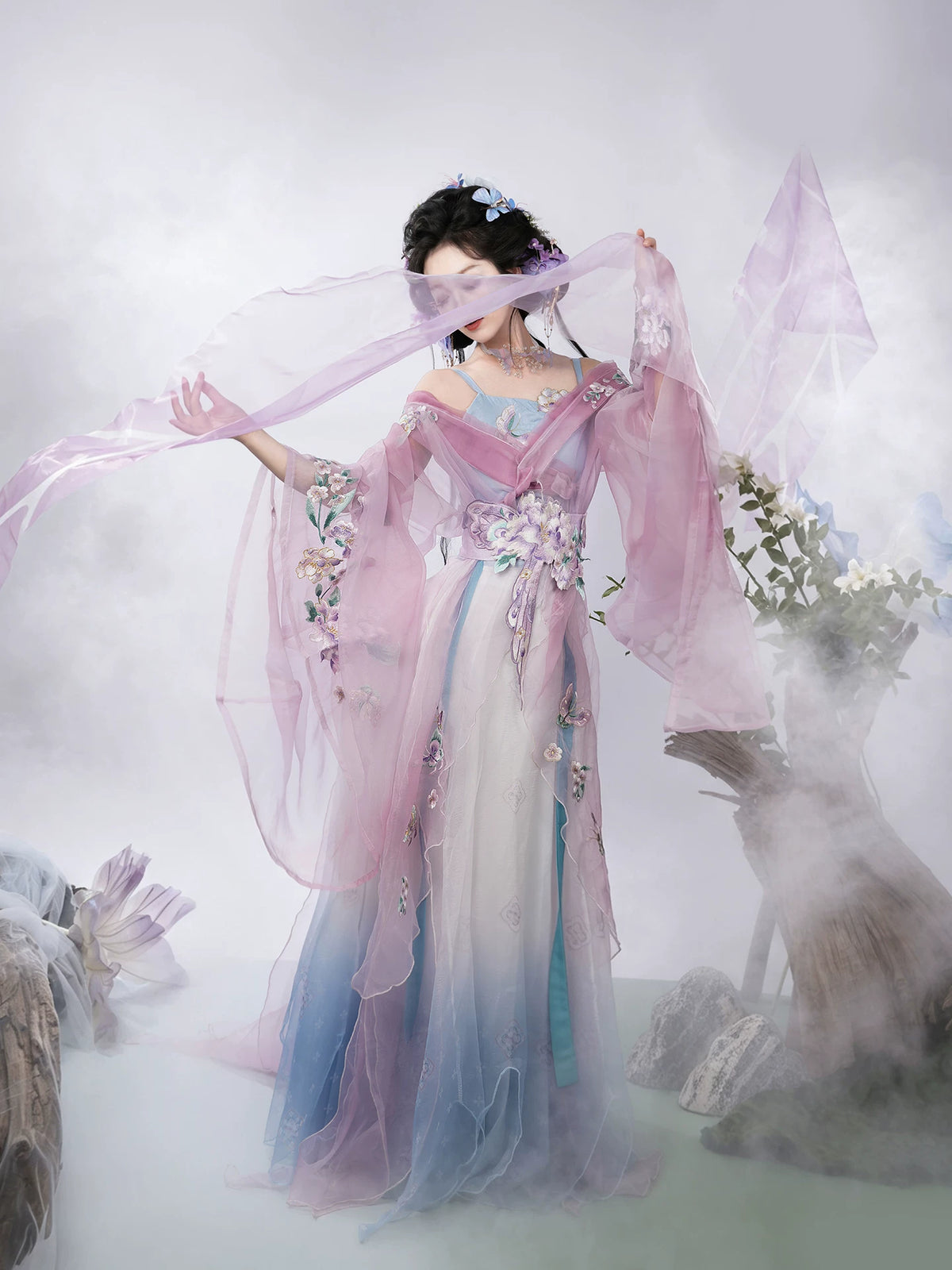
Soft gradient silk hanbok — luminous, tender, unmistakably romantic
Palette: Soft pink, ivory white, pale lavender, blush apricot, warm honey gold — colors that shift in the light, that feel like they were mixed with water.
Color logic: Low saturation throughout. Tonal gradients rather than contrast. The goreum ribbon in a slightly deeper shade of the same hue, creating harmony rather than punctuation.
Who this is for: The person who finds beauty in softness. Ideal for weddings, engagement photoshoots, spring festivals, and any occasion where the goal is to look luminous rather than commanding.
Styling note: Pearl accessories only. White jade norigae. Silver shoes. Nothing that adds warmth or weight to the palette.
👉 Pastel Embroidered Korean Hanbok — Elegant Traditional Korean Dress
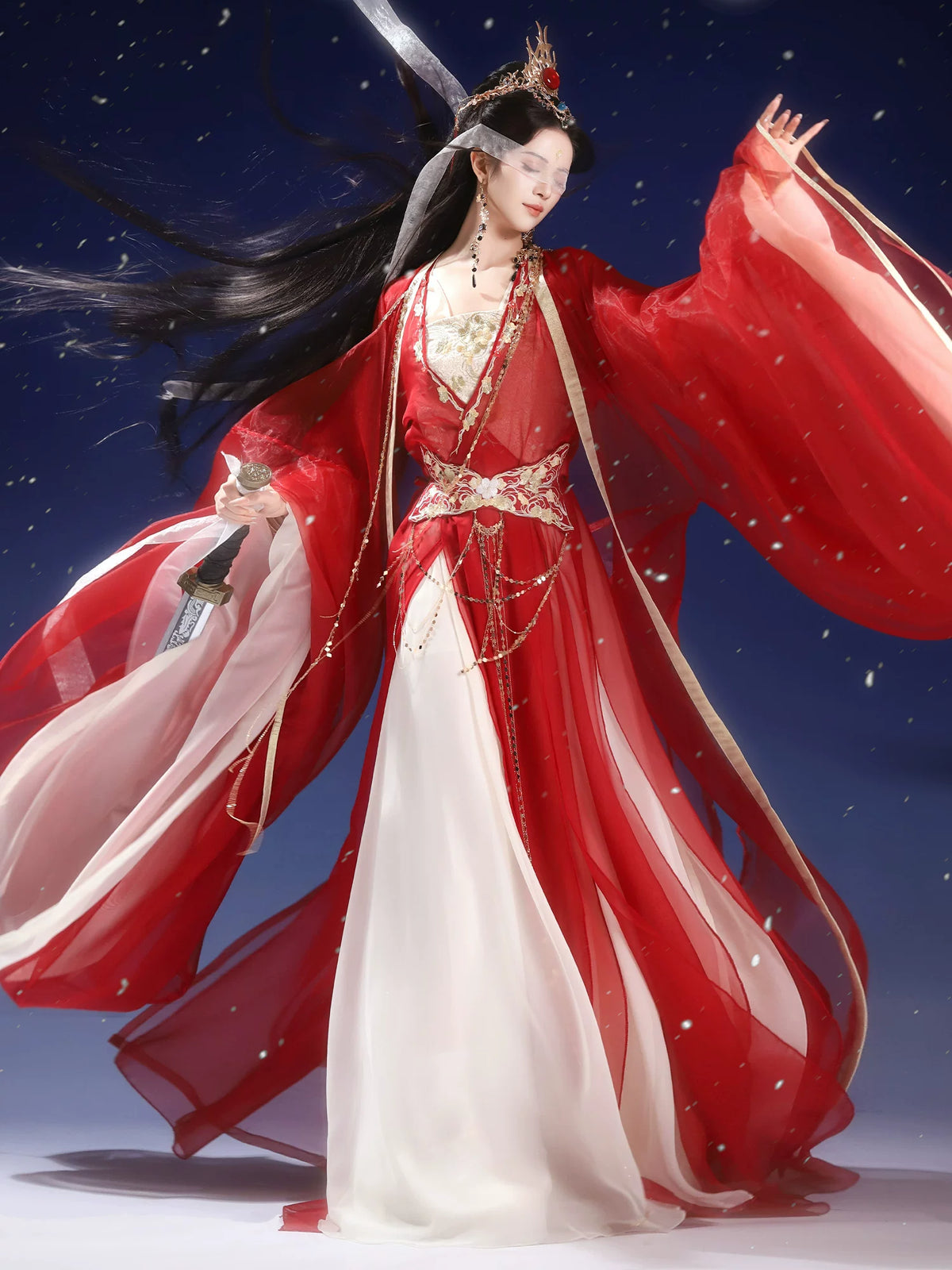
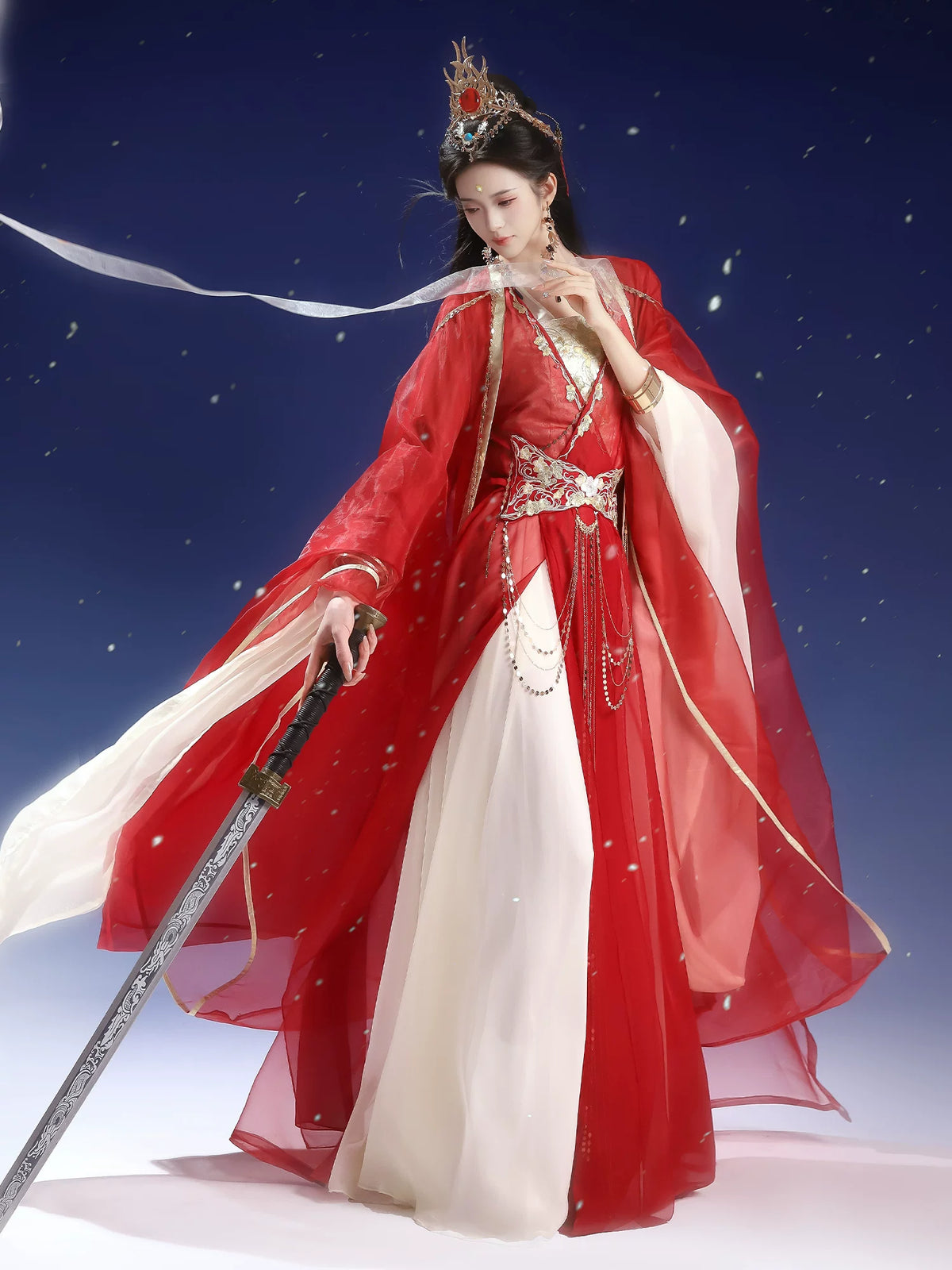
🔥 3.2 Classic Contrast Color Series
Bold, ceremonial, unmistakable. The color of occasions that deserve to be remembered.
Palette: Deep red and royal blue. Crimson and forest green. Vivid jewel tones in deliberate opposition — colors that confront each other, and in that confrontation create something extraordinary.
Color logic: The Obangsaek at its most direct. The white collar and cuffs are essential: the neutral ground that prevents the contrast from becoming conflict.
Who this is for: The person who understands that some occasions require a garment that commands the room. Ideal for weddings, ancestral rites, Seollal, Chuseok.
Styling note: Gold norigae pendant. Gold hair ornaments. Shoes in a complementary jewel tone. Do not soften this palette. It is designed to be seen.
👉 Red Hanbok with Floral Embroidery — Korean Traditional Dress
💜 3.3 Court & Deep Jewel Tone Series
Regal, layered, commanding. The color of someone who carries history with ease.
Deep navy and purple court hanbok — the color of ceremony and quiet authority
Palette: Deep navy, royal purple, midnight indigo, rich teal — colors with weight and depth, colors that absorb light rather than reflect it.
Color logic: Monochromatic depth. The jeogori and chima in the same deep color family, differentiated by texture rather than hue. Gold metallic embroidery as the only accent. The effect is one of total, unhurried authority.
Who this is for: The person who wants a hanbok that feels like a statement of cultural identity rather than a costume. Ideal for formal ceremonies, cultural performances, and editorial photoshoots in traditional settings.
Styling note: Gold hair ornaments. Jade or coral norigae. Deep jewel-tone shoes. Let the depth of the color do the work.
👉 Timeless Korean Hanbok — Bold Yellow & Green with Hand-Embroidered Florals
✨ 3.4 Bold Traditionalist Series
Vivid, joyful, commanding. The color of someone who walks into a room and owns it without trying.
Yellow jeogori & forest green chima — the Obangsaek at its most vivid and joyful
Palette: Olive yellow and forest green. Warm gold and deep jade. Colors drawn directly from the Obangsaek tradition — vivid, deliberate, and completely alive.
Color logic: Maximum contrast between jeogori and chima, with the purple goreum ribbon adding a third color voice. The hand-embroidered florals in contrasting thread colors add visual complexity that rewards close attention.
Who this is for: The person who is not afraid of being seen. Who finds joy in color rather than anxiety. Who wants a hanbok that expresses cultural pride loudly and without apology.
Styling note: Gold norigae pendants. Gold-threaded hair ornaments. Shoes in a complementary jewel tone. Lean into the color, the embroidery, and the presence.
👉 Timeless Korean Hanbok — Bold Yellow & Green Silhouette with Hand-Embroidered Florals
🧵 Part Three: Color, Silk Texture & Embroidery
🔍 How Silk Texture Affects Color Perception
- Charmeuse silk — High sheen, fluid drape. Colors appear lighter and more luminous. Ideal for the pastel and gradient series.
- Brocade silk — Woven pattern, structured weight. Colors appear richer and more complex. Ideal for the classic contrast and court series.
- Matte silk — Low sheen, soft hand. Colors appear warmer and more intimate. Ideal for the neutral and earth tone series.
- Chiffon silk — Sheer, weightless. Colors appear softer and more diffuse. Ideal for the contemporary and gradient series.
🌸 Embroidery Color as the Third Voice
- Tonal embroidery — Same color family as the ground, slightly deeper. Creates texture without contrast. The most refined approach.
- Complementary embroidery — A color from the opposite side of the color wheel, used sparingly. Creates visual interest without disrupting harmony.
- Metallic embroidery — Gold or silver thread on a jewel-tone ground. The traditional court approach. Adds authority and formality.
💡 Part Four: Practical Color Styling Tips
👤 Choosing by Skin Tone
- Fair / cool undertones — Soft lavender, pale blue, ivory white, and cool-toned pastels. Avoid warm yellows and oranges.
- Medium / warm undertones — Warm coral pink, golden yellow, warm ivory, and rich earth tones. The classic contrast series in red and blue is particularly flattering.
- Deep / rich undertones — Jewel tones: deep teal, royal blue, rich burgundy, vivid green. Also warm gold and deep caramel.
- All skin tones — The neutral and earth tone series is universally flattering.
🎉 Choosing by Occasion
- Wedding / bridal — Soft pastel series or classic contrast in red and white. The bride's color is traditionally red.
- First birthday (doljanchi) — All five Obangsaek colors for the child. Parents in soft pastels or warm neutrals.
- Seollal / Chuseok — Family coordination in the same color series, different shades.
- Cultural events / photoshoots — Any series. Court and jewel tones photograph best in traditional architecture.
- Everyday / travel — The neutral and earth tone series. Understated and versatile.
💄 Accessory Color Rules
- Pastel series — Pearl, crystal, white jade. Silver metal. Nothing warm.
- Classic contrast series — Gold metal. Coral or jade norigae. Jewel-tone shoes.
- Court / jewel tone series — Gold hair ornaments. Deep jade or coral norigae. Rich jewel-tone shoes.
- Bold traditionalist series — Gold norigae. Gold-threaded hair ornaments. Complementary jewel-tone shoes.
⚠️ Color Mistakes to Avoid
- Matching jeogori and chima in the same color and depth — Always maintain the light-above, deep-below principle.
- Ignoring the white collar — The white dongjeong is not optional. A hanbok without it looks unfinished.
- Over-accessorizing — Choose one focal accessory — the norigae — and keep everything else simple.
- Choosing color from a screen — Silk hanbok color must be seen in person, in natural light.
❤️ Closing: The Color That Is Yours
Hanbok color is not a trend. It is not a season. It is a conversation between a thousand years of cultural wisdom and the specific person standing in front of the mirror today. The traditional color rules are not constraints — they are a framework that makes the choice easier, not harder.
Color in a silk hanbok is never just color. It is a wish, a memory, an identity. Choose the one that feels most like you — and then let the silk do the rest.
Which hanbok color series speaks to you? Tell me in the comments. 💬
🛍️ Shop by Color Series
- 🌸 Pastel Embroidered Korean Hanbok — Elegant Traditional Korean Dress — Soft Pastel & Gradient Series
- 🔥 Red Hanbok with Floral Embroidery — Korean Traditional Dress — Classic Contrast Series
- 💜 Timeless Korean Hanbok — Bold Yellow & Green with Hand-Embroidered Florals — Bold Traditionalist / Court Series
- 🖤 Black & Pink Hanbok with Floral Patterns — Korean Traditional Dress — Neutral & Earth Tone Series