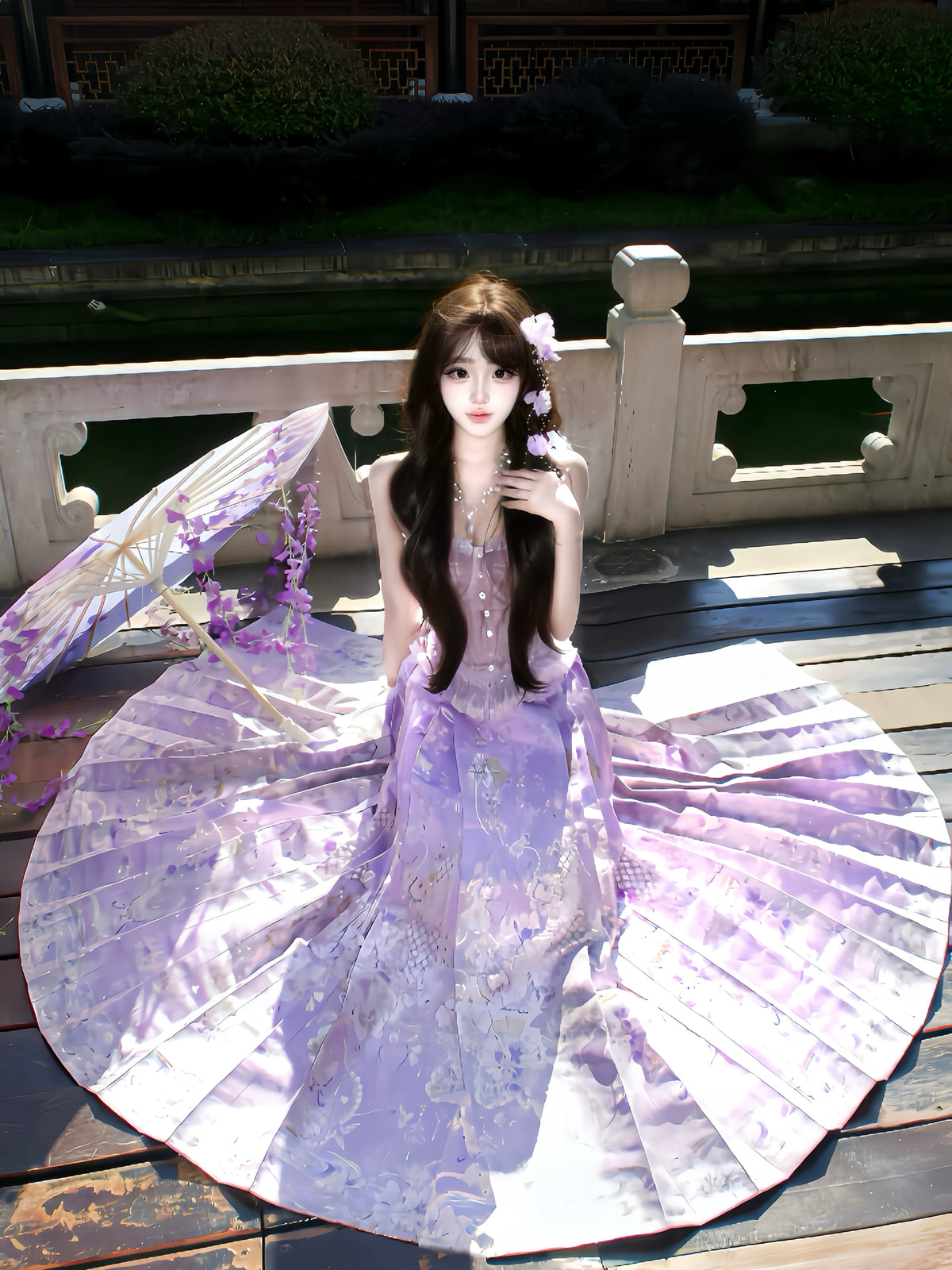
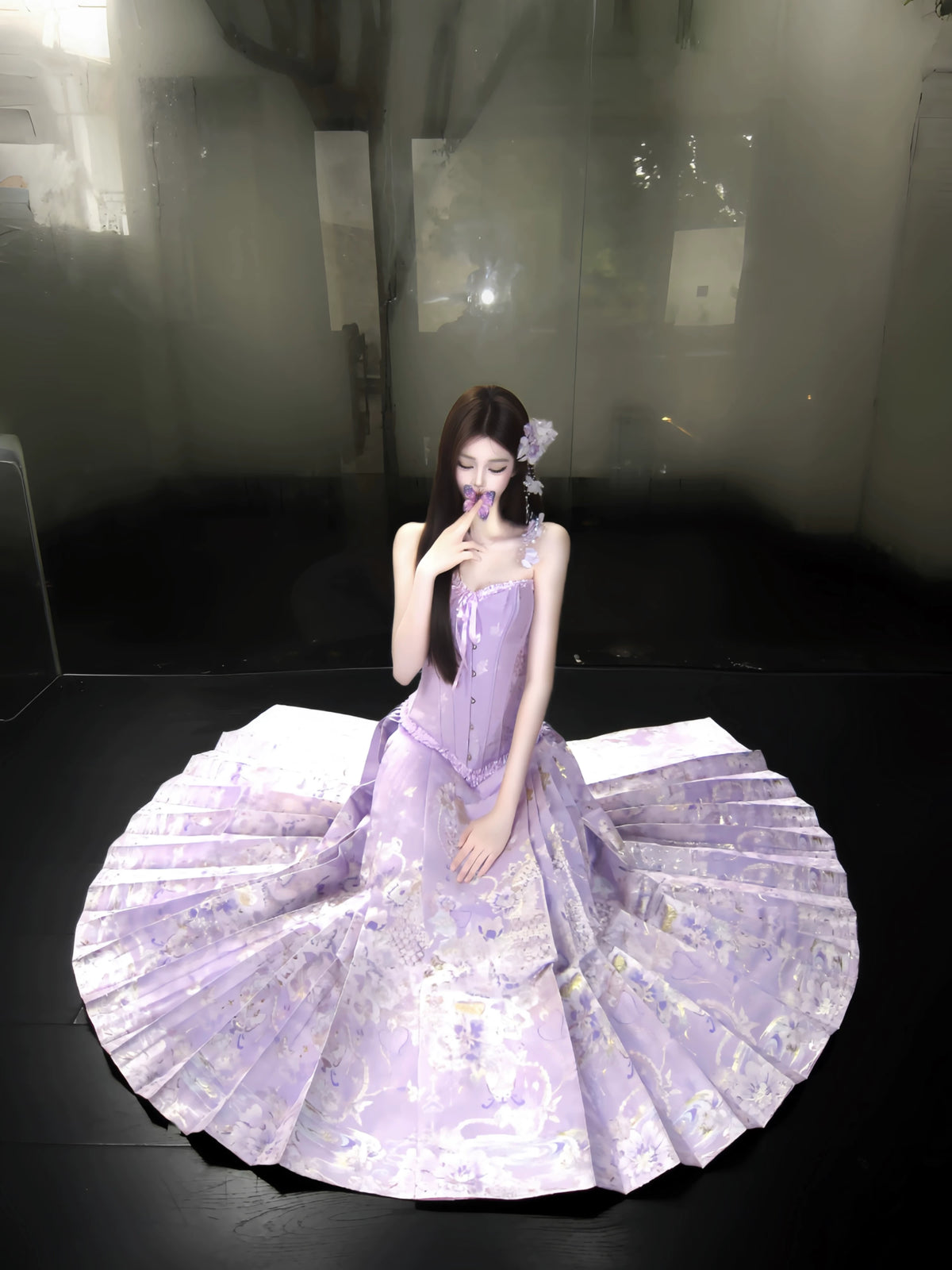
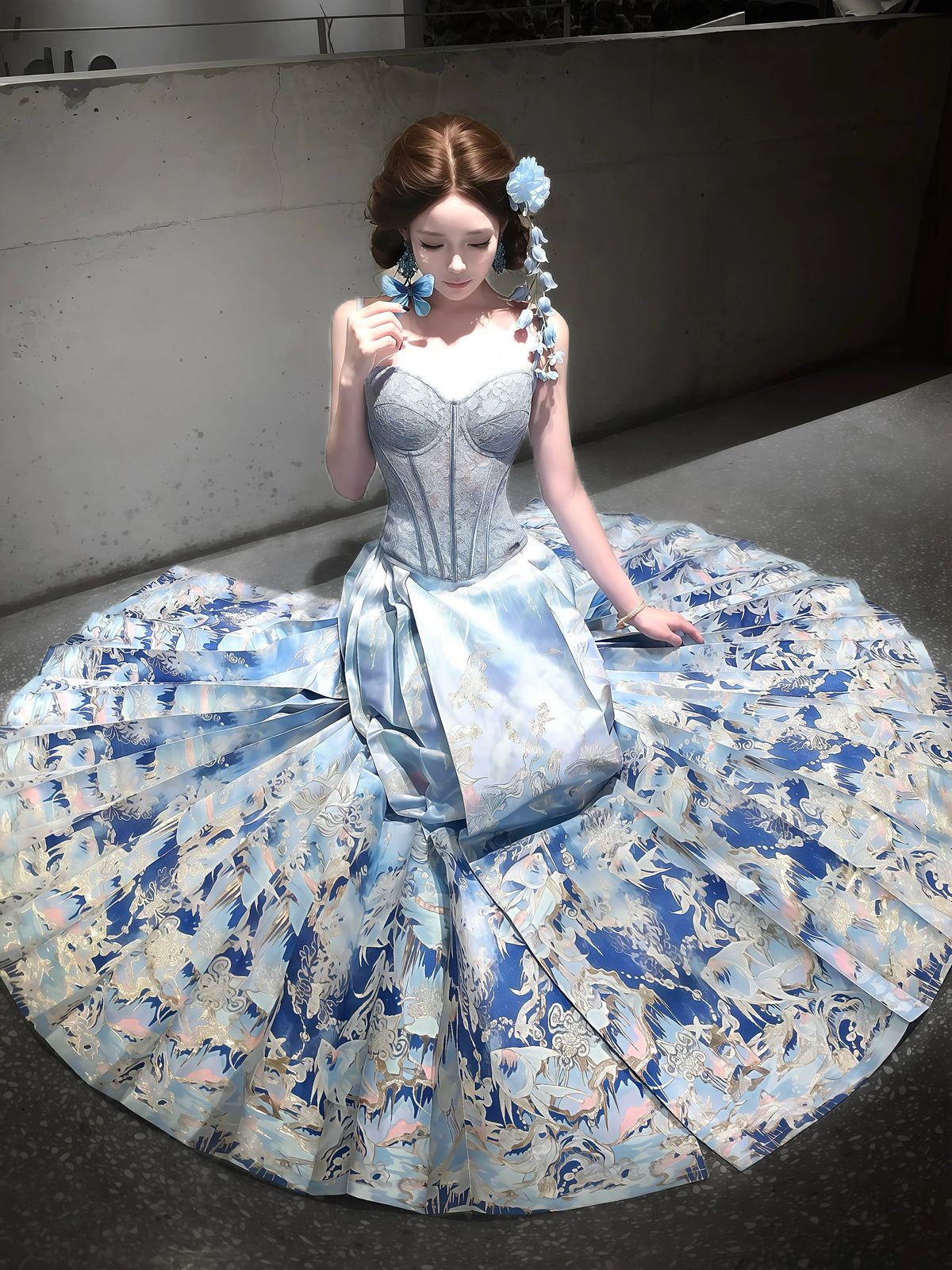
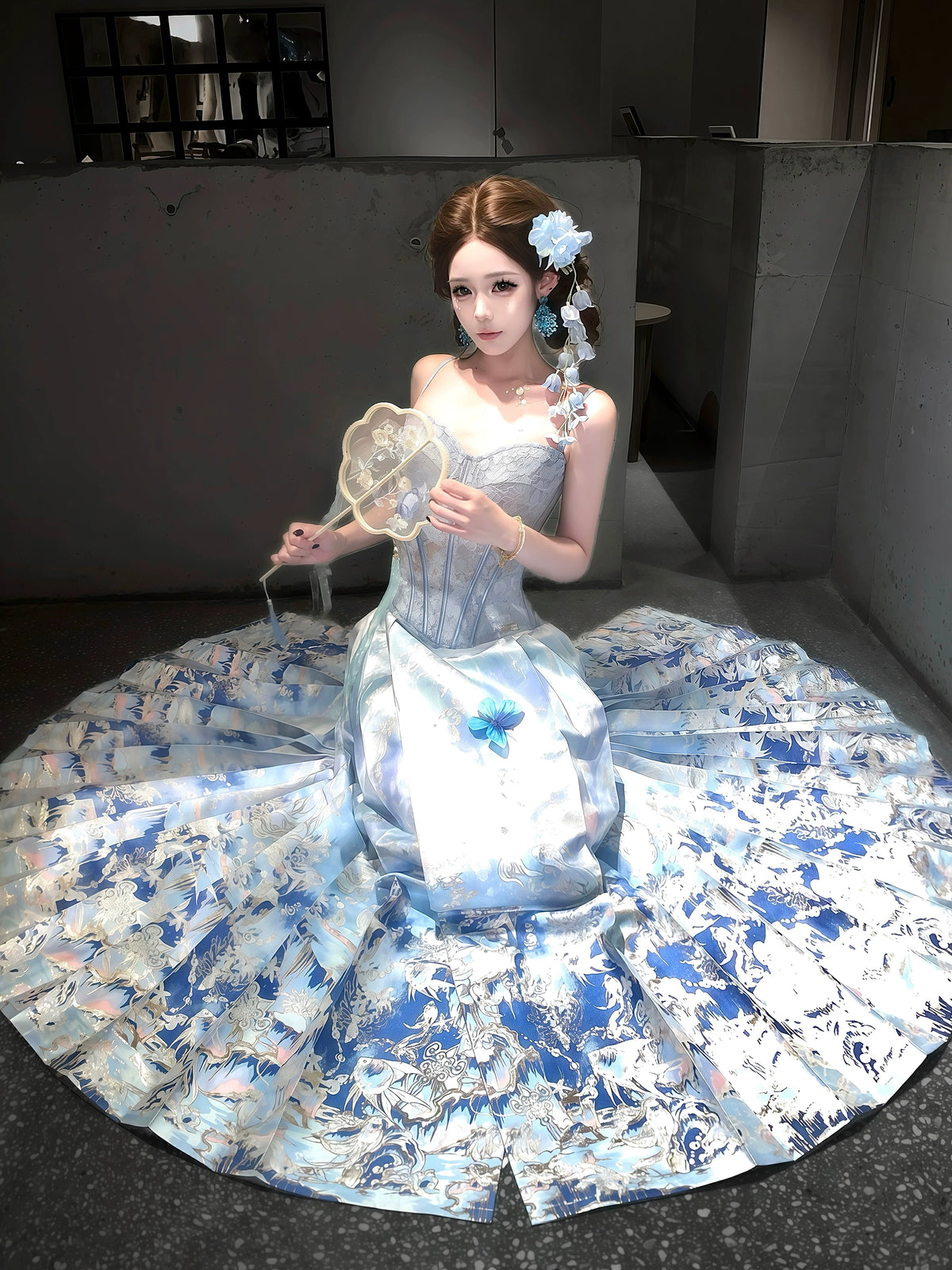
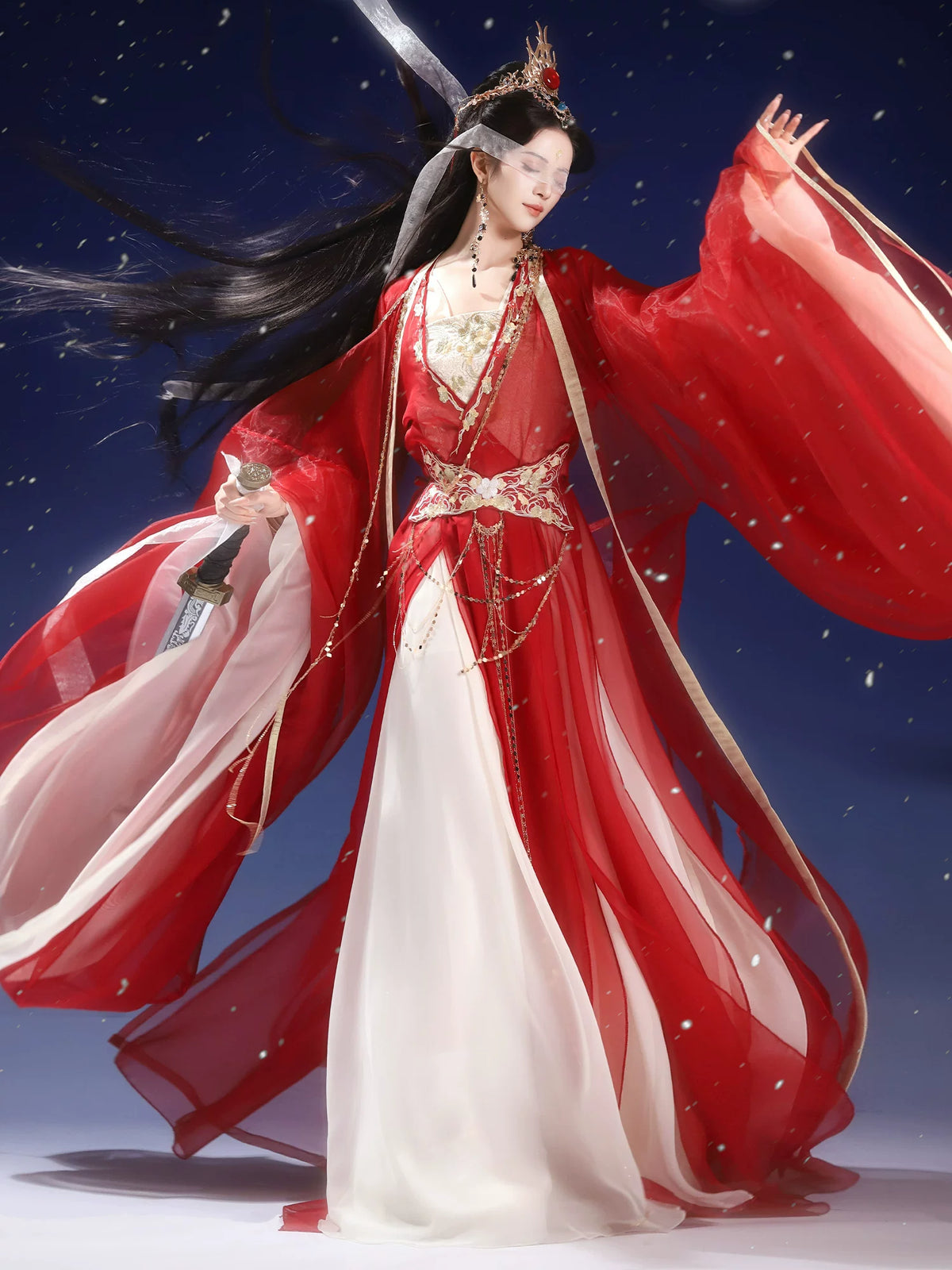
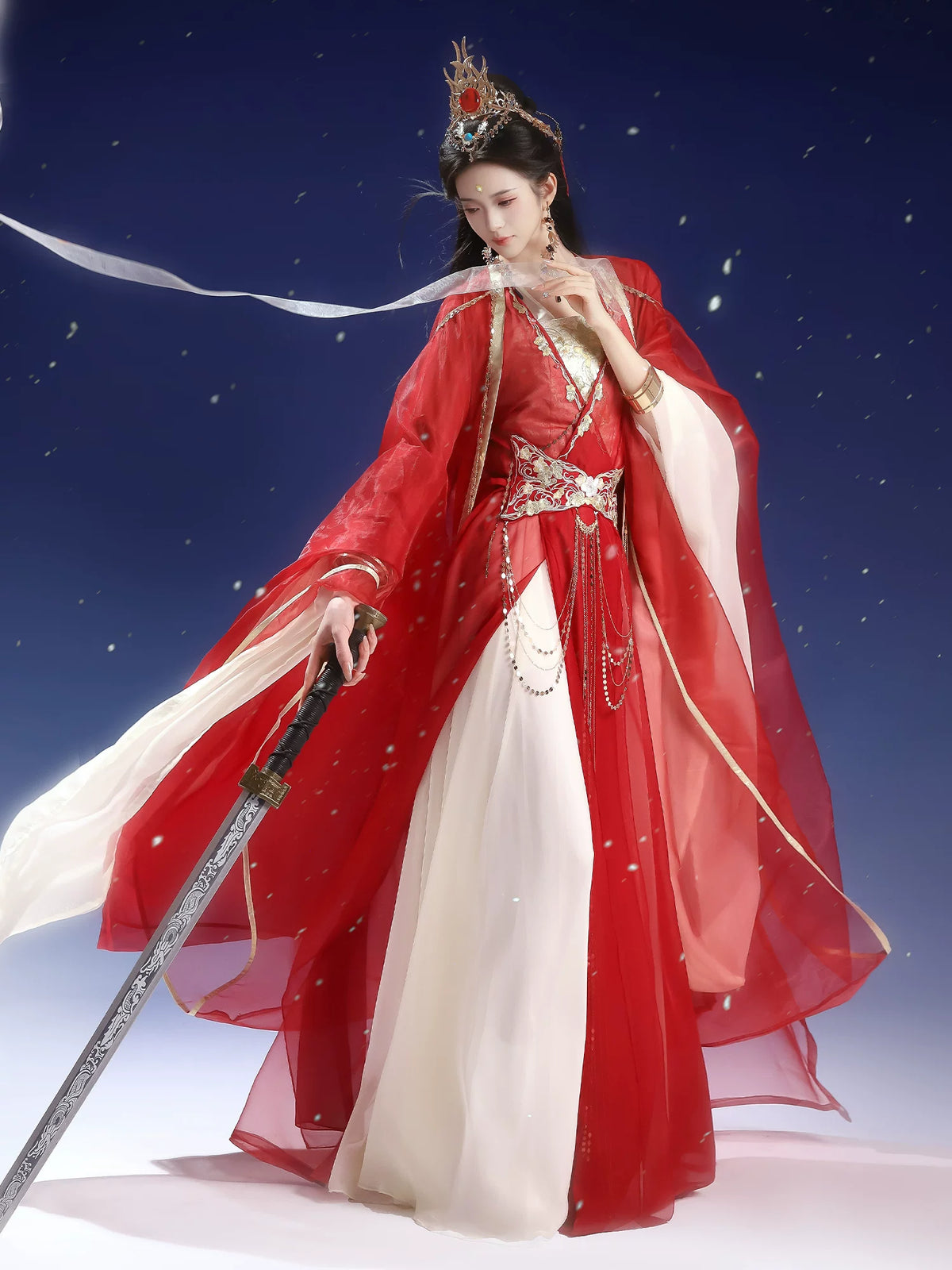
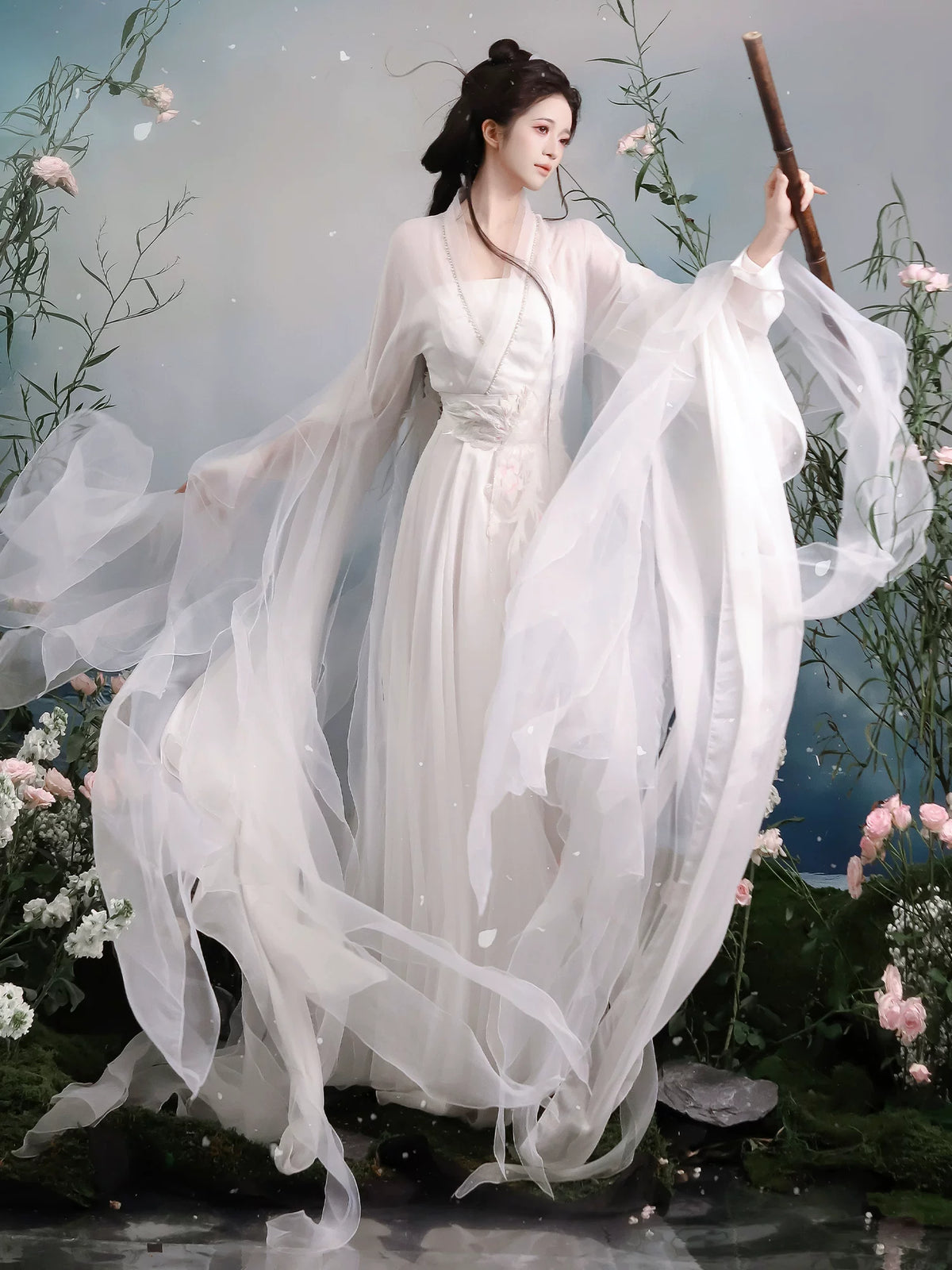
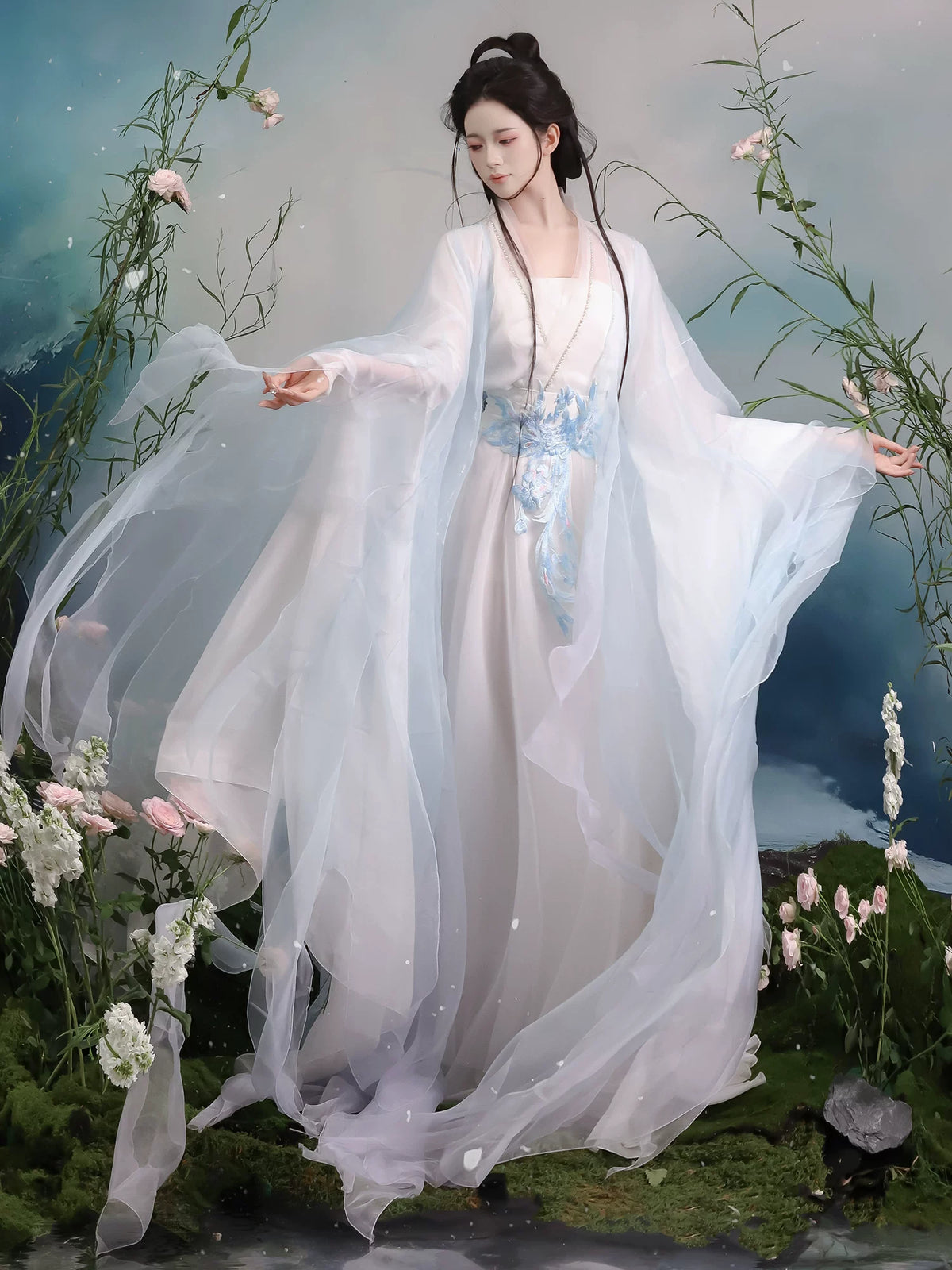
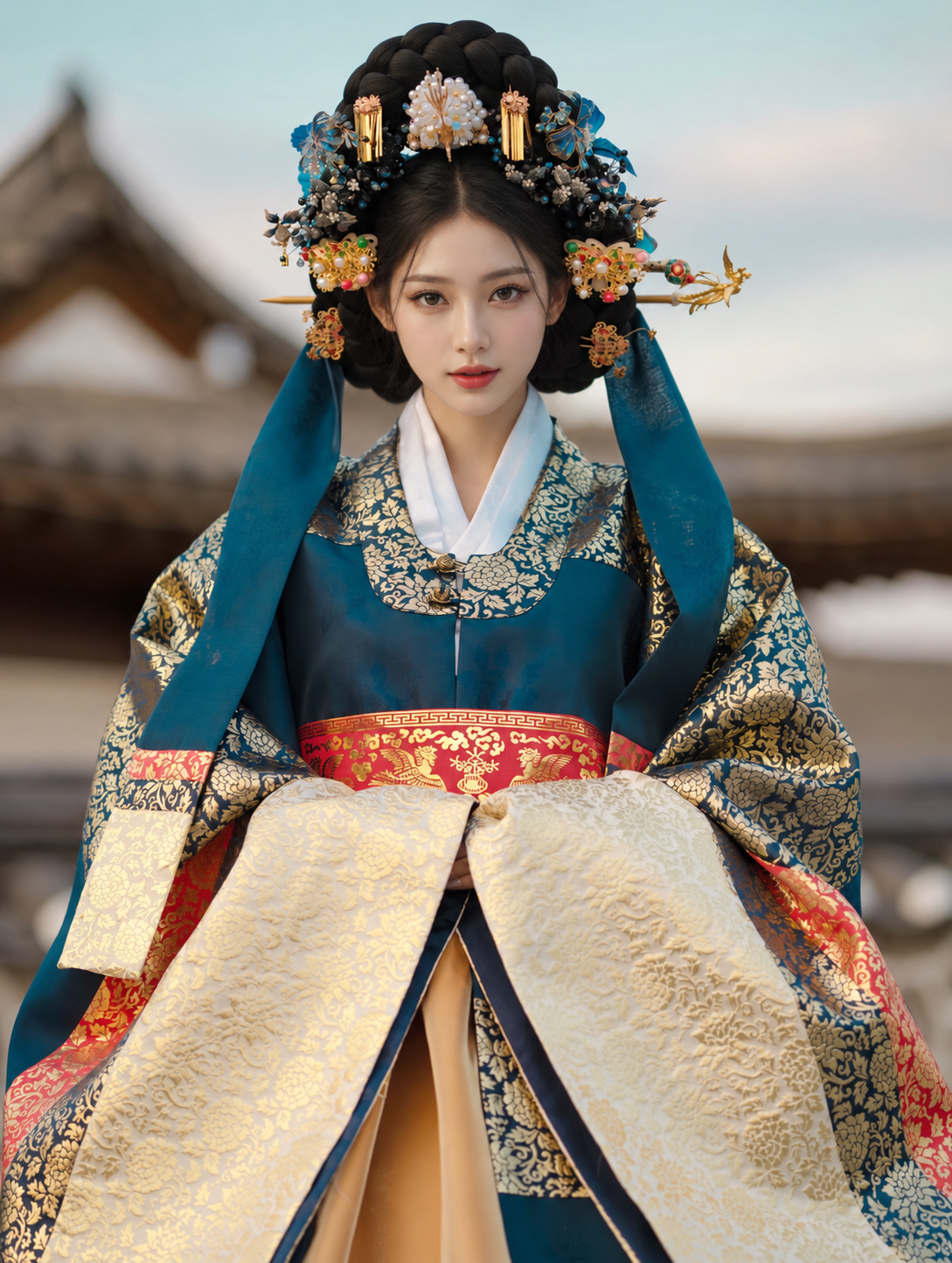
In a world of fast fashion and fleeting trends, Korean hanbok traditional dress stands apart — unchanged in its essential spirit for over a thousand years, yet as alive and relevant today as it was in the royal courts of the Joseon dynasty. Hanbok is not merely clothing. It is a cultural declaration, a philosophical statement, and a living archive of Korean identity.
Today, hanbok is no longer everyday dress. It has become the ceremonial language of Korea's most important moments — worn at royal ancestral rites, state diplomatic occasions, traditional festivals, and the great milestones of family life. To wear hanbok is to step into a lineage of beauty, meaning, and belonging that stretches back across centuries.
🏛️ When Is Korean Hanbok Traditional Dress Worn Today?
↑ A magnificent deep blue and purple wonsam — the formal outer robe worn by noblewomen and brides in the Joseon dynasty. The gold-embroidered motifs, the elaborate jokduri headdress, and the painted folding screen backdrop evoke the full grandeur of Korean court ceremony.
Hanbok has transitioned from daily dress to ceremonial dress — and in doing so, it has become even more precious. Today, hanbok is worn at:
- Weddings (Gyeollye) — the most important occasion for formal hanbok, from the bride's ceremonial robe to the groom's court dress
- Royal Ancestral Rites (Jongmyo Jerye) — the UNESCO-listed ritual performed at Jongmyo Shrine in Seoul, where participants wear historically accurate Joseon dynasty hanbok
- Traditional Festivals — Seollal & Chuseok — Korea's Lunar New Year and autumn harvest festival, when families across the country dress in hanbok to perform ancestral rites and celebrate together
- Diplomatic & State Occasions — hanbok is worn by Korean dignitaries and cultural ambassadors as a symbol of national identity on the world stage
- Cultural Performances & Tourism — hanbok rental at historic palaces has become one of Korea's most beloved cultural experiences for visitors worldwide
👉 Shop Formal Hanbok: Red Blue Hanbok — Korean Court Dress for Wedding & Performance | Court Ancient Women's Wedding Dress — Korean Traditional Hanbok Suit
👗 Women's Hanbok: The Jeogori & Chima
↑ A contemporary hanbok in soft grey and blush pink — the sheer jeogori with its delicate stripe weave, the pink goreum ribbon tied at the chest, and the full, gathered chima skirt all demonstrate the essential structure of women's hanbok. The vintage clasp bag is a charming modern accessory that complements the traditional silhouette beautifully.
The women's hanbok is one of the most recognisable and beloved silhouettes in all of East Asian dress. Its essential structure has remained consistent for centuries, built around two core garments:
Jeogori (저고리) — The Jacket
The jeogori is a short, fitted jacket with long, gently tapered sleeves. Several details define its distinctive character:
- Left over right (uimun) — the left lapel always crosses over the right, a convention shared with other East Asian traditional dress and considered the correct, living way to wear the garment
- Slender, elongated sleeves — the sleeves taper gently toward the wrist, creating a soft, flowing line that emphasises graceful hand movements
- White collar (git) — a clean white collar frames the neckline, creating a crisp contrast against the coloured jacket and drawing attention to the face
- Contrasting cuffs (hansam) — the cuffs are often in a different colour or fabric, sometimes embroidered, adding a refined finishing detail
The Goreum Ribbon — Hanbok's Most Iconic Detail
The goreum (고름) is the long silk ribbon that ties the jeogori closed at the chest. It is one of the most immediately recognisable elements of hanbok — and one of the most meaningful. Traditional hanbok has no buttons, no zips, no hooks. The goreum is the only fastening, tied in a soft bow that sits just below the collar and trails down the front of the skirt in long, flowing ends.
The goreum is almost always in a contrasting colour to the jeogori — a pink ribbon on a grey jacket, a teal ribbon on a burgundy jacket, a red ribbon on a white jacket. This colour contrast is not merely decorative; it is a fundamental part of hanbok's visual language, creating the dynamic colour interplay that makes hanbok so visually striking.
Chima (치마) — The Skirt
The chima is a full-length, high-waisted skirt that wraps around the body and ties at the chest, just above the jeogori. Its defining characteristics are:
- High waist — the skirt ties at the chest rather than the natural waist, creating an elongated, column-like silhouette
- Full, umbrella-shaped volume — the skirt is cut generously, sometimes using up to 12 metres of fabric, to create its signature billowing shape
- Underskirt (sokchima) — a structured underskirt worn beneath the chima to support its shape and help the skirt fall and spread naturally, creating the characteristic floating quality of hanbok in motion
- Ankle length — the chima traditionally falls to the ankle, with just the tips of the shoes visible beneath the hem
The fabric of the chima is typically silk, organza, or fine gauze — materials that drape beautifully and catch the light. Patterns, when present, are elegant and restrained: subtle woven textures, delicate floral prints, or fine embroidery at the hem.
👉 Shop Women's Hanbok: Pastel Embroidered Korean Hanbok — Elegant Traditional Korean Dress | Pink Hanbok — Traditional Korean Court Dress for Events
🤵 Men's Hanbok: Baji, Dopo & the Gat
↑ An exquisite ivory white formal hanbok — the full-length outer robe is covered in silver floral embroidery, with the characteristic wide sleeves and layered silhouette of Joseon dynasty court dress. The white gache (wig headdress) and the traditional interior setting complete a look of serene, formal elegance.
Men's hanbok shares the same fundamental philosophy as women's — loose, comfortable, and designed for a life lived close to the floor — but with a distinctly simpler, more restrained aesthetic.
Baji (바지) — The Trousers
The most distinctive element of men's hanbok is the baji — extraordinarily wide-legged trousers that are unlike almost any other traditional garment in the world. The baji are cut with an enormous amount of fabric in the leg, creating a silhouette that is simultaneously voluminous and graceful. They are tied at the waist with a drawstring and gathered at the ankle with a ribbon or band.
This extreme width is not merely aesthetic — it is deeply practical. Korean traditional life was lived largely on the floor: sitting cross-legged, kneeling, bowing deeply. The baji's generous cut allows complete freedom of movement in all of these positions, making it perfectly adapted to the rhythms of traditional Korean daily life.
Dopo (도포) — The Formal Outer Robe
Over the jeogori and baji, men of rank wore the dopo — a long, flowing outer robe that falls to the ankle. The dopo is worn for formal occasions and in cooler weather, adding a layer of visual weight and formality to the men's hanbok silhouette. It is typically in a single, deep colour — navy, charcoal, or deep green — with minimal embellishment.
The Gat (갓) — The Scholar's Hat
No discussion of men's hanbok is complete without the gat — one of the most extraordinary hats in the history of world dress. The gat is a tall, cylindrical hat with a wide brim, woven entirely from black horsehair (maemi). It was worn exclusively by men of the yangban (aristocratic) class and scholars, and was a powerful symbol of education, social rank, and Confucian virtue.
Common men, by contrast, wore simpler cloth caps — the geongeon or bokgeon — in undyed or dark fabric. The distinction between the gat and the cloth cap was immediately legible to anyone in Joseon society: it told you, at a glance, exactly where a man stood in the social order.
👉 Shop Men's & Unisex Hanbok: Blue & Pink Traditional Korean Hanbok | White Green Hanbok — Korean Traditional Court Dress
🎨 Colour & Social Hierarchy: The Five Cardinal Colours
↑ A fresh, modern hanbok in sky blue and blush pink — the blue jeogori with its matching goreum ribbon, the delicate floral embroidery at the cuffs and hem, and the full organza chima create a look that is both traditionally structured and beautifully contemporary. The autumn foliage backdrop adds warmth and seasonal poetry.
Colour in Korean hanbok traditional dress is never arbitrary. It is governed by the obangsaek (오방색) — the five cardinal colours of Korean traditional culture, rooted in the philosophy of eum-yang (yin and yang) and the five elements (ohaeng):
- Blue/Green (청) — East, wood, spring, growth and new beginnings
- Red (적) — South, fire, summer, passion, vitality, and protection against evil
- Yellow (황) — Centre, earth, the emperor and the divine; reserved exclusively for royalty
- White (백) — West, metal, autumn, purity, mourning, and the common people
- Black (흔) — North, water, winter, wisdom and the unknown
In ancient Korea, colour was a strict social code. The royal family wore yellow and deep red; the aristocracy wore rich, saturated colours in silk; commoners were restricted to white, pale blue, and undyed natural tones. Wearing a colour above your station was not merely a fashion faux pas — it was a punishable offence.
Today, these restrictions no longer apply — but the symbolic resonance of colour in hanbok remains. Brides wear red and blue for protection and fertility; mourners wear white; celebrants choose bright, saturated hues to invite good fortune and joy.
👉 Shop by Colour: Purple Korean Hanbok — Traditional Embroidered Hanbok | Mint Green & White Korean Princess Palace Hanbok | White Hanbok Palace Dress
✨ The Cut & Silhouette: Straight Lines, Natural Volume
↑ A striking white and forest green hanbok — the white jeogori features 3D floral appliqué at the chest and a bold red goreum ribbon, while the deep green chima creates a powerful colour contrast. The traditional Korean courtyard setting, with its latticed wooden screens and ceramic storage jars, provides an authentically atmospheric backdrop.
One of the most remarkable things about Korean hanbok traditional dress is its construction. Unlike Western tailoring, which uses complex darts, seams, and shaping to mould fabric to the body, hanbok is built on an almost entirely straight-line cut.
There are virtually no curved seams, no complex darts, no structured boning or padding. The fabric is cut in simple geometric shapes — rectangles, trapezoids, gentle curves at the collar — and assembled with a minimum of structural intervention. And yet, when worn correctly, hanbok creates one of the most beautiful and distinctive silhouettes in the history of dress.
The secret lies in the way it is worn, not the way it is cut:
- The chima, tied high at the chest and supported by the sokchima underskirt, naturally spreads and billows as the wearer moves, creating a full, three-dimensional volume that no amount of tailoring could replicate
- The jeogori's straight sleeves fall in gentle curves when the arms are lowered, creating soft, flowing lines that emphasise graceful movement
- The goreum ribbon, tied loosely at the chest, adds a dynamic, asymmetric element that shifts and moves with the wearer
The overall aesthetic is one of generous concealment — the body is enveloped rather than revealed, the silhouette suggested rather than defined. This reflects a deep current in East Asian aesthetic philosophy: the beauty of restraint, the elegance of modesty, the grace of a form that moves through the world without imposing itself upon it.
Patterns & Symbolism
When hanbok is decorated, the motifs chosen are never arbitrary. Traditional hanbok patterns draw from a rich vocabulary of symbolic imagery:
- Peony (모란) — the king of flowers, symbolising wealth, honour, and feminine beauty; the most common motif in formal hanbok
- Lotus (연화) — purity and spiritual enlightenment; associated with Buddhist tradition and the capacity to rise above difficulty
- Butterfly (나비) — joy, transformation, and marital happiness; a favourite motif for wedding hanbok
- Dragon & Phoenix (용포덕) — the supreme symbols of royal power; the dragon representing the king, the phoenix the queen
- Landscape (sansuhwa) — mountains, water, and pine trees; evoking longevity, resilience, and the harmony of nature
- Chrysanthemum (국화) — Korea's national flower, representing longevity and perseverance through adversity
👉 Shop Patterned & Embroidered Hanbok: Pastel Embroidered Korean Hanbok | Blue Yanji Korean Princess Court Hanbok
🍺 Hanbok Through Life's Milestones
Perhaps the most profound dimension of Korean hanbok traditional dress is its role as the ceremonial thread that runs through an entire human life. From the very first birthday to the final ancestral rites, hanbok marks every significant passage:
🎂 First Birthday — Doljanchi (돌잔치)
A child's first birthday is one of the most joyful and significant celebrations in Korean culture. The baby is dressed in brightly coloured hanbok — typically in the primary colours of the obangsaek — and placed before a table of symbolic objects. The child reaches for one of the objects in the doljabi ritual, and the object chosen is said to predict their future path. The hanbok worn at doljanchi is often kept as a treasured family heirloom.
💍 Wedding — Gyeollye (결례)
The Korean wedding is the most elaborate occasion for formal hanbok. The bride traditionally wears a wonsam or hwarot — a richly embroidered ceremonial outer robe in red and blue or green and red — over layers of coloured hanbok. The groom wears formal court dress. The colours chosen — red for the bride, blue for the groom — represent the complementary forces of yin and yang, united in marriage.
🌸 Traditional Festivals — Seollal & Chuseok
Korea's two great traditional holidays are the most common occasions for everyday Koreans to wear hanbok. Families dress in their finest hanbok to perform ancestral rites, visit relatives, and celebrate together. The act of wearing hanbok on these days is itself a form of cultural continuity — a way of honouring ancestors and affirming belonging to a living tradition.
🍰 60th Birthday — Hwangap / Hwangapjeon (환갑잔)
The 60th birthday is a major milestone in Korean culture — the completion of the full 60-year cycle of the traditional calendar. It is celebrated with a grand feast (hwangapjeon) at which the honoured elder wears formal hanbok in red — the colour of vitality and protection — while family members dress in their finest hanbok to pay their respects.
🍻 Ancestral Rites — Jesa (제사)
Ancestral memorial rites are performed on the anniversary of a family member's death and at major festivals. Participants wear white or subdued hanbok as a mark of respect and mourning. The ritual connects the living to the dead, the present to the past — and hanbok is the garment in which this connection is made visible.
👉 Shop for Every Occasion: Purple Korean Hanbok — Weddings, Cultural Festivals & Photoshoots | Orange Yanji Korean Daily Hanbok Dress | Blue & Pink Traditional Korean Hanbok
🛍️ Shop Our Korean Hanbok Traditional Collection
Whether you are dressing for a wedding, a cultural celebration, a photoshoot, or simply a deep appreciation of one of the world's most beautiful fashion traditions, our hanbok collection has something for every occasion and every aesthetic:
- 💜 Purple Korean Hanbok — Traditional Embroidered Hanbok — for weddings, cultural festivals & photoshoots
- 🦴 Pastel Embroidered Korean Hanbok — elegant and refined for formal occasions
- 💙 Blue & Pink Traditional Korean Hanbok — a classic colour combination with timeless appeal
- 💚 White Green Hanbok — Korean Traditional Court Dress — crisp and striking for cultural events
- 👑 Blue Hanbok Korean Princess Palace Dress — inspired by Joseon dynasty court dress
- ❤️ Red Blue Hanbok — Korean Court Dress for Wedding & Performance — the classic bridal colour combination
- 🤍 Mint Green & White Korean Princess Palace Hanbok — fresh and regal for photoshoots and celebrations
- 🫦 White Hanbok Palace Dress — pure and elegant for weddings, photoshoots & stage performances
- 🍑 Pink Hanbok — Traditional Korean Court Dress for Events — soft and feminine for celebrations
Hanbok is more than a garment. It is a conversation between past and present, between the individual and the culture that shaped them. To wear it is to carry something ancient and alive — a tradition that has survived dynasties, wars, and centuries of change, and emerged more beautiful for all of it. ✨