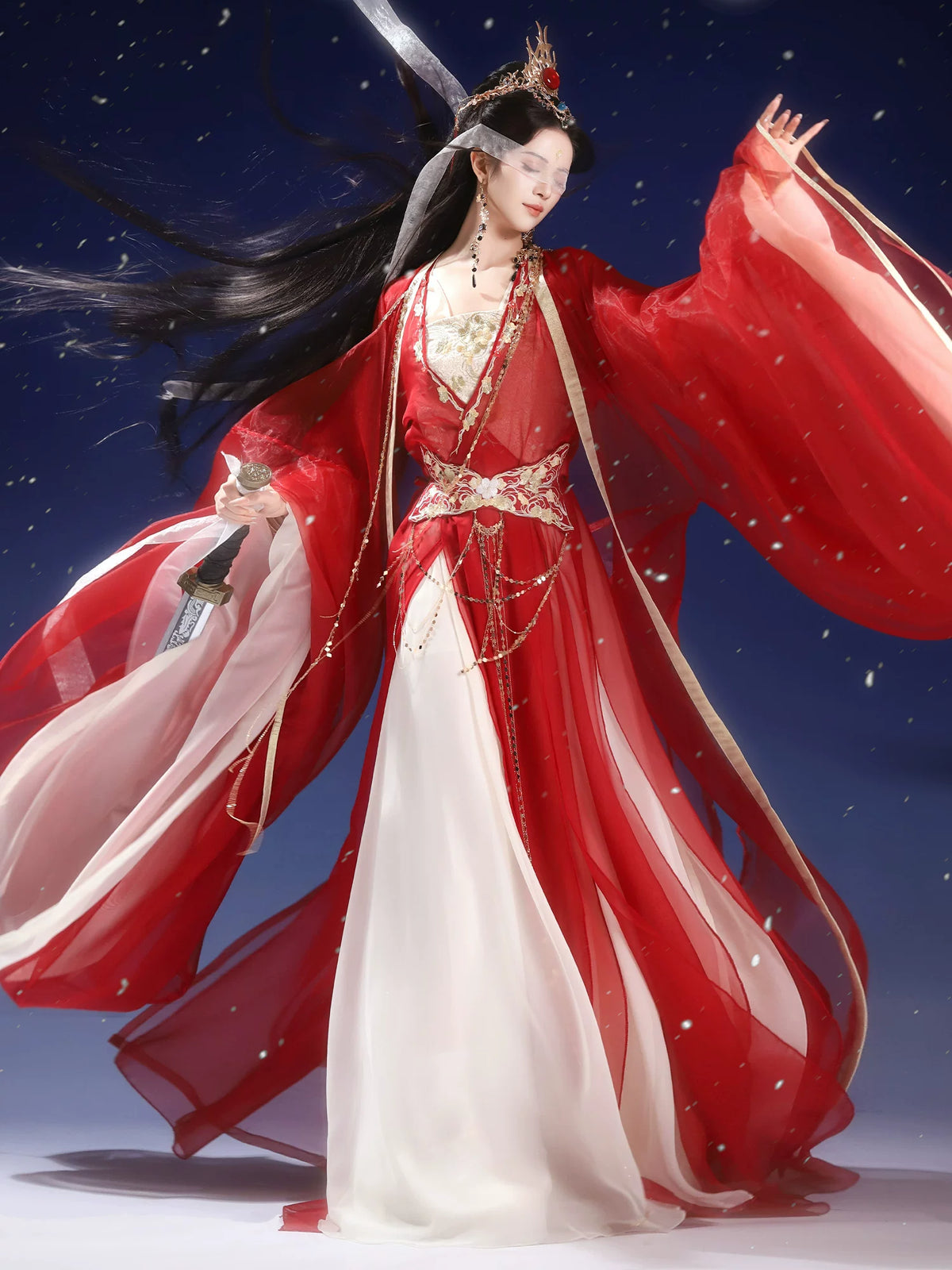
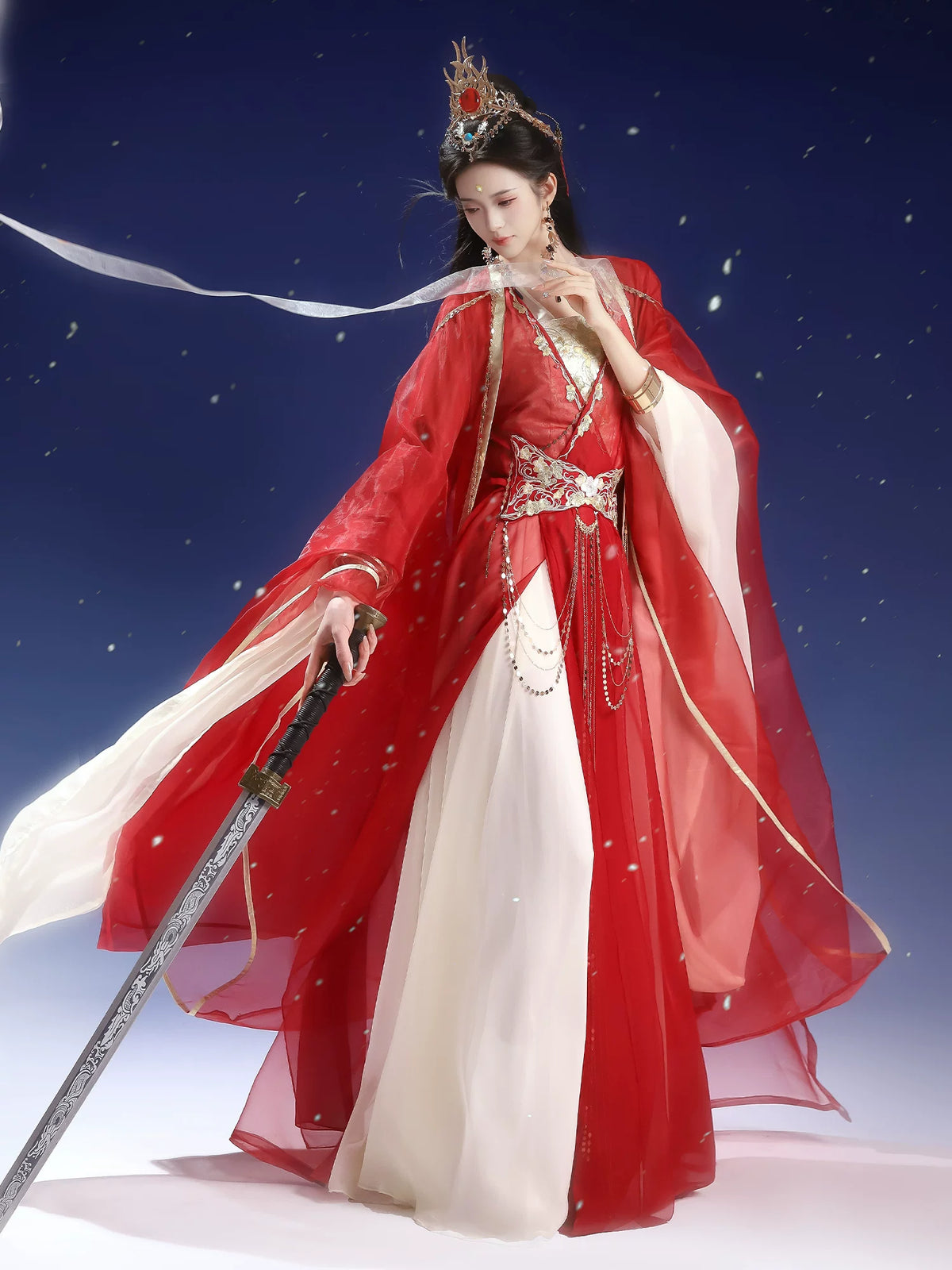
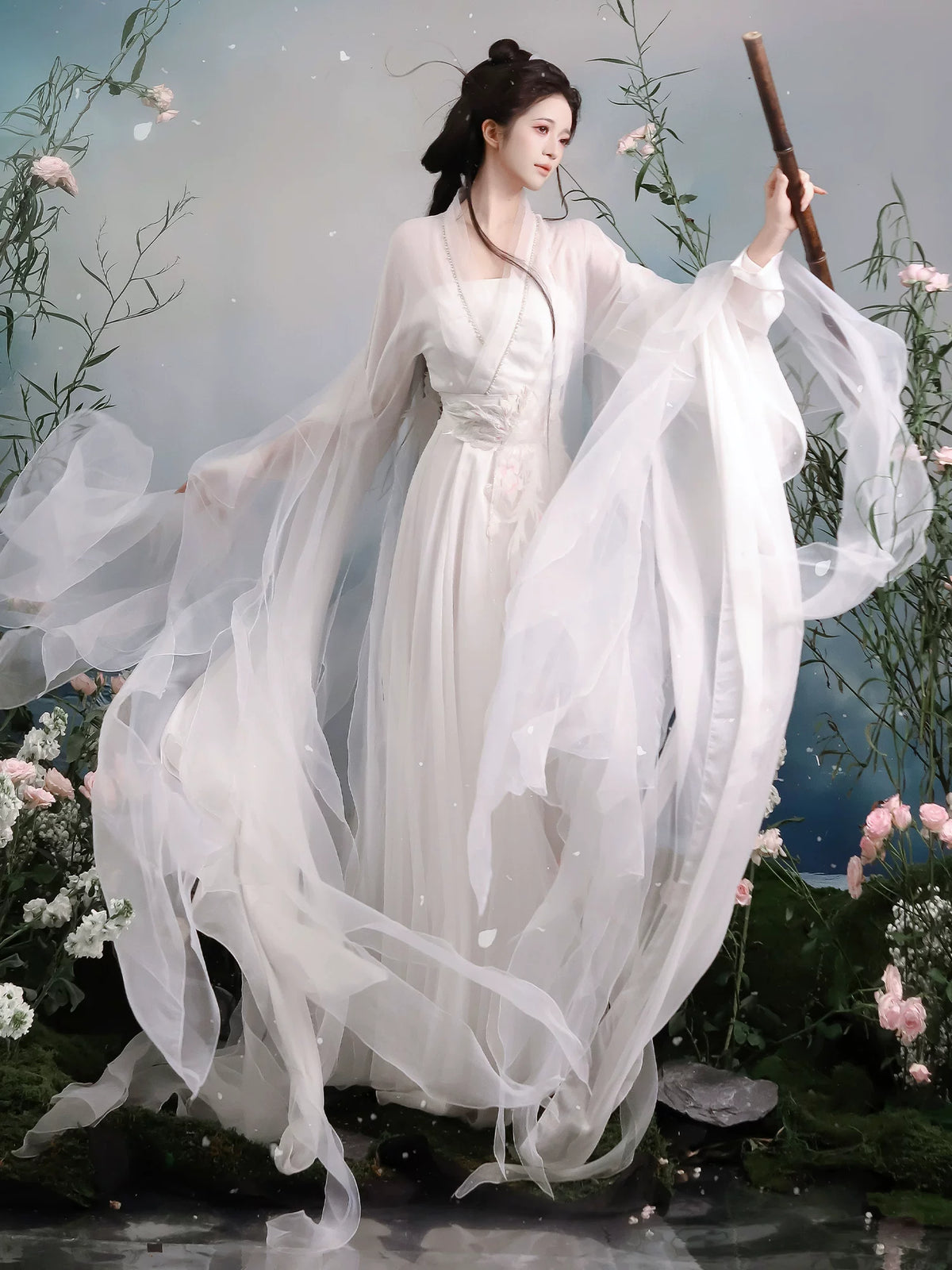
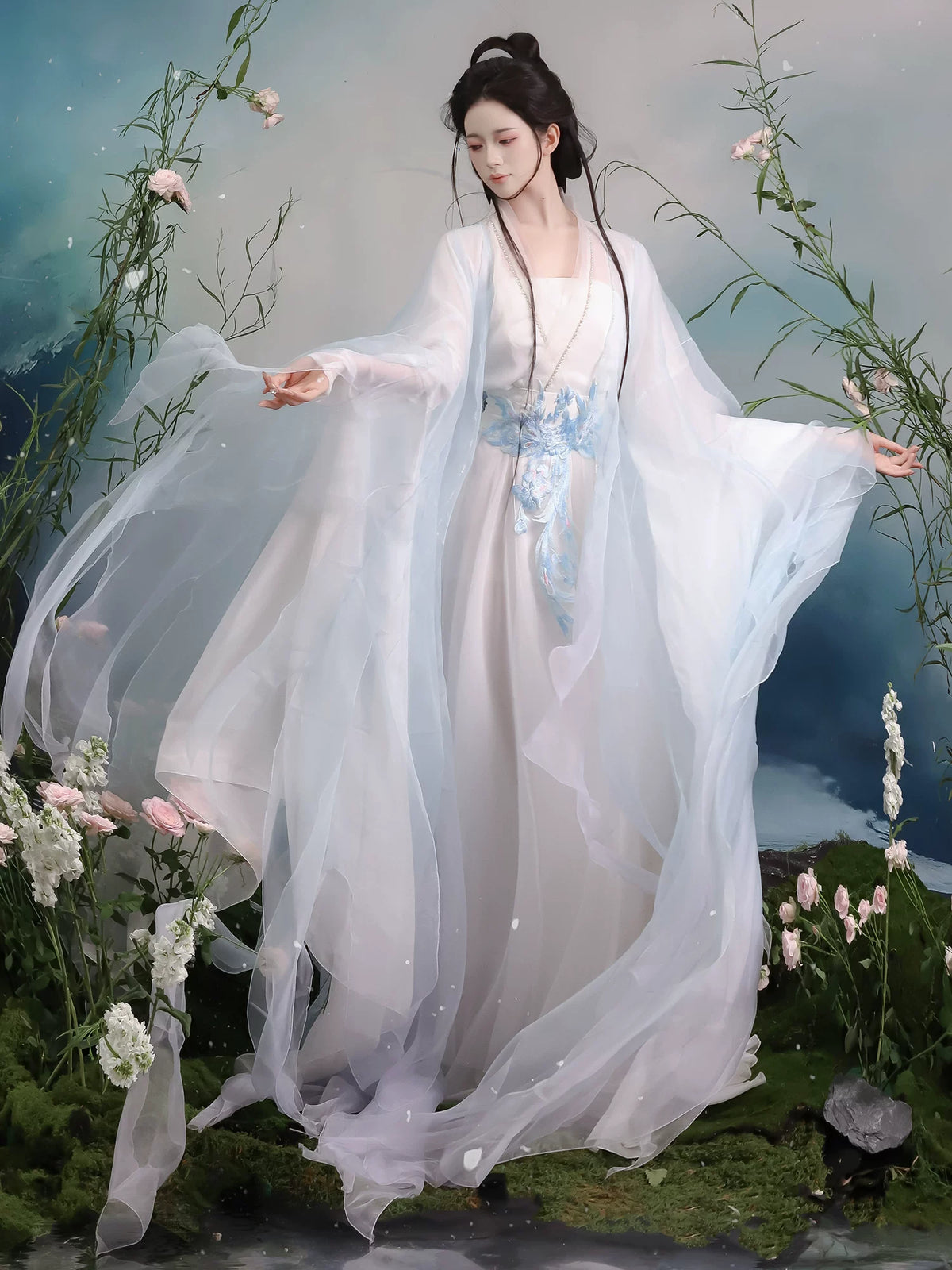
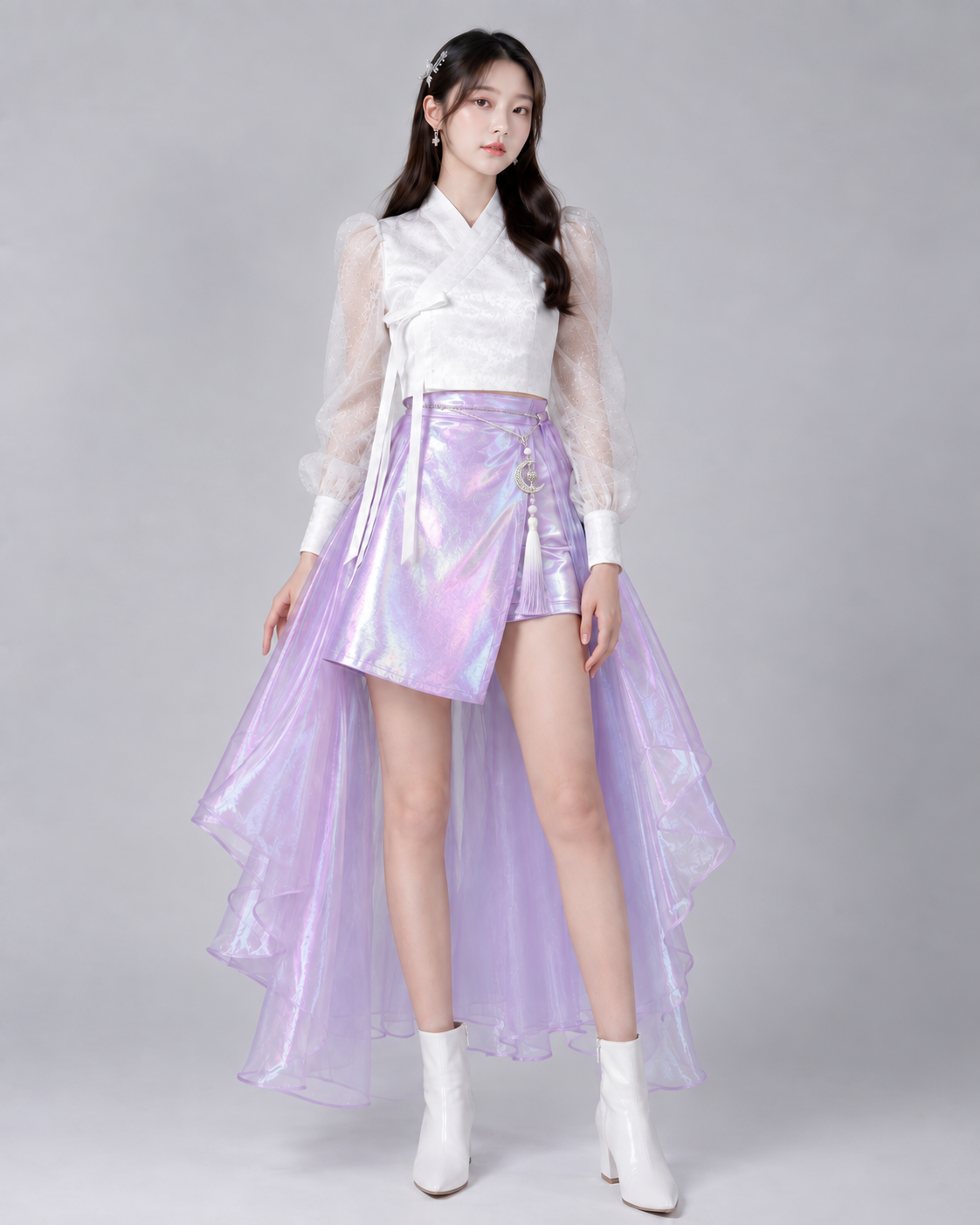
Hanfu Clothing Patterns: A Complete Visual Guide to Traditional Chinese Textile Art

When most people discover hanfu for the first time, they're drawn in by the silhouette — the flowing sleeves, the layered hems, the quiet elegance of a garment that has survived thousands of years. But look closer, and you'll find that the real story of hanfu is told in its patterns.
Hanfu clothing patterns are not decorative afterthoughts. They are a visual language — one that communicates dynasty, status, season, and meaning with every thread. Whether you're a first-time buyer or a seasoned collector, understanding these patterns will transform the way you see and choose hanfu.
This guide covers the most important hanfu clothing patterns, their historical roots, their symbolic meanings, and how they appear in modern hanfu today.
Ready to find a style you can wear?
Compare complete Hanfu looks or browse Mamian skirts for everyday and occasion outfits.
What Are Hanfu Clothing Patterns?
In the context of traditional Chinese dress, "patterns" (纹样, wényàng) refers to the decorative motifs woven, embroidered, or printed onto fabric. These patterns were never arbitrary — in imperial China, specific motifs were regulated by law, with certain designs reserved exclusively for the emperor, the nobility, or specific court ranks.
Today, hanfu enthusiasts and designers draw freely from this rich visual vocabulary, reinterpreting classical patterns for modern daily wear, photography, and cultural events. Hanfu clothing patterns generally fall into several broad categories:
- Floral and botanical motifs — plum blossom, lotus, peony, chrysanthemum
- Animal and mythological motifs — dragon, phoenix, crane, deer, koi
- Geometric and structural motifs — cloud collar, wave patterns, interlocking rings
- Landscape and narrative motifs — mountains, rivers, pavilions, seasonal scenes
- Auspicious symbol motifs — shou (longevity), fu (fortune), ruyi (as you wish)
1. The Dragon Pattern (龙纹, Lóng Wén)

Dragon motifs have a long history in Chinese decorative art. Their form and use varied by period, and some court-dress systems regulated particular dragon designs and insignia. Modern garments use dragon imagery much more freely, so a contemporary product motif should not be treated as evidence of historical rank.
In modern hanfu, dragon patterns appear most frequently on Tang suit jackets, men's robes, and ceremonial hanfu. The dragon is typically rendered in gold or silver thread embroidery against a deep ground colour — navy, black, or imperial yellow.
👉 Browse related styles: Tang suit shirts and Chinese jackets
2. The Phoenix Pattern (凤纹, Fèng Wén)

The phoenix (凤凰, fènghuáng) is the feminine counterpart to the dragon — a symbol of grace, virtue, and renewal. In imperial China, the phoenix was the emblem of the empress, appearing on her ceremonial robes in elaborate multi-coloured embroidery.
Unlike the Western phoenix, the Chinese fenghuang is a composite creature — combining the beak of a rooster, the body of a mandarin duck, the tail of a peacock, and the legs of a crane. Its appearance was considered an omen of peace and prosperity.
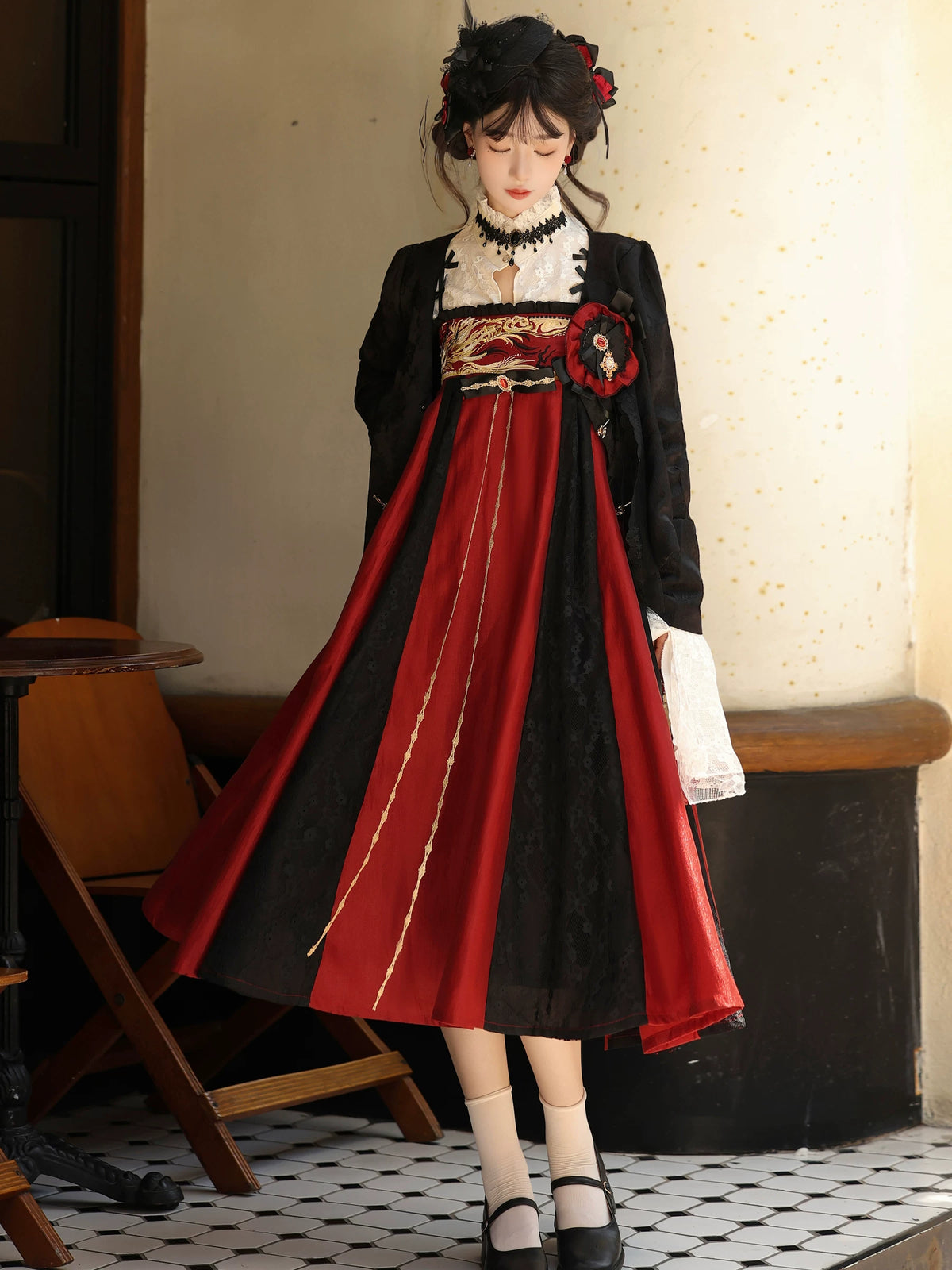
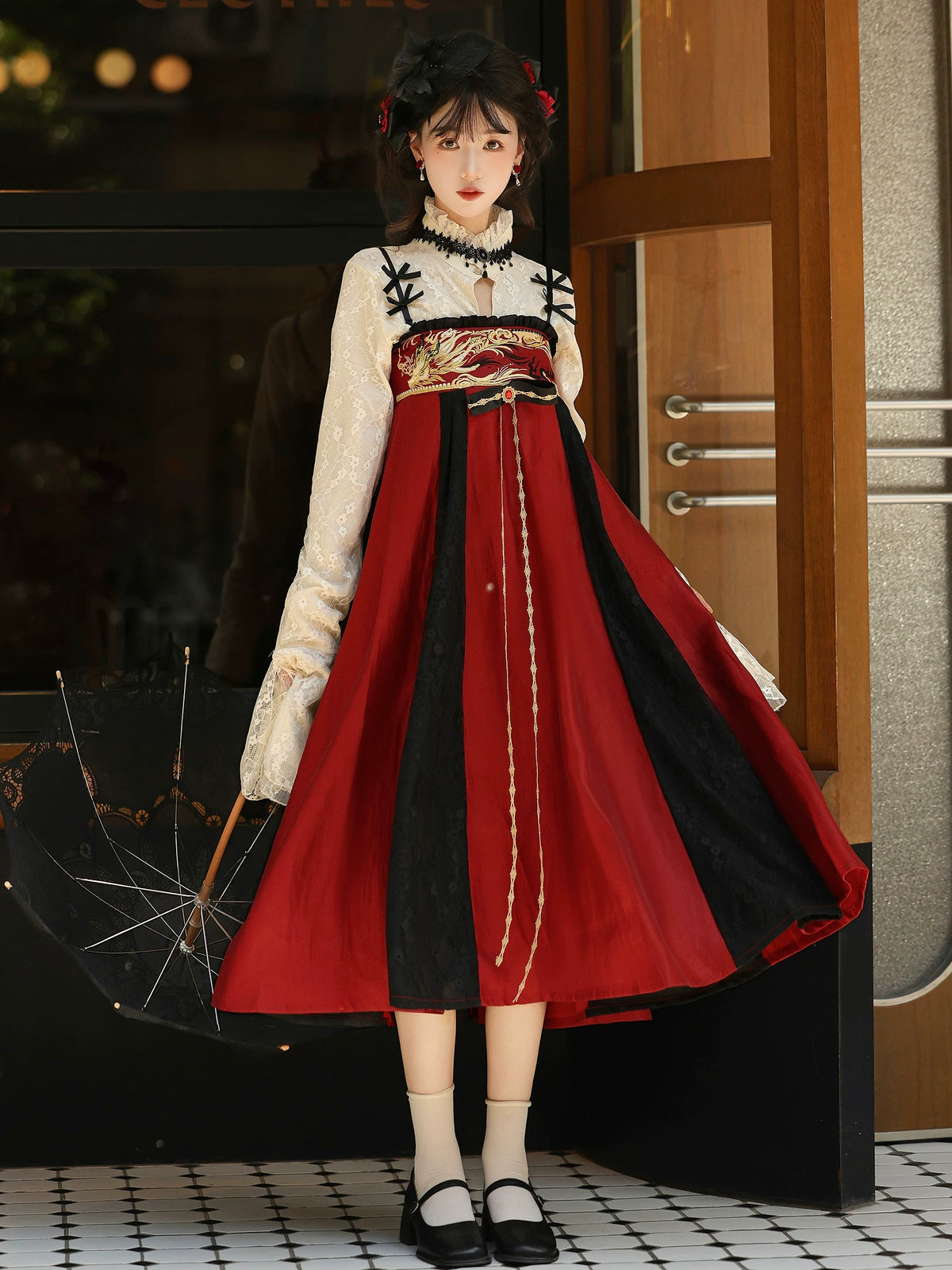
In contemporary hanfu, phoenix patterns appear most often on wedding hanfu, ceremonial robes, and festival dress — typically rendered in red, gold, and green.
👉 Shop the look: Perfect Harmony Bridal Hanfu – New Chinese Style Mamian Skirt Wedding Dress
3. The Horse-Face Skirt Pattern (马面裙纹样)

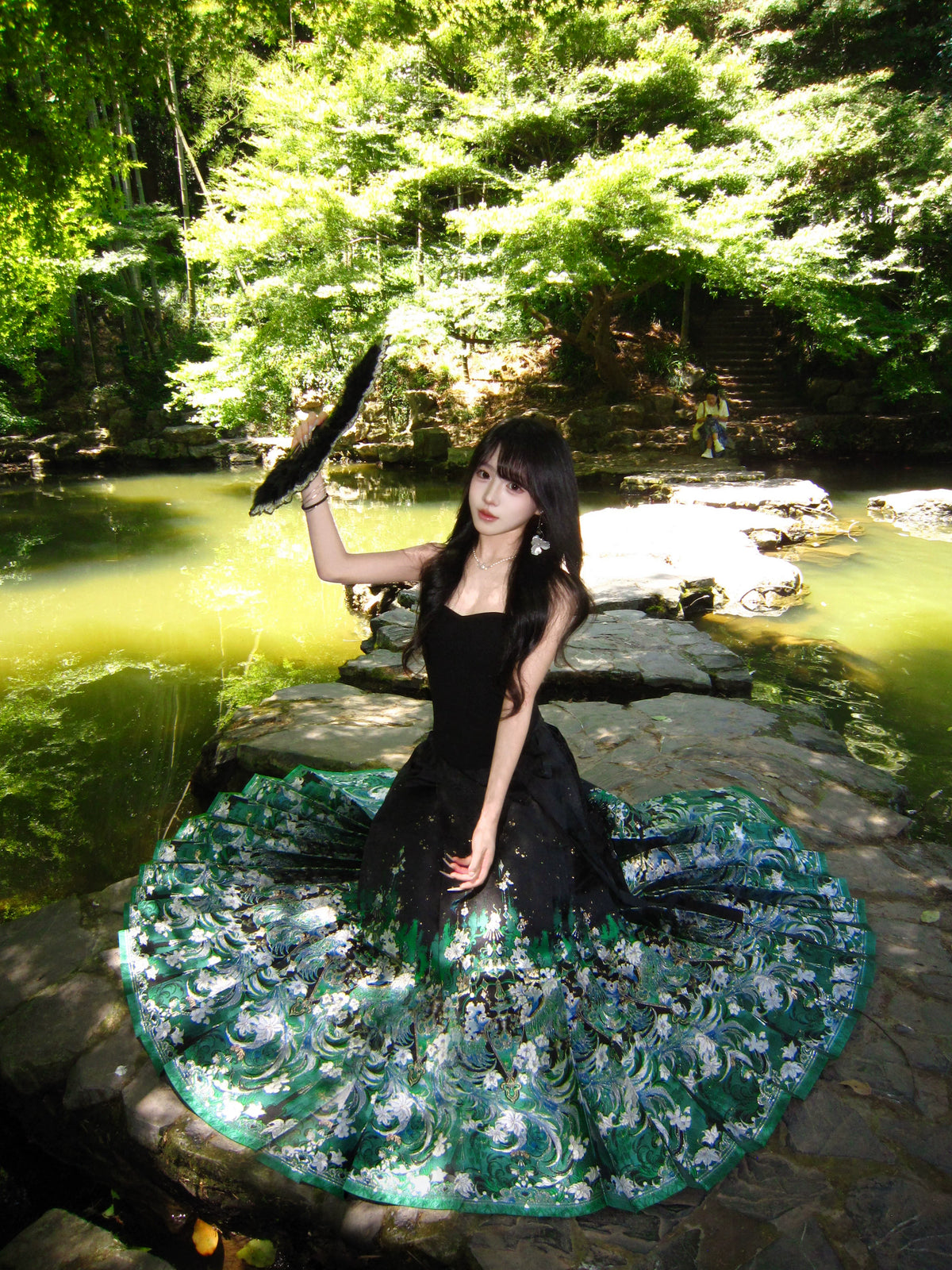
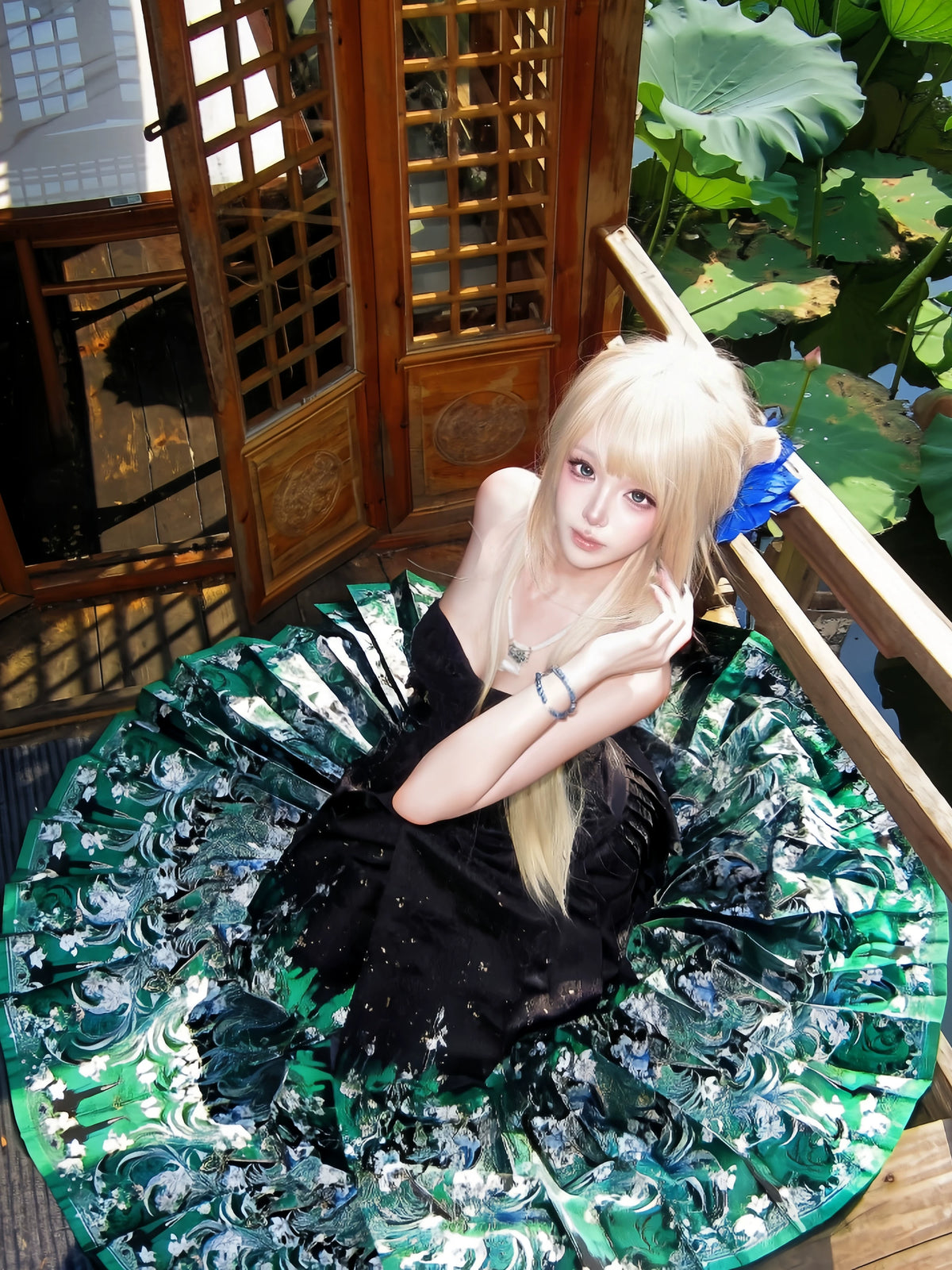
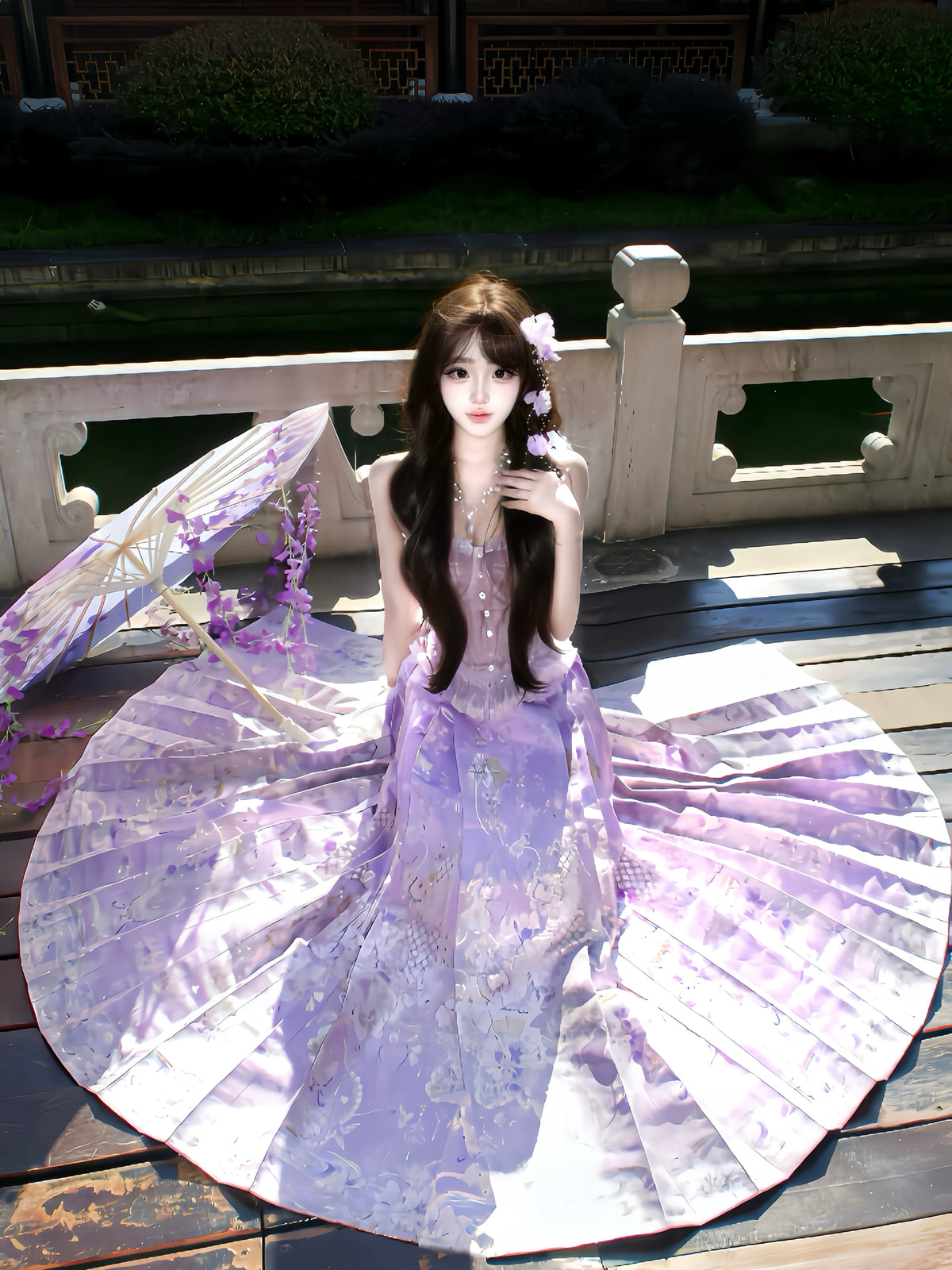
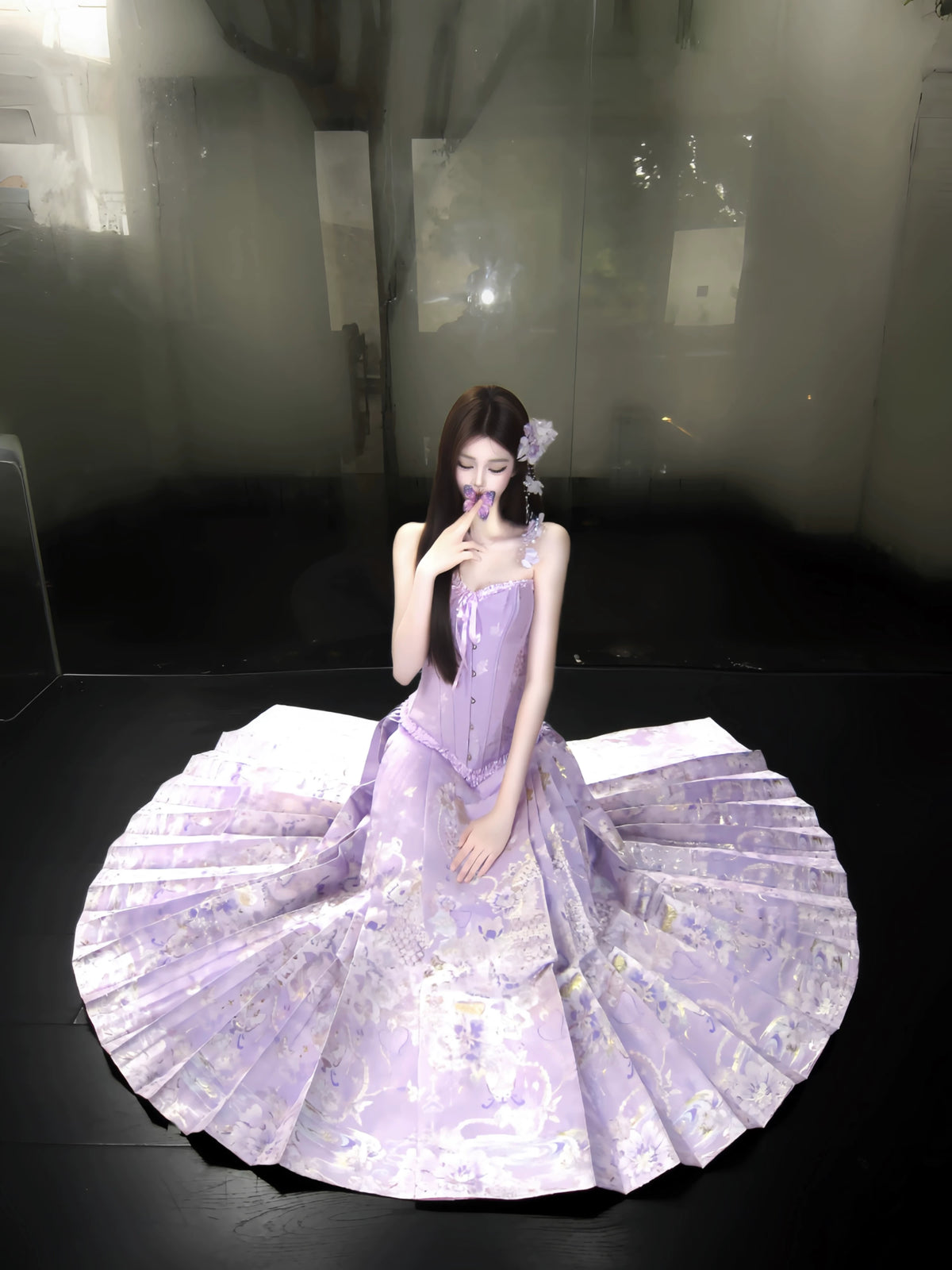
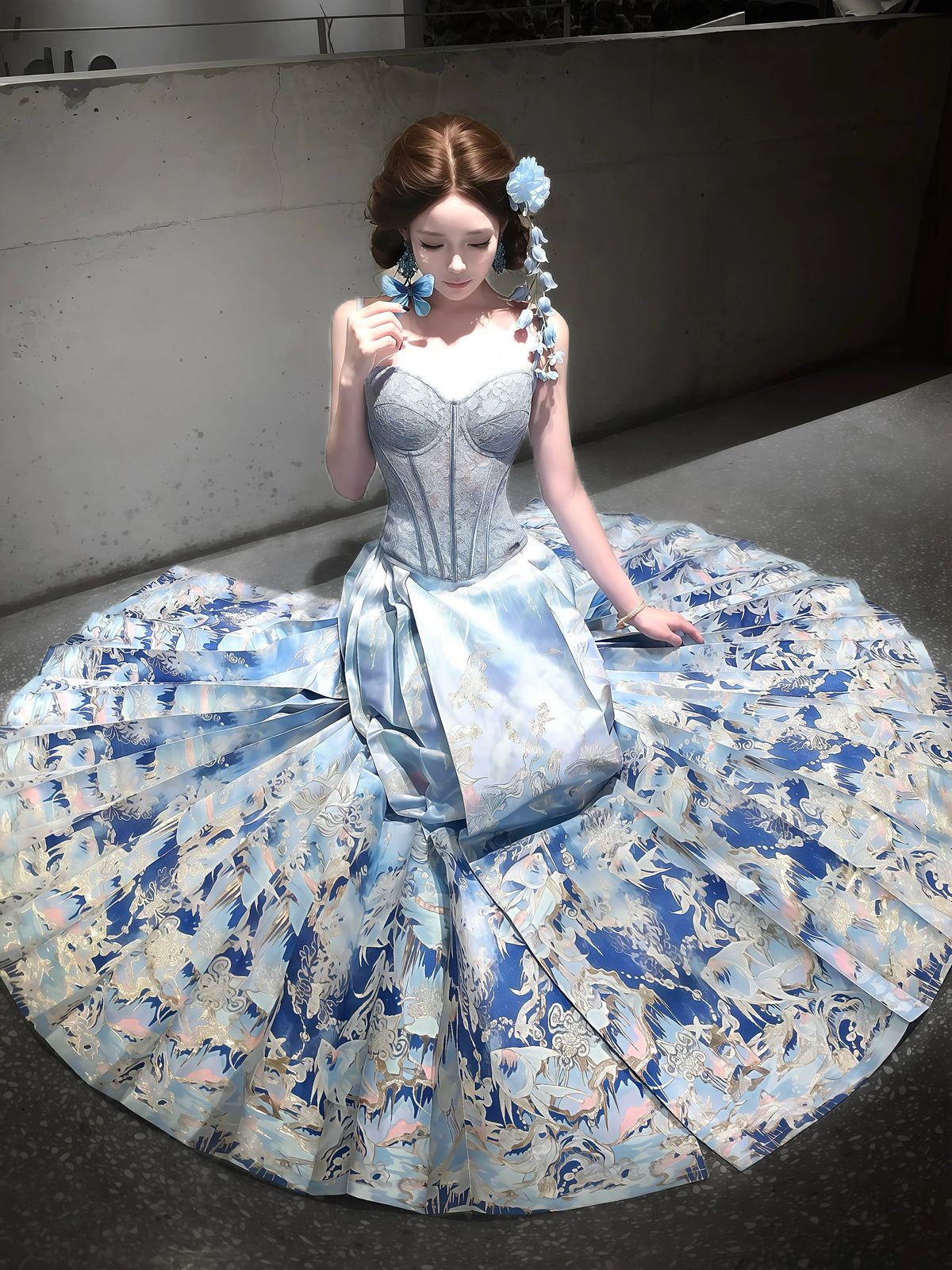
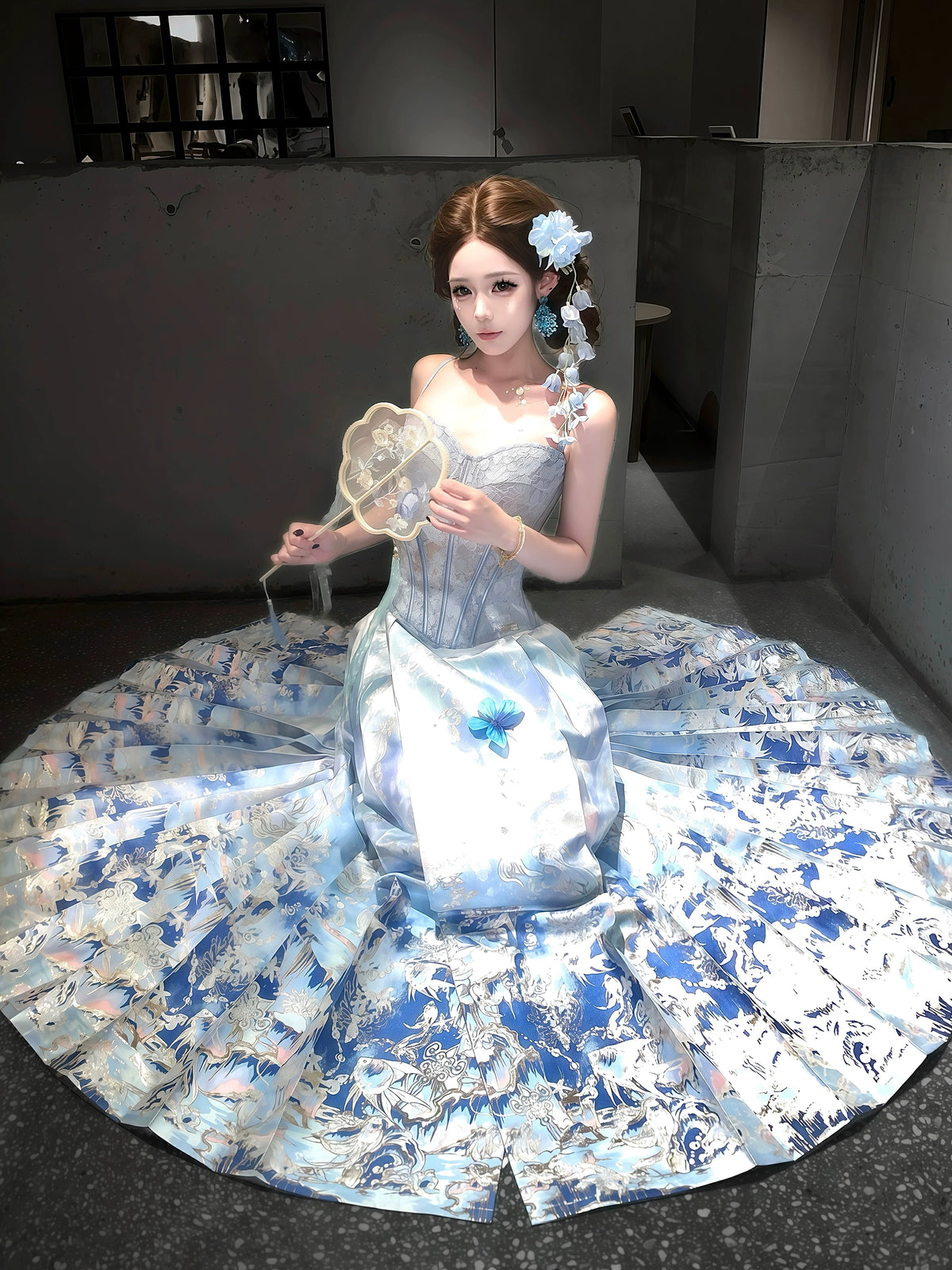
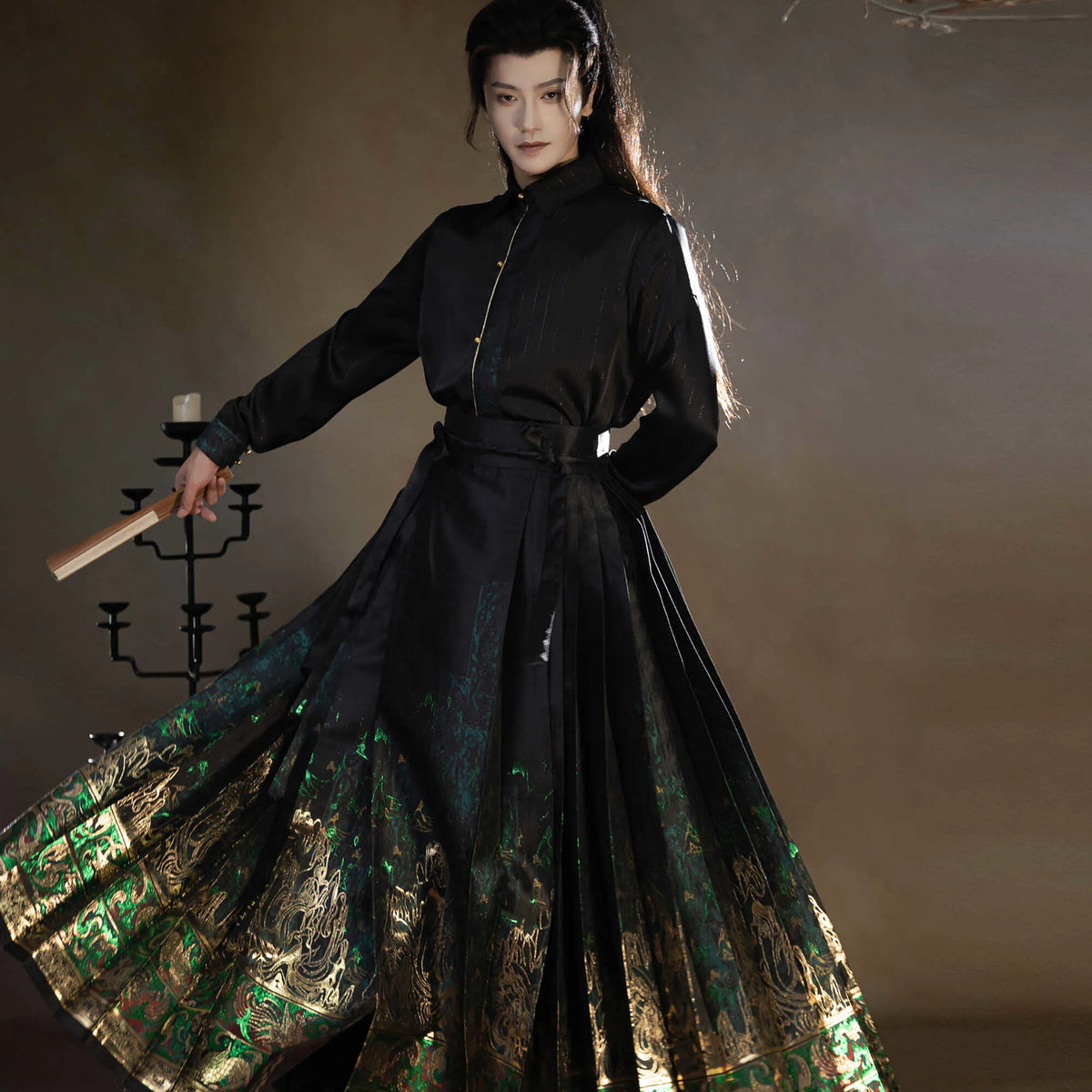
The horse-face skirt (马面裙, mǎmiàn qún) is one of the most distinctive garment forms in Ming and Qing dynasty hanfu — and its patterns are among the most visually complex in the entire hanfu tradition. The skirt is named for its characteristic front and back panels (the "horse faces") — flat, unpleated sections that serve as the primary canvas for decorative patterns.
Common horse-face skirt patterns include:
- Gold-thread or metallic-effect woven fabrics — sellers may describe these as “woven gold” or “gold yarn,” but the fibre content and construction vary by product. Check the individual specification rather than assuming a named historical technique.
- Jacquard brocade (提花) — woven patterns with raised texture, often featuring geometric or floral motifs
- Embroidered narrative scenes — landscapes, figures, or auspicious symbols worked in fine thread
- Wave and cloud borders (海水江崖纹) — stylised waves rising into mountain peaks, symbolising the eternal cycle of nature
👉 Browse related styles: Mamian and horse-face skirts
4. Cloud and Mist Patterns (云纹, Yún Wén)

Cloud motifs have a long history in Chinese decorative art and appear in many periods and media. On Hanfu and Hanfu-inspired clothing, you may encounter forms such as:
- Ruyi clouds (如意云纹) — a curling, mushroom-shaped cloud associated with good fortune
- Rolling clouds (卷云纹) — dynamic, spiralling forms that suggest movement and transformation
- Cloud collar (云肩) — a decorative collar piece shaped like four overlapping cloud petals
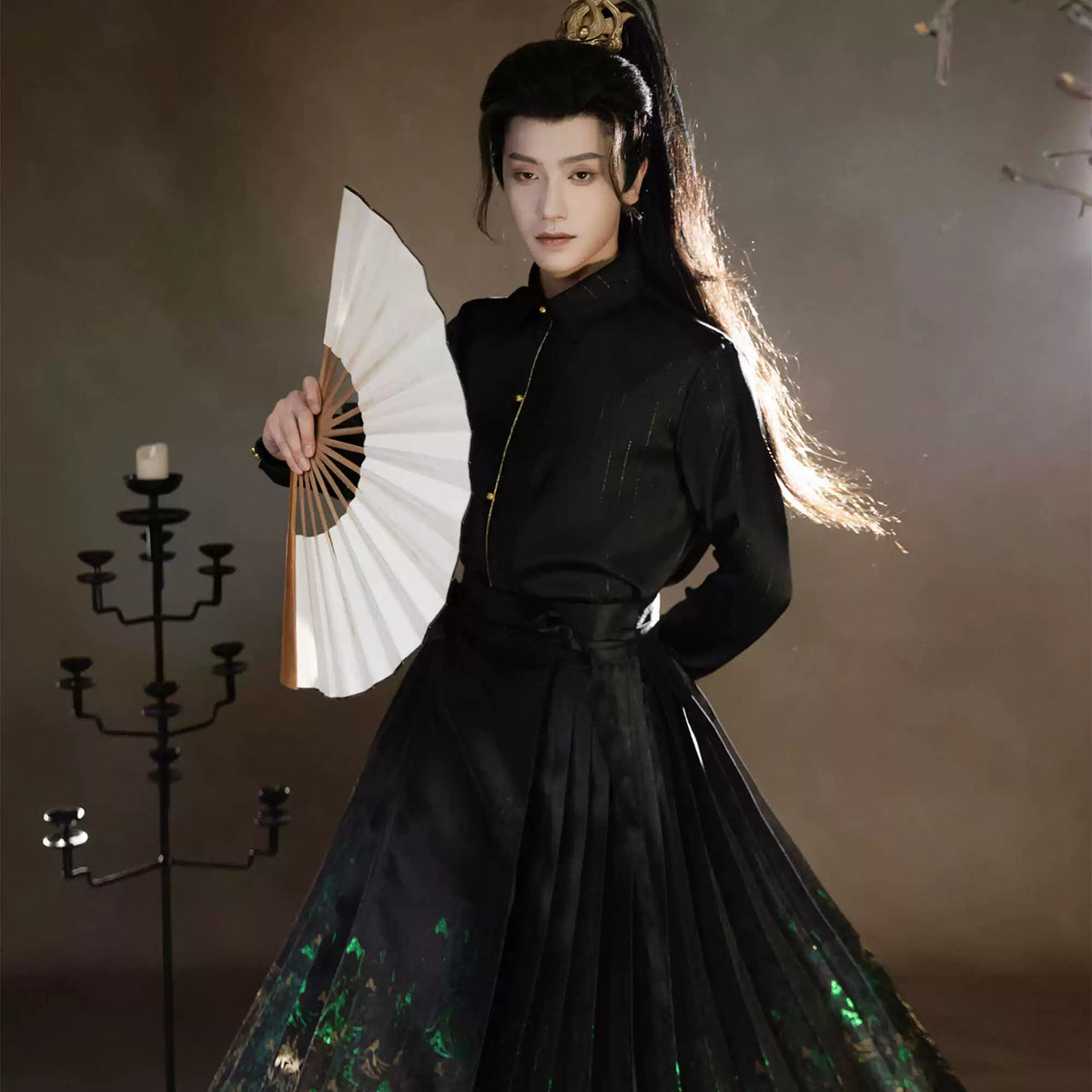
Cloud patterns are particularly associated with the xianxia (仙侠) aesthetic — the world of immortal swordsmen and celestial beings that has inspired a generation of hanfu enthusiasts through novels, dramas, and games.
👉 Shop the look: "Xiaoyao" – Men's Xianxia Hanfu 5-Piece Set | Black & White | Improved Ancient Style
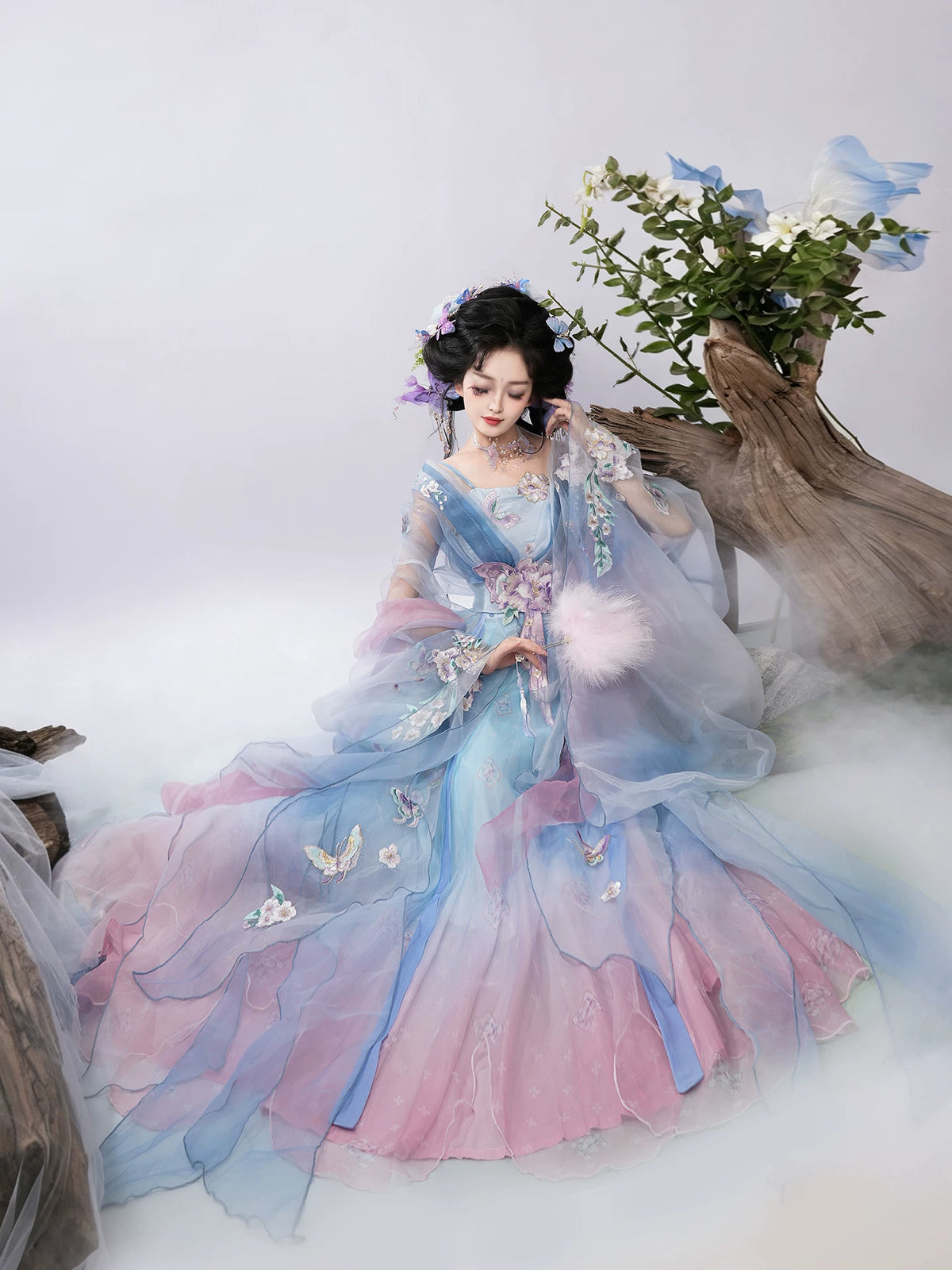
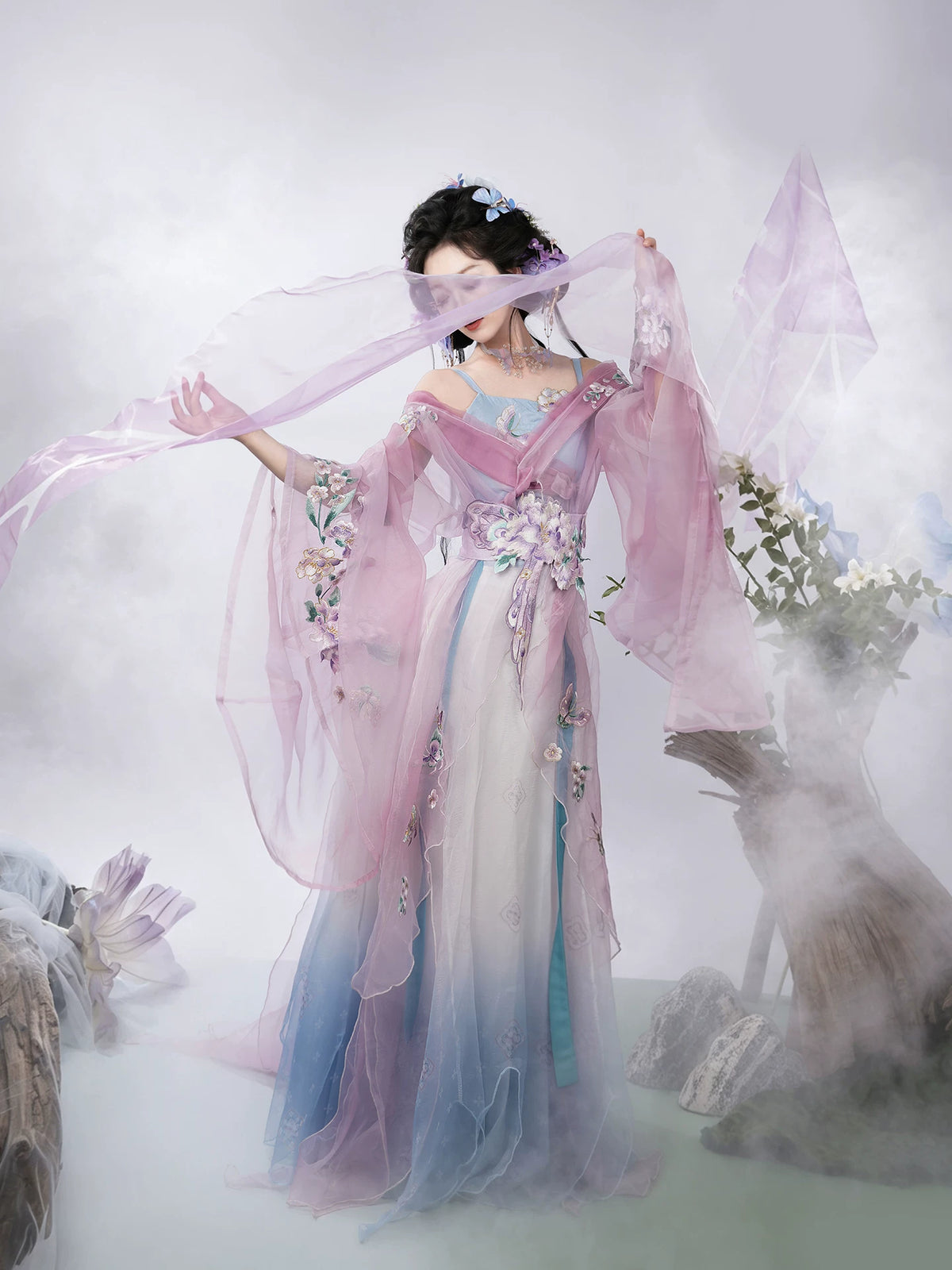
5. Floral Embroidery Patterns (花卉刺绣纹样)

Floral embroidery is perhaps the most universally beloved category of hanfu clothing patterns. Chinese embroidery (刺绣, cìxiù) is one of the world's great textile arts, with a history stretching back over 3,000 years. The four most significant flowers in Chinese textile tradition are:
- Peony (牡丹) — the "queen of flowers," symbolising wealth, honour, and feminine beauty. The most common motif in Qing dynasty court robes.
- Plum blossom (梅花) — a symbol of resilience and purity, blooming in winter against the snow. Associated with Song dynasty hanfu.
- Lotus (荷花) — a symbol of purity and spiritual elevation. Common in Buddhist-influenced garments.
- Chrysanthemum (菊花) — a symbol of longevity and autumn, associated with the scholar's life.
👉 Shop the look: "Moon Cutting Cherry" – Large Sleeve Hanfu 4-Piece Set | Heavy Embroidery Fairy Style
6. Brocade and Jacquard Patterns (织锦纹样)

While embroidery applies pattern to the surface of fabric, brocade (锦) and jacquard (提花) weave pattern directly into the fabric structure itself — creating a textile with a raised, three-dimensional quality. The most celebrated Chinese brocades include:
- Yunjin (云锦) — Nanjing Yunjin brocade is included on UNESCO’s Representative List of the Intangible Cultural Heritage of Humanity. UNESCO describes its use of materials including silk, gold thread and peacock-feather yarn. Read the UNESCO entry.
- Shu brocade (蜀锦) — from Sichuan, known for vivid colours and geometric patterns.
- Song brocade (宋锦) — from Suzhou, characterised by fine, dense weave and subtle colour gradations.
👉 Shop the look: Elegant Brocade | Ming Dynasty Jacket & Mamian Skirt
👉 Lumingxi Original | Tang Swingneck Shirt & Jacquard Skirt
7. The Wave and Mountain Border (海水江崖纹)

One of the most architecturally striking patterns in Chinese textile history, the sea-water and mountain-cliff border (海水江崖纹) appears at the hem of imperial robes as a band of stylised waves rising into diagonal mountain peaks. The pattern symbolises the eternal cycle of nature — the sea and the mountains, the yin and the yang, the endless renewal of the world.
Today, this pattern appears on formal hanfu, Tang suit jackets, and ceremonial robes — often rendered in contrasting colours at the hem for maximum visual impact.
👉 Shop the look: Lumingxi Original | Tang Swingneck Shirt & Jacquard Skirt | New Chinese Style Daily Hanfu
How to Choose Hanfu Patterns for Your Occasion
For daily wear — choose subtle, small-scale patterns: fine embroidery, tonal jacquard, or sheer gold yarn weaves.
For photography and events — choose bold, high-contrast patterns: large-scale embroidery, dramatic brocade, or statement prints. These photograph beautifully in natural light.
For formal occasions — choose auspicious patterns (phoenix, peony, wave-and-mountain borders) in rich, celebratory colours. Red and gold for weddings; deep blue or green for banquets.
For size selection — prioritize the garment measurements, intended ease and placement of large motifs rather than relying on a universal “flattering” rule. Check the selected variant because tops, skirts and complete sets may be sold separately.
Caring for Patterned Hanfu
Care depends on the fibre, dye, construction and embellishment of the individual garment. Follow the product care label or seller instructions first; do not apply one cleaning method to every embroidered or brocade item.
- Confirm whether decorative pieces and detachable accessories should be removed before cleaning.
- Avoid snagging raised embroidery, metallic yarn and beadwork.
- Test heat and cleaning products cautiously when the fibre composition is not stated.
- If the listing does not provide enough care information, ask before washing or ironing.
The Living Language of Hanfu Patterns
Hanfu clothing patterns are not museum pieces. They are a living visual language — one that continues to evolve as designers, artisans, and wearers find new ways to interpret ancient motifs for contemporary life. When you choose a hanfu with a particular pattern, you are participating in a conversation that has been ongoing for thousands of years.
Ready to compare garments? Browse women's Hanfu or men's traditional Hanfu, then check the selected product's material, measurements and included pieces before ordering.
Frequently Asked Questions
What is the most common pattern on hanfu?
There is no single motif that applies to every period or Hanfu style. Floral motifs such as peony, plum blossom, lotus and chrysanthemum are widespread, but their use and meaning depend on the garment, period and design context.
What do dragon patterns on hanfu mean?
Dragon motifs can evoke power, auspiciousness and historical court imagery, but meaning varies by period and design. A dragon on a modern Hanfu-inspired garment does not by itself indicate historical rank or ceremonial authenticity.
Can I wear patterned hanfu for everyday use?
Yes, when the garment's cut, fabric and care needs suit the setting. For everyday wear, compare movement, sleeve length, opacity, washing requirements and whether the listing sells a full set or an individual component.
What does “woven gold” mean in a product listing?
It usually indicates a gold-coloured or metallic-effect yarn woven into the textile, but it does not establish a specific fibre, percentage of metal or historical technique. Check the individual product specification and ask for clarification when composition matters.