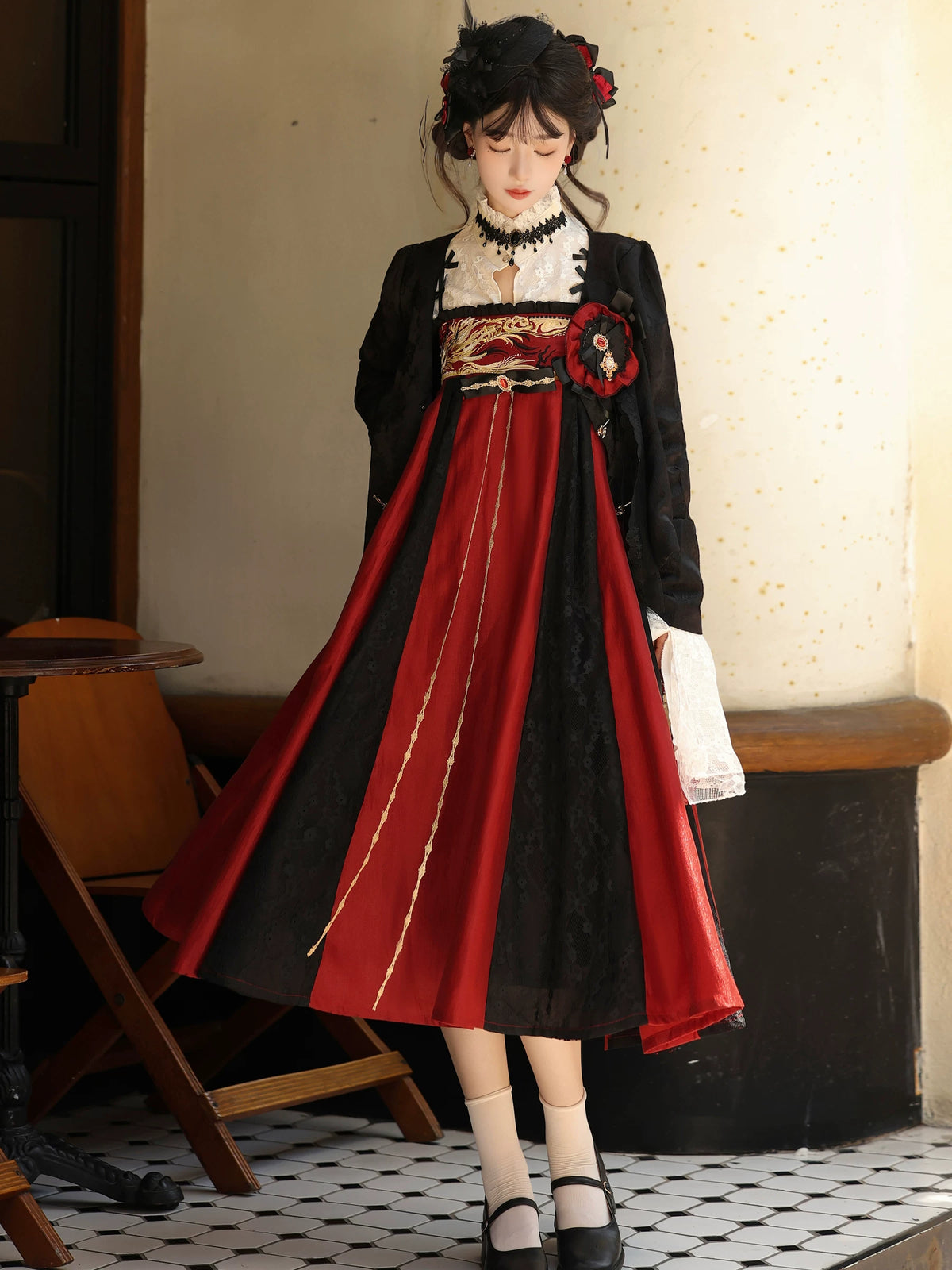
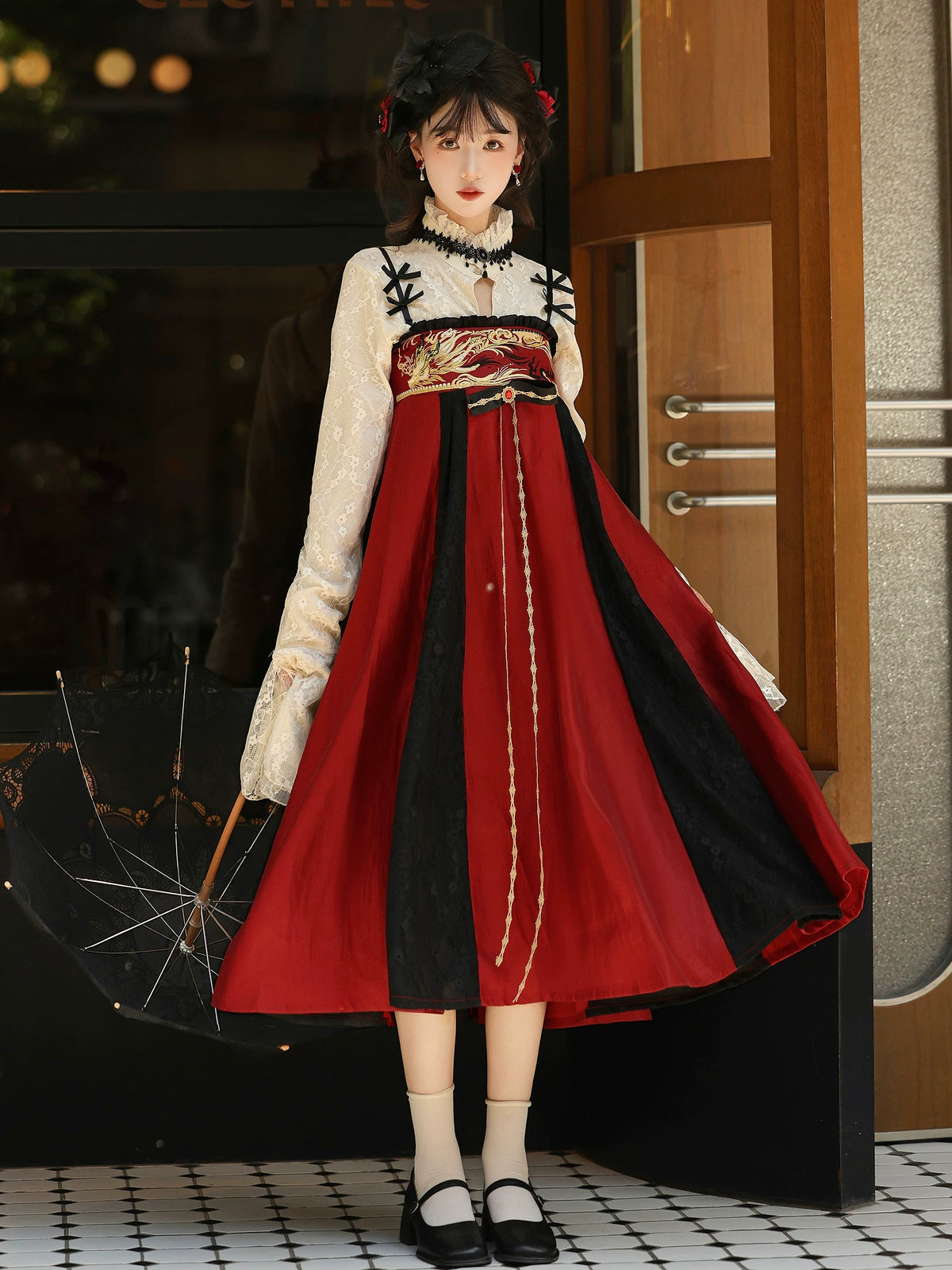
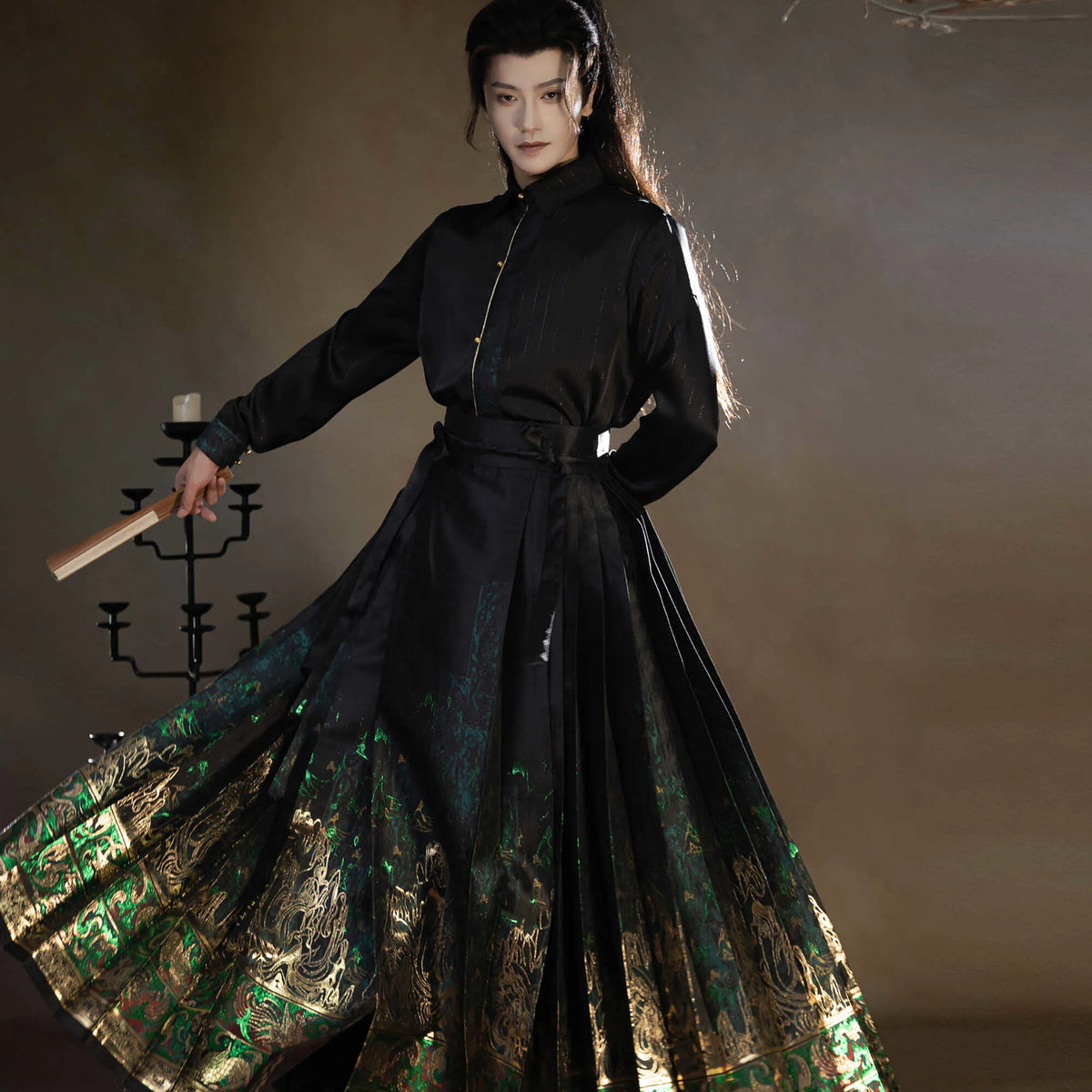
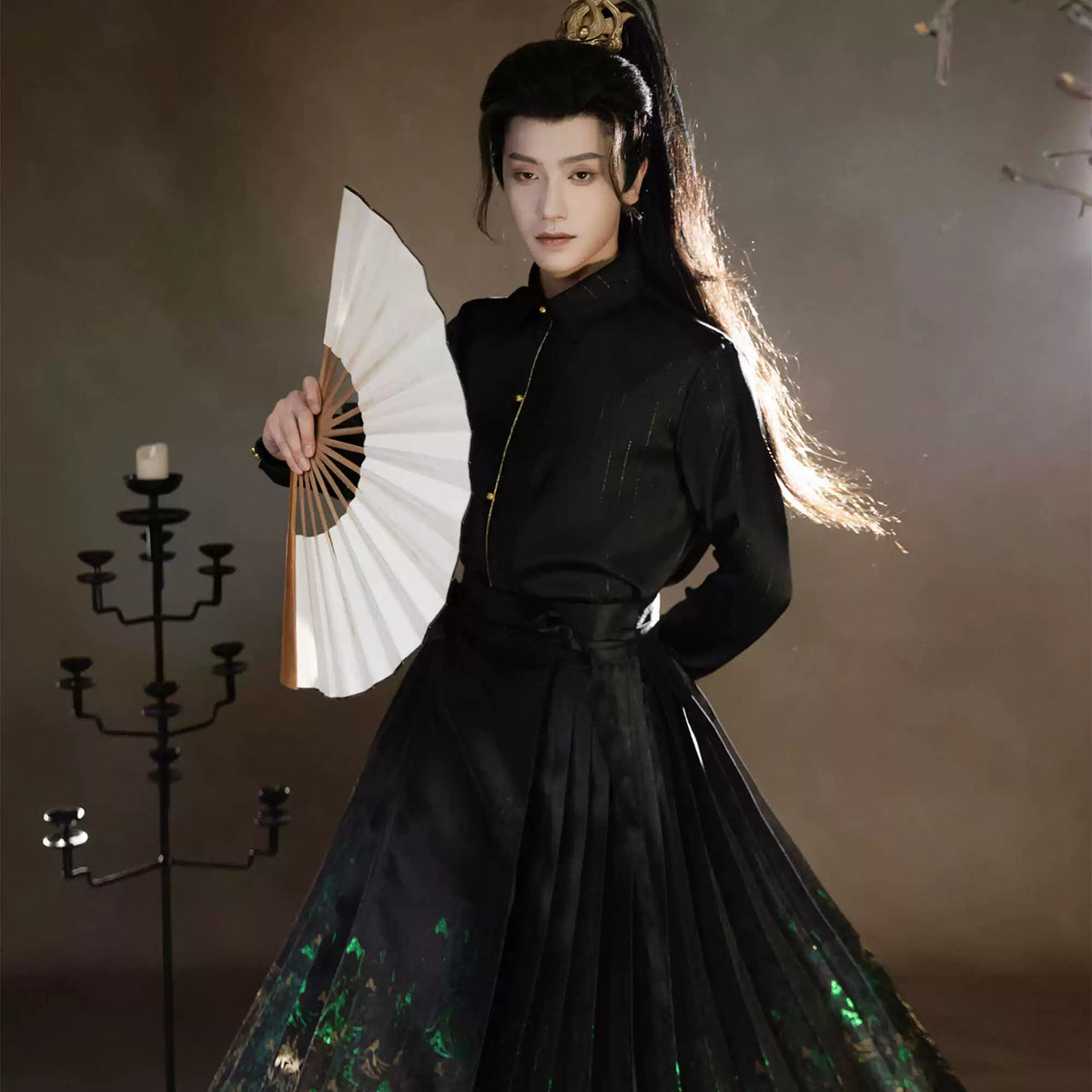
There is a moment — usually somewhere between the third episode of The Untamed and the first time you see a man in a perfectly draped white robe holding a sword against a misty mountain backdrop — when something shifts. You stop watching and start wanting.
That is the pull of male hanfu. And once you feel it, it doesn't let go.
Male Hanfu includes garments based on documented Chinese clothing traditions, modern revival pieces, and designs made for performance or fantasy styling. These categories can overlap visually, but they are not interchangeable: product descriptions should be checked for dynasty references, construction details, included pieces, and whether the design is historical-style, modern, or xianxia-inspired.
Whether you are completely new to hanfu or already deep in the rabbit hole, this guide covers everything: the history, the styles, how to wear it, and how to find the right set for you. Browse our full men's hanfu collection →
What Is Male Hanfu?
Hanfu (汉服) means "clothing of the Han people" — the dominant ethnic group of China. It refers to the traditional dress worn by Han Chinese men and women from the earliest dynasties through to the mid-17th century, when the Qing dynasty mandated a change in dress codes that effectively ended the tradition for nearly four centuries.
Common construction cues found in many Hanfu garments include:
- Cross-collar (交领) — in common youren construction, the wearer's left collar panel overlaps the right, creating an opening toward the right. Not every Hanfu garment uses a cross-collar; round-collar and other forms also exist.
- Sash fastening (系带) — garments are tied rather than buttoned, creating the characteristic flowing silhouette.
- Layered construction — inner robes, outer robes, and accessories are worn in combination, each layer adding depth and intentionality to the overall look.
The result is a silhouette unlike anything in Western menswear: generous, flowing, and deeply considered. Wide sleeves that catch the wind. Hems that sweep the ground. A presence that is simultaneously powerful and serene.
A Brief History: How Male Hanfu Evolved
Male hanfu did not emerge fully formed. It evolved across dynasties, each era adding its own aesthetic vocabulary to a continuous tradition.
Han Dynasty (206 BCE – 220 CE) established the foundational forms: the shenyi (深衣), a one-piece robe combining upper and lower garments, worn in deep, saturated colours with minimal decoration. Dignified, austere, and unmistakably powerful.
Tang Dynasty (618 – 907 CE) opened China to the world, and male dress reflected it. The round-collar robe (圆领袍) absorbed Central Asian influences while remaining distinctly Chinese. Tang men dressed with confidence — structured silhouettes, bold colours, and a dynamic energy that still resonates today.
Song Dynasty (960 – 1279 CE) pulled back toward scholarly restraint. The zhiduo (直裰) — a straight-cut robe in muted, natural tones — became the uniform of the educated gentleman. Understated, refined, and quietly authoritative.
Ming Dynasty (1368 – 1644 CE) brought male hanfu to its most elaborate expression. Wide sleeves, structured collars, rich embroidery, and layered construction created a visual language of ceremony and status that remains the primary reference point for hanfu revival today.
The 4 Main Styles of Male Hanfu Today
The modern hanfu revival has produced four distinct aesthetic directions for men. Understanding them helps you find your own entry point into the tradition.
1. Xianxia (仙侠) — The Immortal Swordsman
This is the aesthetic that launched a thousand Pinterest boards. Inspired by the immortal swordsmen of Chinese fantasy dramas — The Untamed, Word of Honor, Ashes of Love — xianxia male hanfu is cinematic, ethereal, and completely committed to drama.
Key elements: floor-length layered robes, wide water sleeves (水袖) that billow and flow, translucent outer layers, monochrome or two-tone palettes (white and blue, black and silver), and embroidery motifs drawn from mythology — cranes, dragons, pine trees, clouds.
This is the style for photography, cultural events, and anyone who has ever wanted to look like they could summon lightning. Shop xianxia male hanfu →
2. Warrior (武将) — Power and Ceremony
Where xianxia is ethereal, warrior hanfu is grounded and commanding. Structured silhouettes, heavy embroidery, metallic accents, and a colour palette built around black, deep red, and gold create a look of absolute authority.
Dragon motifs dominate — full-body dragon embroidery on a structured black robe is one of the most striking expressions of male hanfu available today. This is the style that stops a room.
Warrior hanfu works for photography, cosplay, cultural performances, and anyone who wants to make an entrance that people remember. Shop warrior male hanfu →
3. Scholar (文人) — Refined Everyday Elegance
The scholar aesthetic draws directly from Song and Ming dynasty literati dress: structured but relaxed, decorated but restrained, confident without being theatrical. This is male hanfu for the man who wants to wear it in real life — not just for photography.
Champagne, cream, sage green, and dusty blue are the signature colours. Embroidery is present but considered — a dragon roundel on the chest, cloud patterns at the hem, subtle ink-wash prints on the outer robe. A jade belt or braided sash completes the look.
This direction may suit shoppers who prefer restrained colours, structured layers, and less theatrical decoration. Compare the live assortment rather than assuming every scholar-style listing has the same fabric, construction, or level of historical accuracy. Shop scholar-style male Hanfu →
4. Minimalist (简约) — Clean Lines, Maximum Impact
Not every man wants embroidery. The minimalist direction strips male hanfu back to its essential elements: the cross-collar construction, the wide sleeves, the flowing silhouette — and lets the cut and fabric do the work.
White, pale mint, and soft grey are the dominant tones. A simple braided cord belt. A folding fan. Nothing more. The result is a look that photographs beautifully in natural settings and wears comfortably for extended periods.
This is the entry point for men who are drawn to hanfu aesthetically but want something they can actually wear to a cultural event, a photoshoot, or a festival without feeling overdressed. Shop minimalist male hanfu →
How to Wear Male Hanfu: A Practical Guide
Male hanfu is layered, and the layering follows a consistent logic regardless of style:
- Inner robe (中衣) — a lightweight base layer, usually white or pale-coloured, with a visible collar that frames the face.
- Main robe (外袍 / 上衣) — the primary garment that defines the style. This is what people see first.
- Outer robe (大氅 / 外套) — an optional over-layer for formal occasions, cooler weather, or maximum visual impact.
- Belt or sash (腰带) — tied at the waist to define the silhouette. Jade belts for formal looks; braided cord for everyday wear.
- Accessories — jade pendants (玉佩), hair accessories (发冠 / 发簪), folding fans, and footwear complete the look.
Collar direction: for common right-lapelled (youren, 右衽) cross-collar garments, the wearer's left panel overlaps the right. Follow the construction shown for the specific garment; not every Hanfu style uses the same collar form.
Choosing the Right Male Hanfu Size
Choose from the measurements and construction of the individual listing rather than from a universal body-type rule. Check chest and shoulder room for upper garments, waist structure for skirts or trousers, total garment length, sleeve reach, and the number of layers you plan to wear.
- For layered sets: allow enough ease for the inner and middle garments named in the selected variant.
- For long robes: compare garment length with your height and intended footwear so the hem does not create a trip risk.
- For performance or filming: check shoulder and sleeve mobility instead of choosing solely for a fitted appearance.
- For component listings: confirm whether the chosen option is one piece or a complete set before comparing price.
If a size chart omits units or a measurement needed for fit, confirm it before ordering. Do not assume that the same letter size is consistent across different makers.
Male Hanfu for Every Occasion
Photography & cosplay — xianxia and warrior sets with dramatic sleeves, heavy embroidery, and high-contrast colour palettes. These are designed to be seen and remembered.
Cultural events & festivals — scholar and minimalist sets in breathable fabrics. Comfortable enough to wear for hours, striking enough to stand out.
Weddings & ceremonies — coordinated couples' sets in deep red or black with gold embroidery. Browse our couples' hanfu collection →
Daily wear — improved hanfu (改良汉服) in cotton-linen blends. The silhouette and construction of traditional hanfu, adapted for modern comfort and practicality.
Care & Storage
Care requirements vary with fibre content, dye, embroidery, metallic decoration, structure, and detachable accessories. Use the care information on the individual product or garment label. When instructions are missing, confirm them before washing rather than applying one method to every Hanfu item.
- Separate removable belts, pendants, hairpieces, and rigid accessories before cleaning.
- Test uncertain dyes and avoid heat until the fabric and decoration requirements are known.
- Support heavy embroidery or long garments during storage so their weight does not distort the fabric.
- For rental listings, follow the stated return and cleaning terms instead of cleaning the garment automatically.
Why Male Hanfu Is Having Its Moment
Contemporary interest in male Hanfu is visible across cultural events, photography, historical-style fashion, performance, and online communities. The revival includes both careful historical research and imaginative modern or fantasy interpretations, so shoppers benefit from knowing which kind of garment they are viewing.
For international audiences discovering these styles through drama, social media, or photography, respectful interest starts with accurate naming: Hanfu is Chinese clothing, Hanbok is Korean clothing, and xianxia costume is a fantasy category rather than a synonym for historically documented Hanfu.
Ready to Find Your Style?
Whether you are drawn to the cinematic drama of xianxia, the commanding presence of warrior hanfu, the refined elegance of the scholar aesthetic, or the clean simplicity of minimalist robes — there is a male hanfu set that is right for you.
Browse the full men's hanfu collection at Yandan Hanfu →
Frequently Asked Questions
Is male hanfu only for Chinese men?
Not at all. Hanfu is worn and celebrated by people of all backgrounds worldwide. Cultural appreciation — approached with respect and genuine interest — is always welcome.
What is the difference between hanfu and a Tang suit?
“Tang suit” can refer to modern Chinese jackets commonly associated with stand collars and frog closures, while retail usage can also be inconsistent. Hanfu is the broader clothing tradition of the Han Chinese and includes multiple collar, robe, upper-garment, and lower-garment forms across different periods. Check the construction and period reference rather than relying on the English product label alone.
Can I wear male hanfu every day?
Some modern or improved Hanfu designs are intended for easier everyday styling, but fabric, weight, sleeve width, layering, and care vary by product. Choose from the actual measurements and materials listed rather than assuming every daily style is a cotton-linen blend.
What shoes do men wear with hanfu?
Traditional cloth shoes (布鞋) for formal looks, leather boots for warrior styles, or clean white sneakers for daily improved hanfu. The key is keeping footwear simple and unobtrusive.
How do I know which size to order?
Use the size chart available on the individual listing and check chest, shoulder, waist, garment length, sleeve reach, and layering room as applicable. If units or essential measurements are missing, confirm them before ordering; letter sizes are not necessarily consistent between makers.
Explore Song-style outfits for men
For a closer look at one dynasty-inspired direction, read our Song dynasty clothing guide for men. It pairs museum reference points with current layered outfits, explains set-versus-separate options, and helps you choose optional scholar headwear.
Where to compare men's Hanfu before ordering
Compare traditional men's Hanfu for robe and layered outfit options, or modern men's Hanfu for contemporary styling. Check each selected option for the garments included, its measurements and its material description; collection names do not establish the construction or contents of every outfit.
When should I order men's Hanfu for an event overseas?
Yandan offers free worldwide shipping with import duties included. Ready-stock items normally dispatch within 3–5 days; made-to-order and preorder items generally require 3–4 weeks before dispatch. Delivery transit starts afterward and varies by destination. Read the shipping policy and contact us with your destination and event date before ordering if timing is essential.