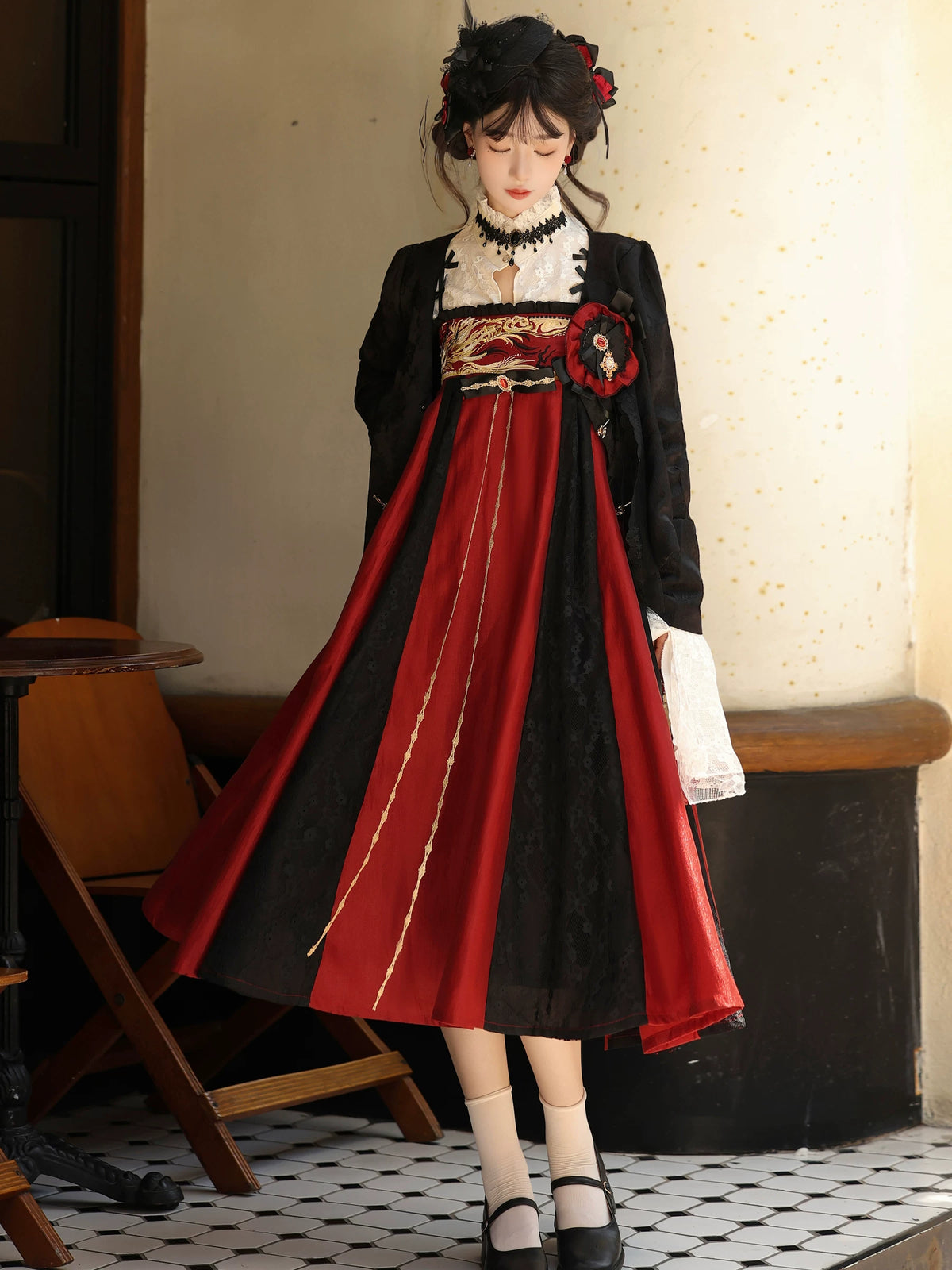
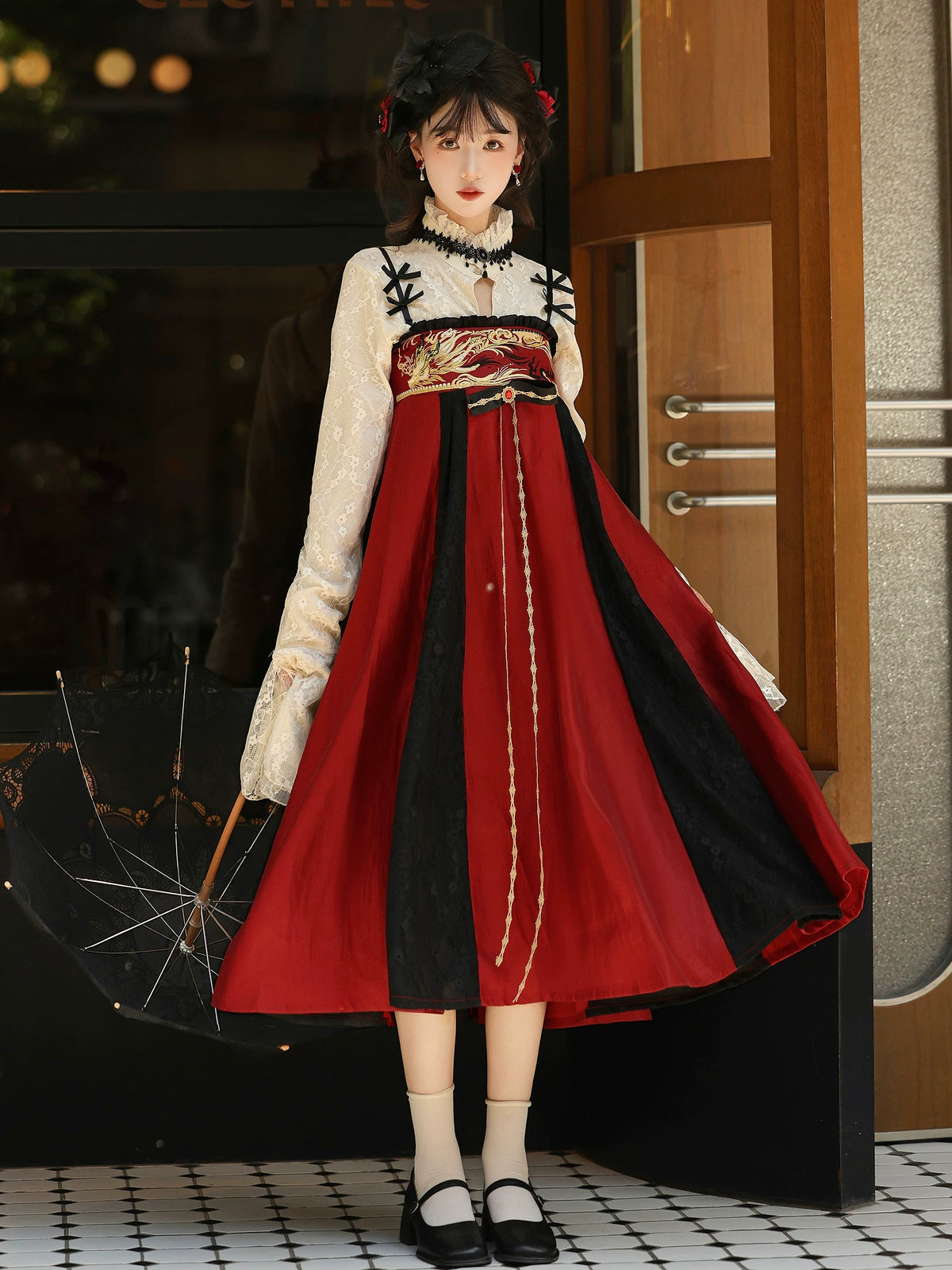
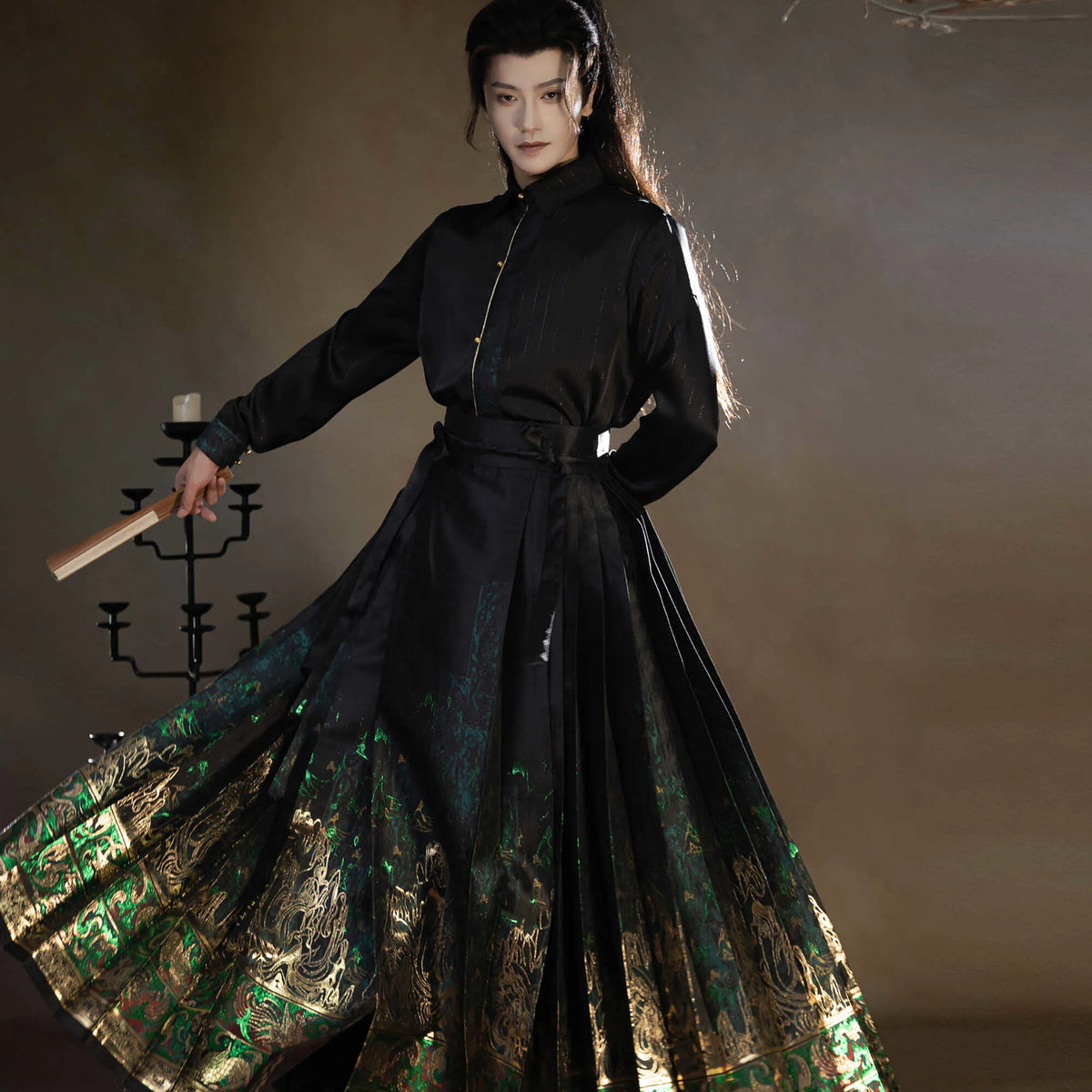
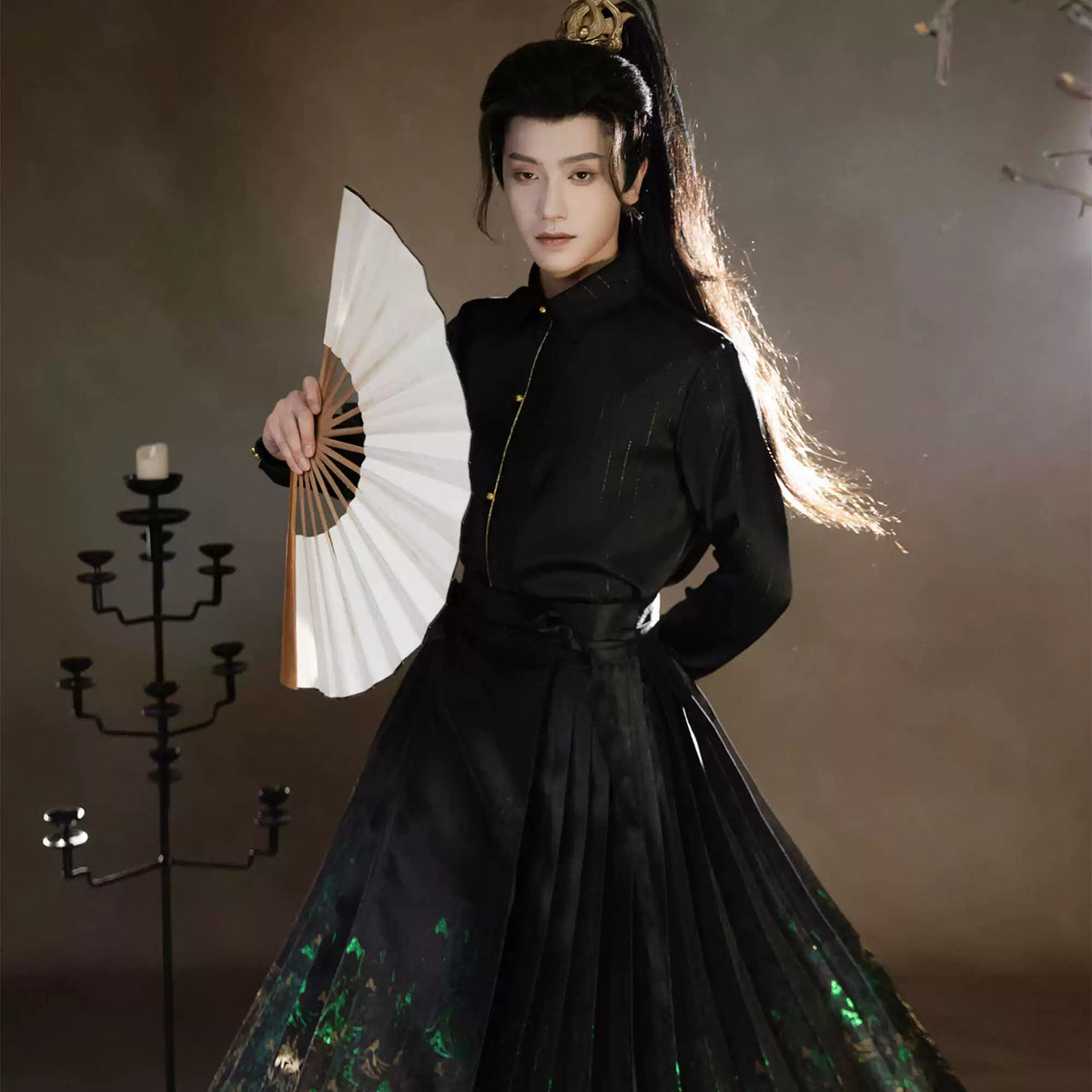
Practical Guide · 5 Occasions · All Hanfu Types
Hanfu Is Not Just
for Photoshoots.
It Is for Your Life.
Most people who want to buy hanfu talk themselves out of it with the same thought: "It’s too dramatic for everyday life." This guide exists to prove that thought wrong — one occasion at a time.
🌸 Part One: Breaking the “Hanfu = Photoshoot Prop” Myth
Here is the most common thing people say before buying their first hanfu: "I love it, but where would I even wear it?" It is a reasonable question. And it has a better answer than most people expect.
Hanfu is not cosplay. It is not a costume. It is a category of clothing with the same range as any other wardrobe — casual pieces for everyday wear, elegant pieces for special occasions, and ceremonial pieces for the moments that matter most. The problem is not that hanfu is unwearable. The problem is that most people have only ever seen the most elaborate version of it, photographed in a garden, and assumed that was the whole story.
The truth about types of hanfu:
- 👚 There is a hanfu for your morning commute — and it looks like a stylish outfit, not a costume.
- ☕ There is a hanfu for your afternoon date — soft, elegant, and more memorable than any dress.
- 🌄 There is a hanfu for your travel photos — the kind that stops the scroll.
- 🎊 There is a hanfu for every festival — when wearing it is not dramatic, it is exactly right.
- 💍 There is a hanfu for the biggest day of your life — and it will mean more than any Western alternative.
By the end of this guide, you will know exactly which type of hanfu belongs in each part of your life. Let’s start with the one you will wear most.
🌿 Occasion 1: Daily Commute & Campus Life
Scenes: Going to class, heading to the office, running errands, grocery shopping
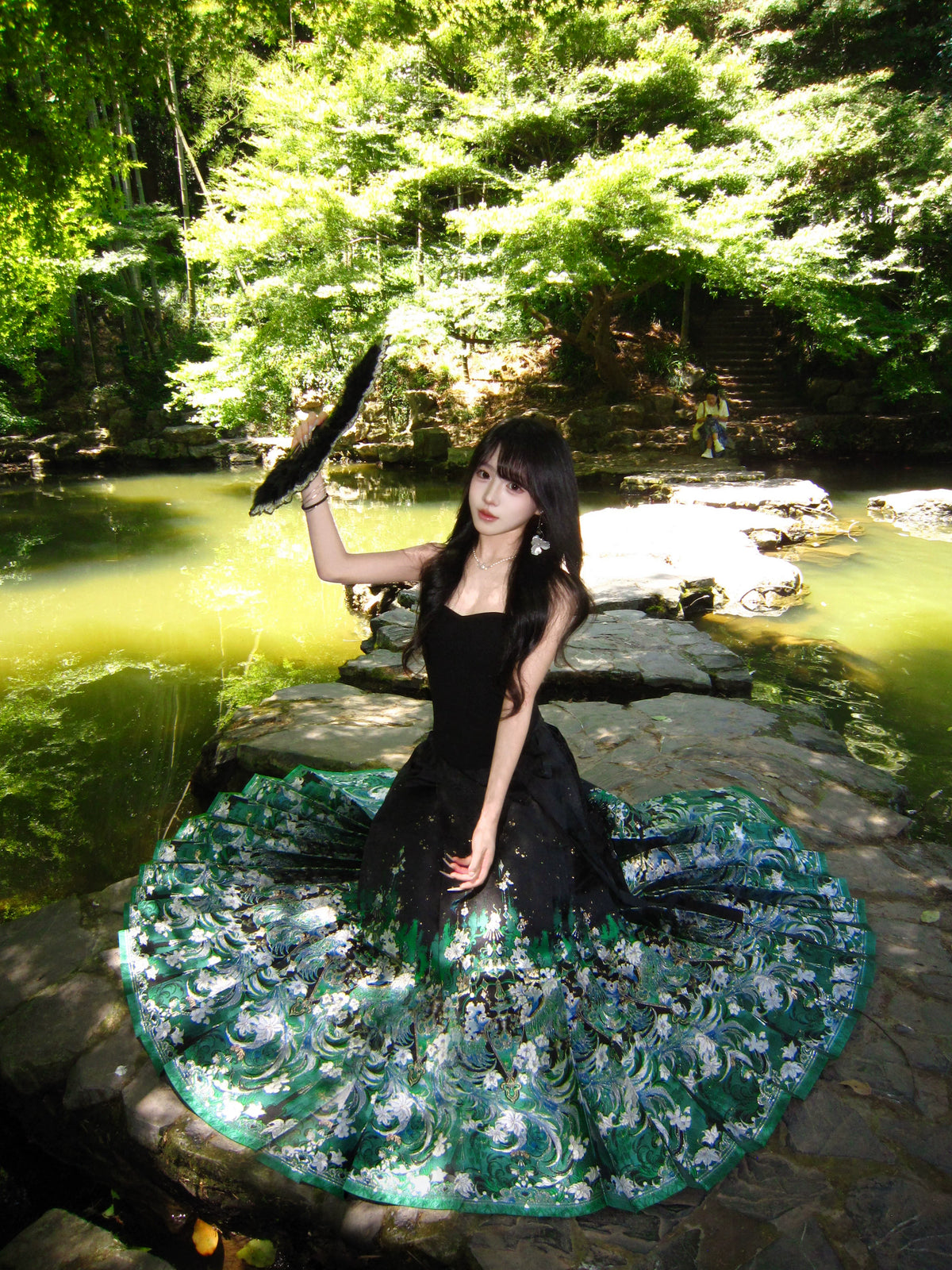
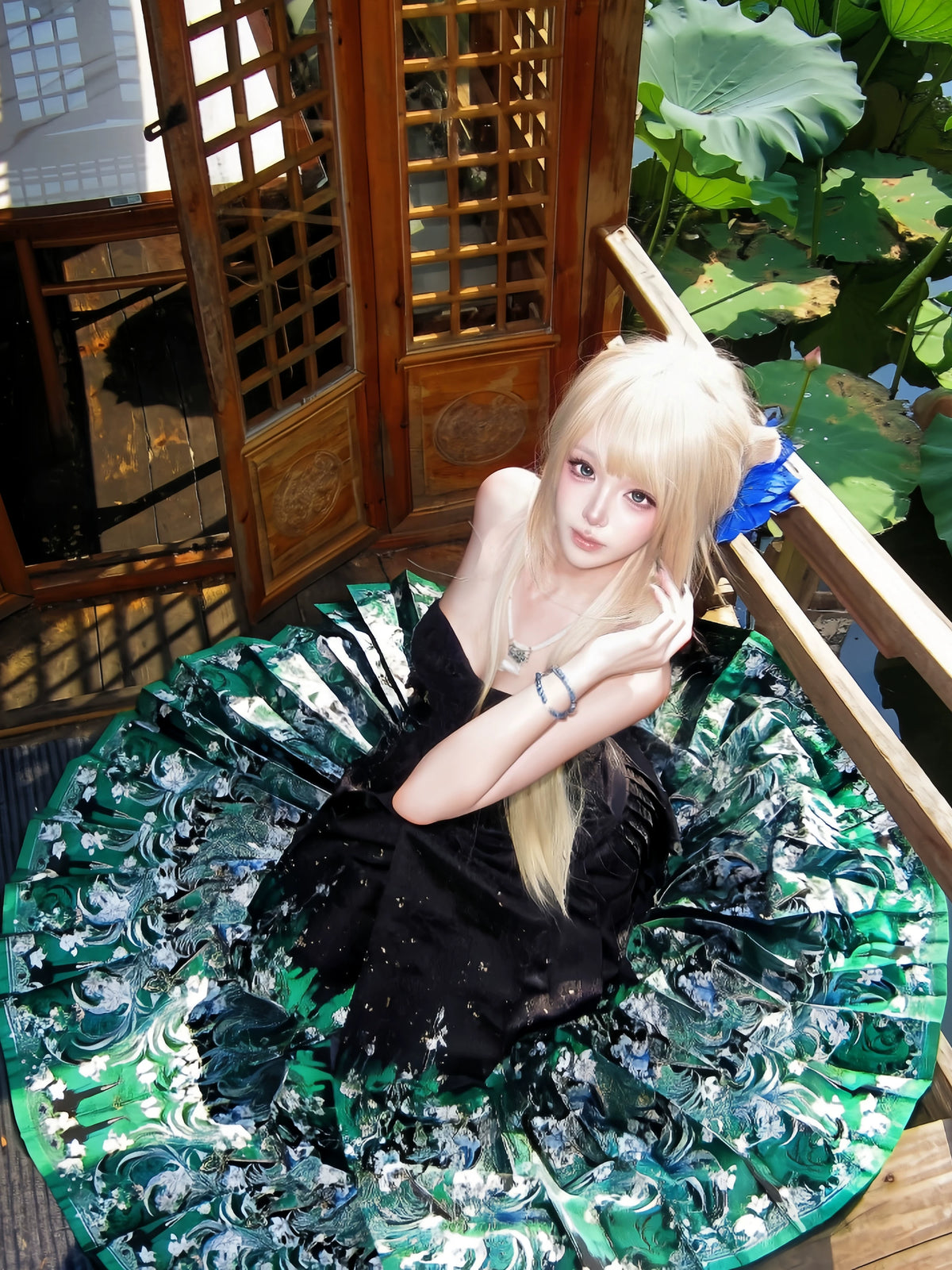
Ming-dynasty stand-collar jacket + ivory mamian skirt — the everyday hanfu that looks like a fashion statement, not a costume
👗 Recommended Styles
- Short ao + mamian skirt (short length)
- Song-dynasty beizi + xuan skirt
- Ming-dynasty duijin short jacket
✨ Styling Notes
- White sneakers or clean canvas shoes
- Simple canvas tote or structured backpack
- Hair tied back — clean and practical
❌ What to Avoid
- Floor-length trailing skirts
- Heavy embroidery or elaborate layering
- Anything that requires two hands to manage
💡 The one-line pitch:
Your classmates will think you’re wearing a stylish Chinese-inspired dress. You’ll know you’re wearing a 600-year-old silhouette. Both things can be true.
👉 Elegant Princess Dress Flower Daily Sweet Hanfu | Ming Dynasty Purple Horse Dress Hanfu
🌸 Occasion 2: Dates & Catching Up with Friends
Scenes: Afternoon tea, cinema, dinner with friends, weekend brunch
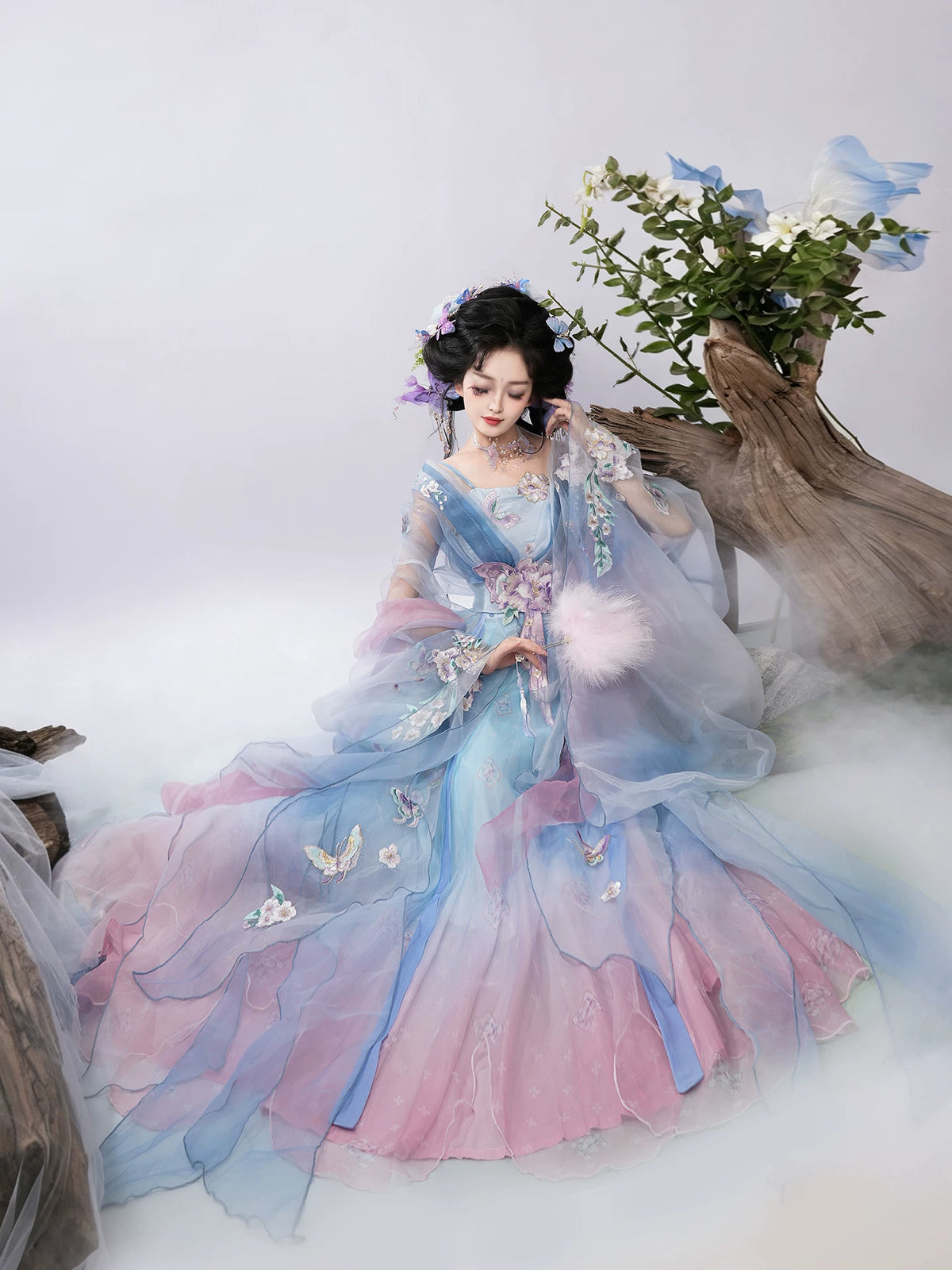
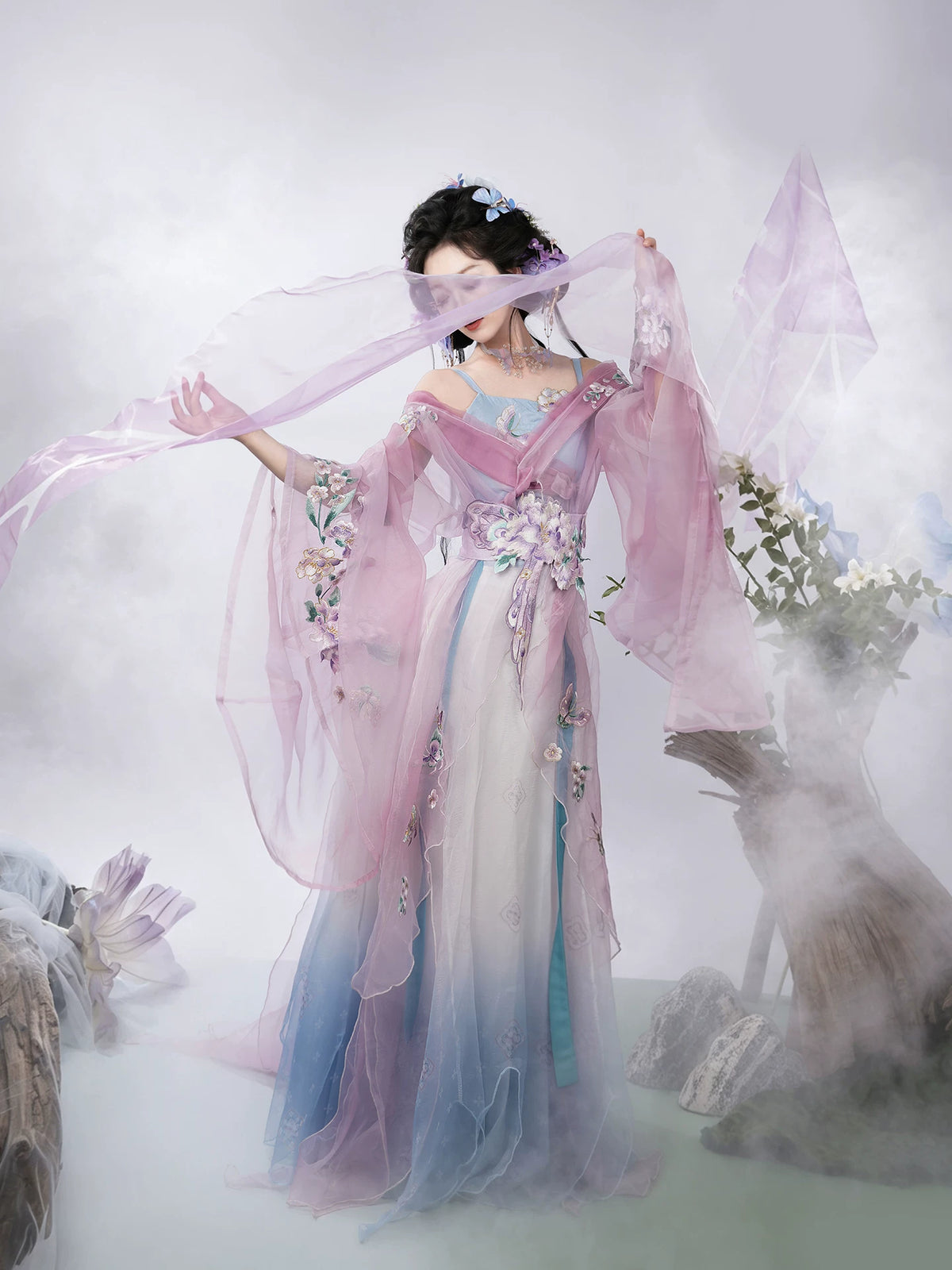
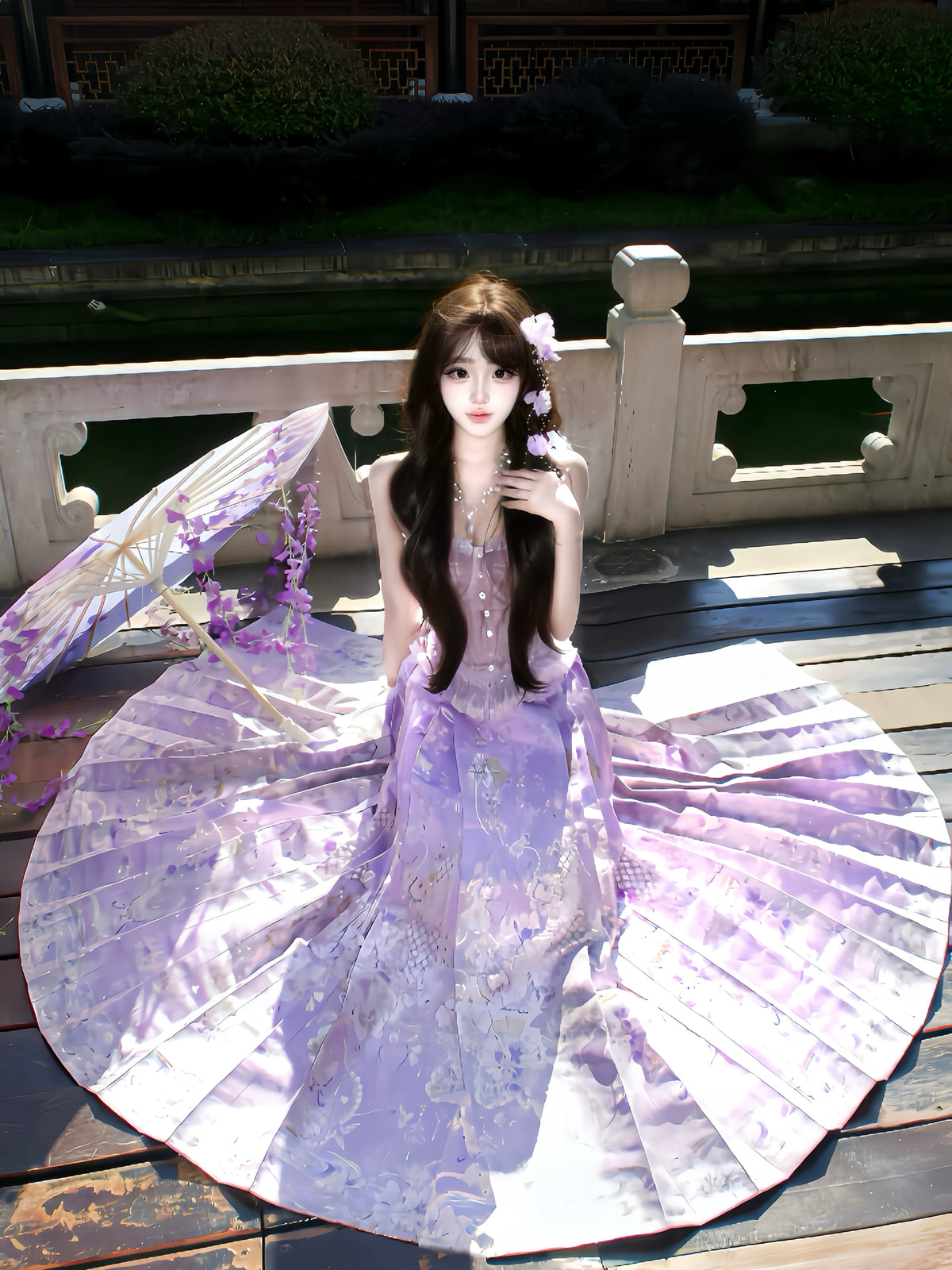
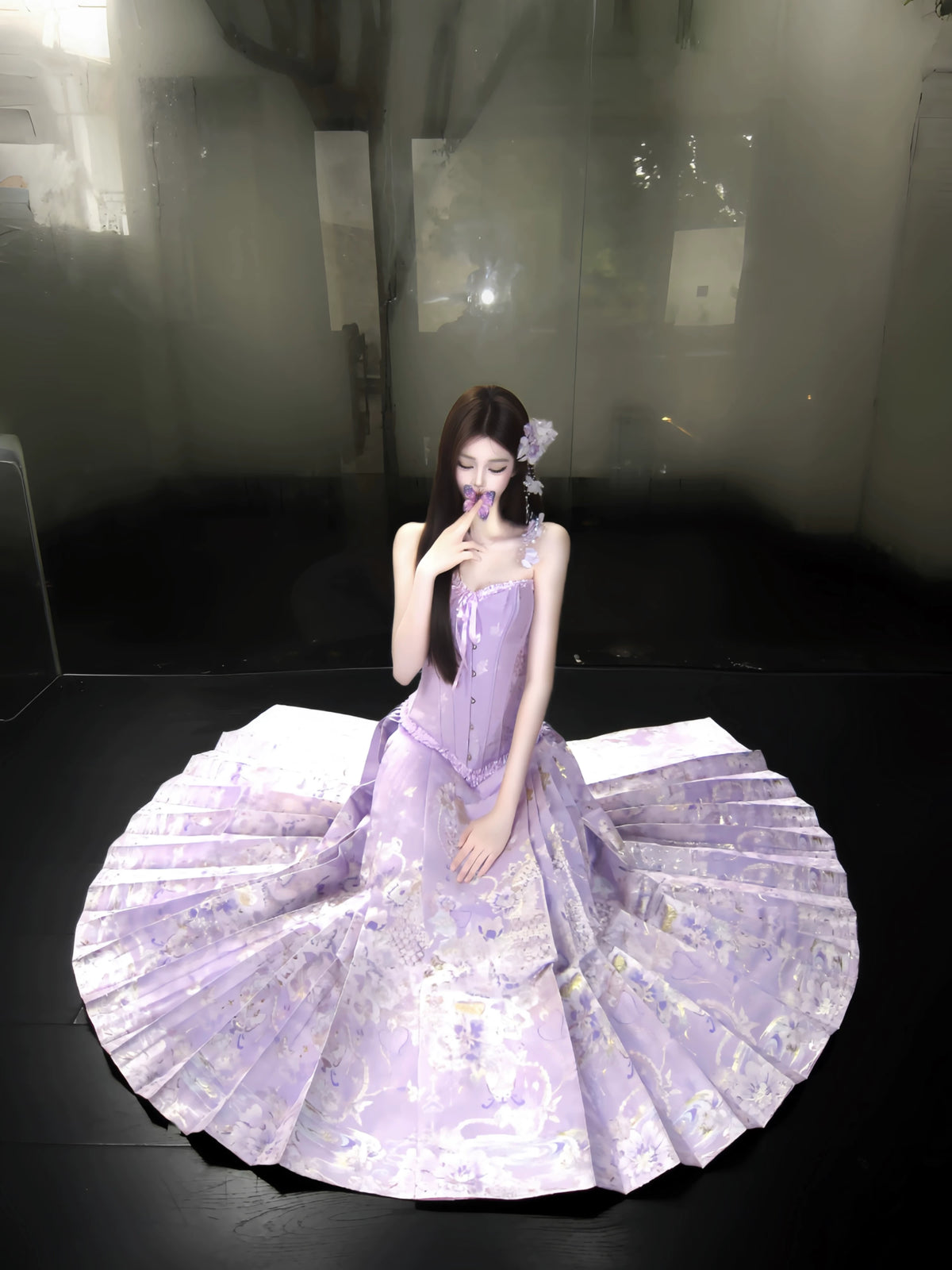
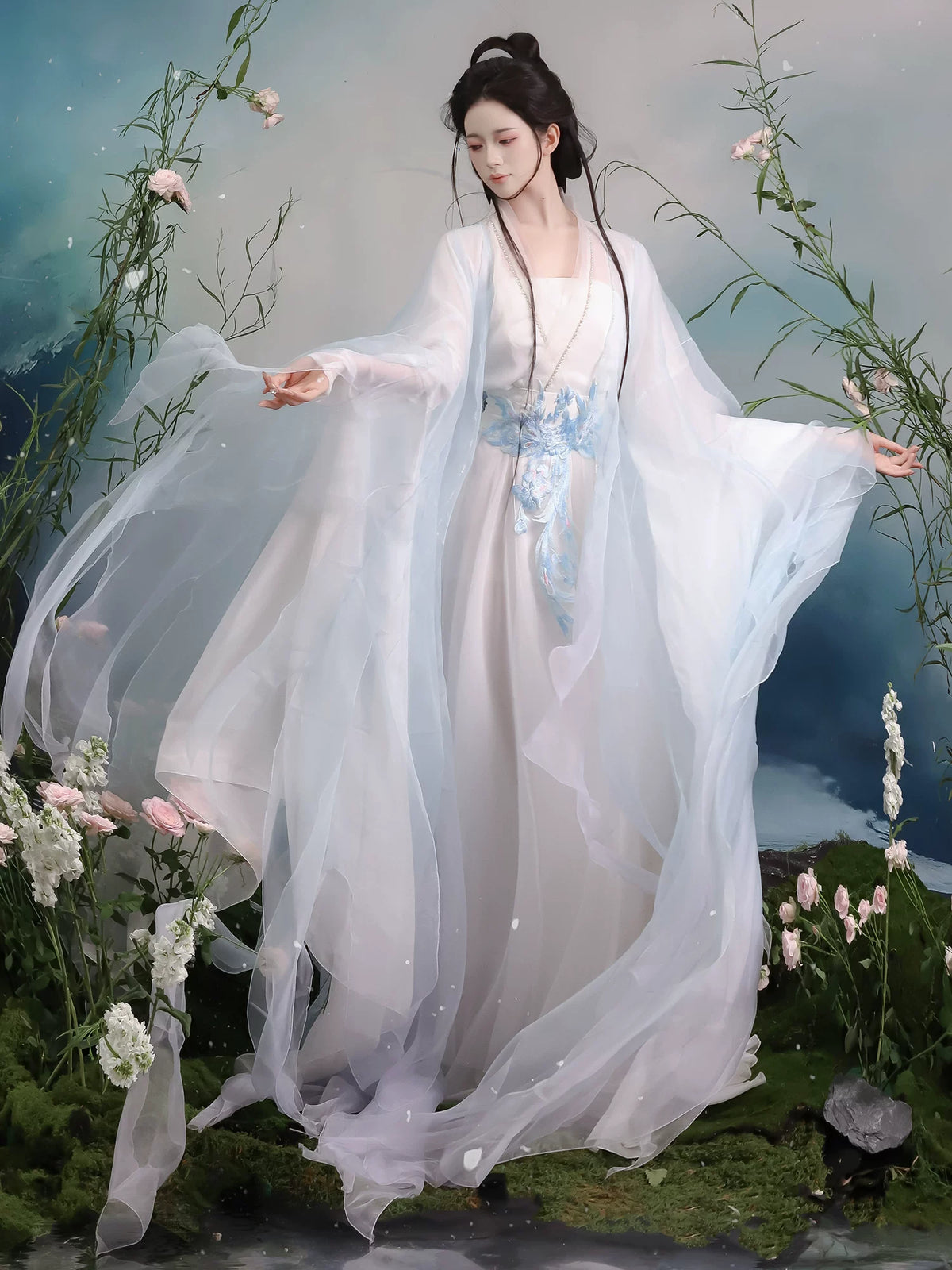
Blue-purple gradient qixiong ruqun — soft, luminous, and impossible to forget. The kind of outfit that earns a second look across the room.
👗 Recommended Styles
- Tang-dynasty qixiong ruqun (soft, muted tones)
- Song-dynasty three-pleat skirt
- Ming-dynasty stand-collar diagonal-front changshan
✨ Styling Notes
- Pearl hair pins or simple floral accessories
- Light, natural makeup
- Mary Janes or simple leather flats
🔍 The Secret Detail
Choose a piece with small embroidery at the sleeve cuff or hem — the kind that only reveals itself when you raise your hand or take a step. Understated until it isn’t.
💡 The one-line pitch:
Soft, distinctive, and impossible to forget. More memorable than any dress — and you will be the only one in the room wearing it.
👉 Rain Dream Purple Smoked Hanfu | Tang Dynasty Embroidered Plus Size Hanfu Skirt — Super Fairy Spring and Summer
🏗️ Occasion 3: Travel & Photography
Scenes: Ancient towns, classical gardens, historic architecture, cherry blossom season, autumn foliage
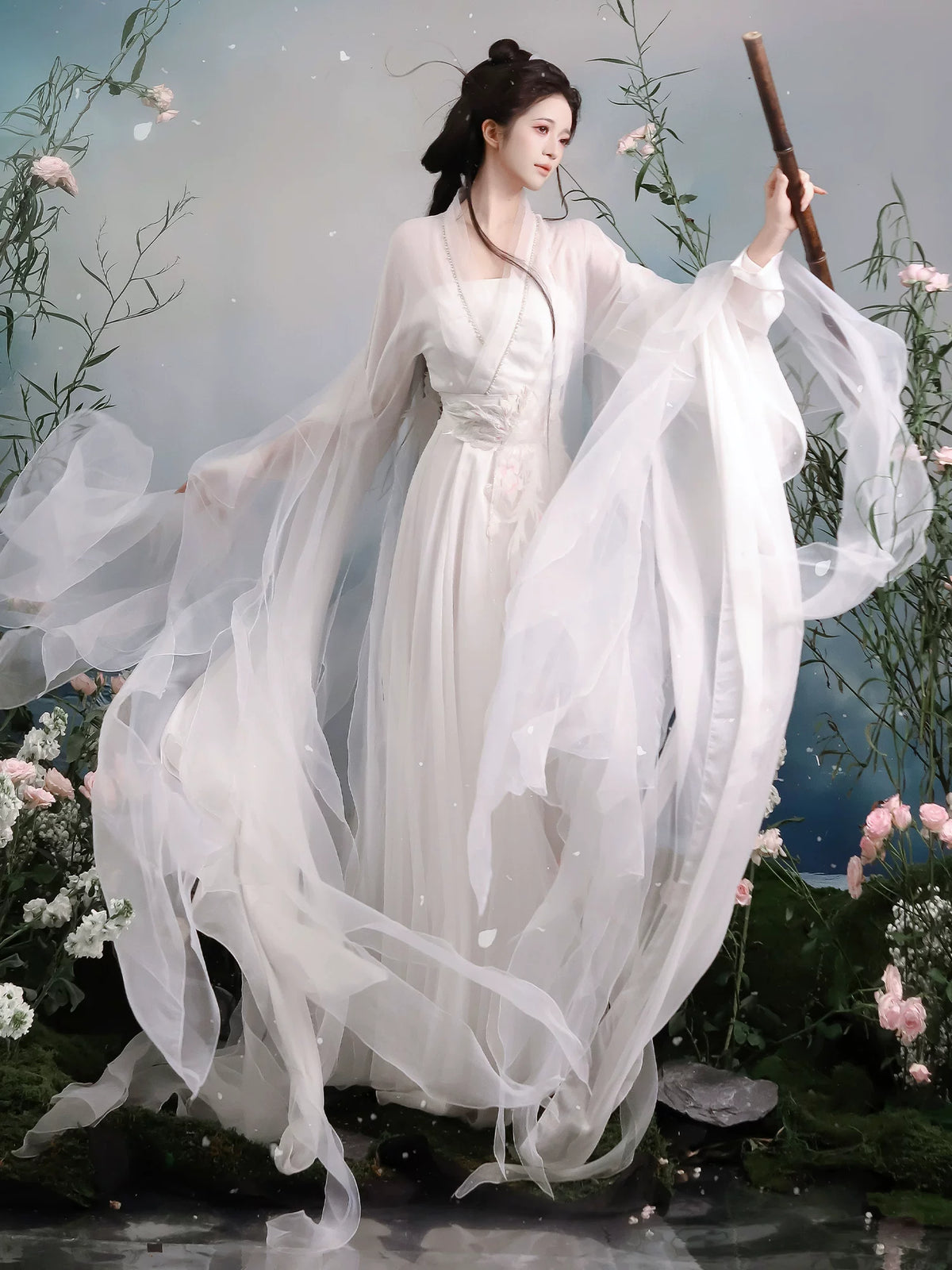
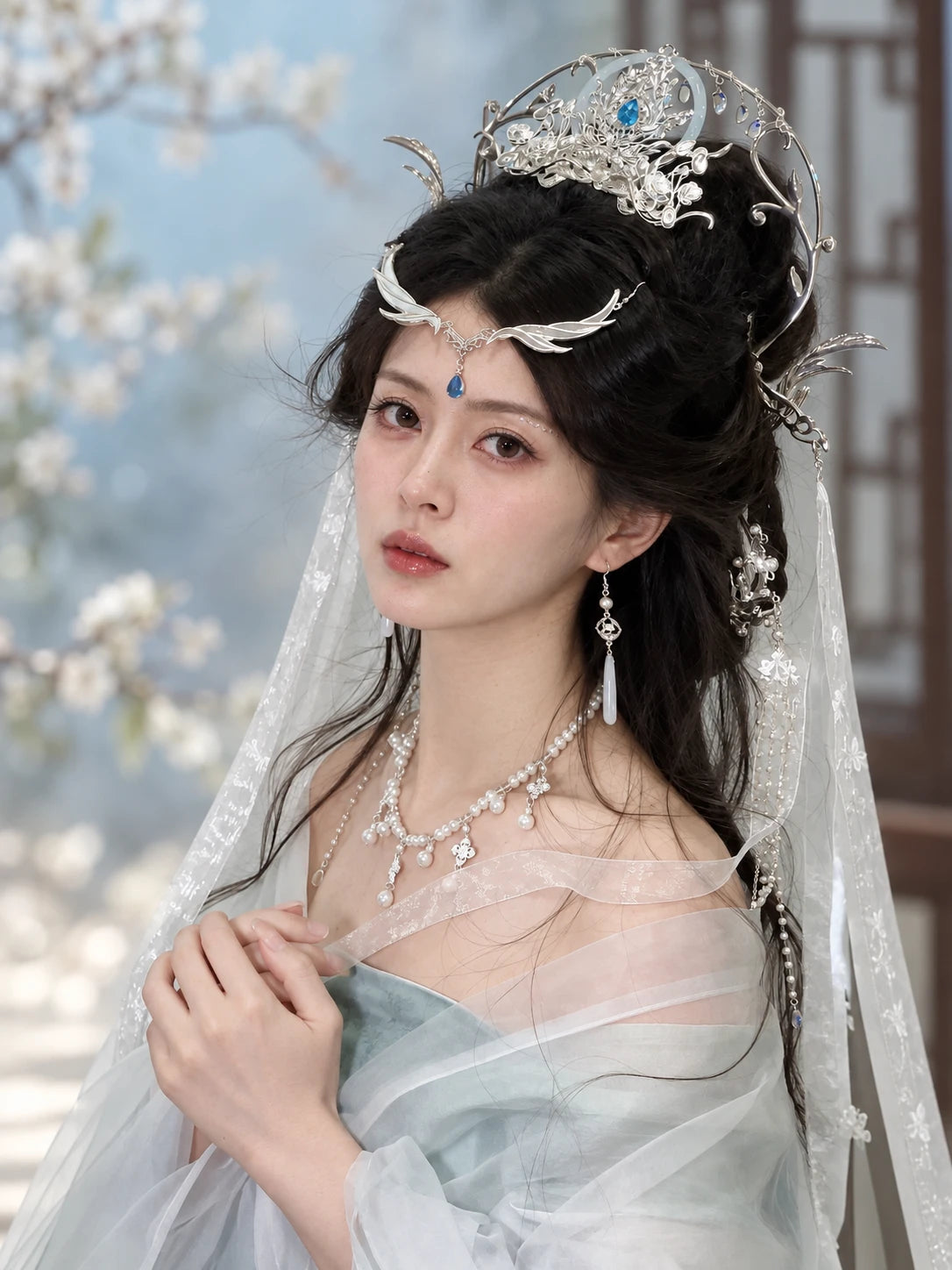
Cherry blossom season + flowing ribbon-sleeve hanfu — everyone else takes tourist photos. You take editorial spreads.
👗 Recommended Styles
- Jin-dynasty style (flowing, ethereal)
- Tang-dynasty qixiong ruqun (celestial, luminous)
- Ming-dynasty pifeng cape (grand, architectural)
✨ Styling Notes
- Hair crown or buyao step-ornament
- Round fan or oil-paper umbrella as prop
- Makeup can be slightly more defined for photography
🗺️ Match Style to Setting
- Forbidden City → Ming-dynasty
- Jiangnan water towns → Song-dynasty
- Mountain or forest → Jin-dynasty
- Tang-era temples → Tang-dynasty
💡 The one-line pitch:
Everyone else takes tourist photos. You take editorial spreads. The setting has not changed — only what you are wearing in it.
👉 Emissary of the Kingdom of Heaven Hanfu — Fairy National Style | The Prosperous Tang Dynasty Traditional Hanfu
🎊 Occasion 4: Festivals & Traditional Cultural Events
Scenes: Lunar New Year, Mid-Autumn Festival, Huachao Festival, hanfu gatherings, lantern fairs
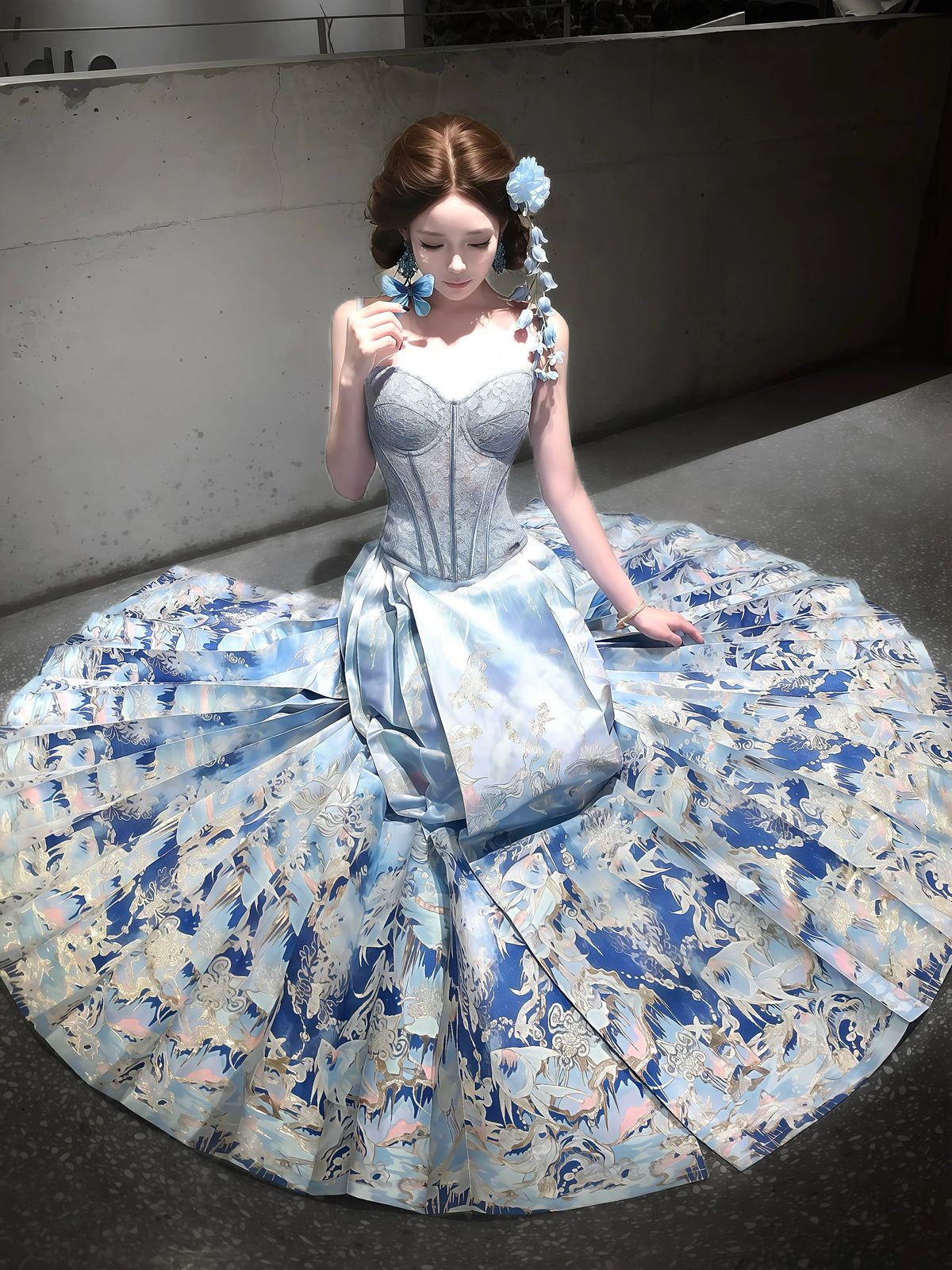
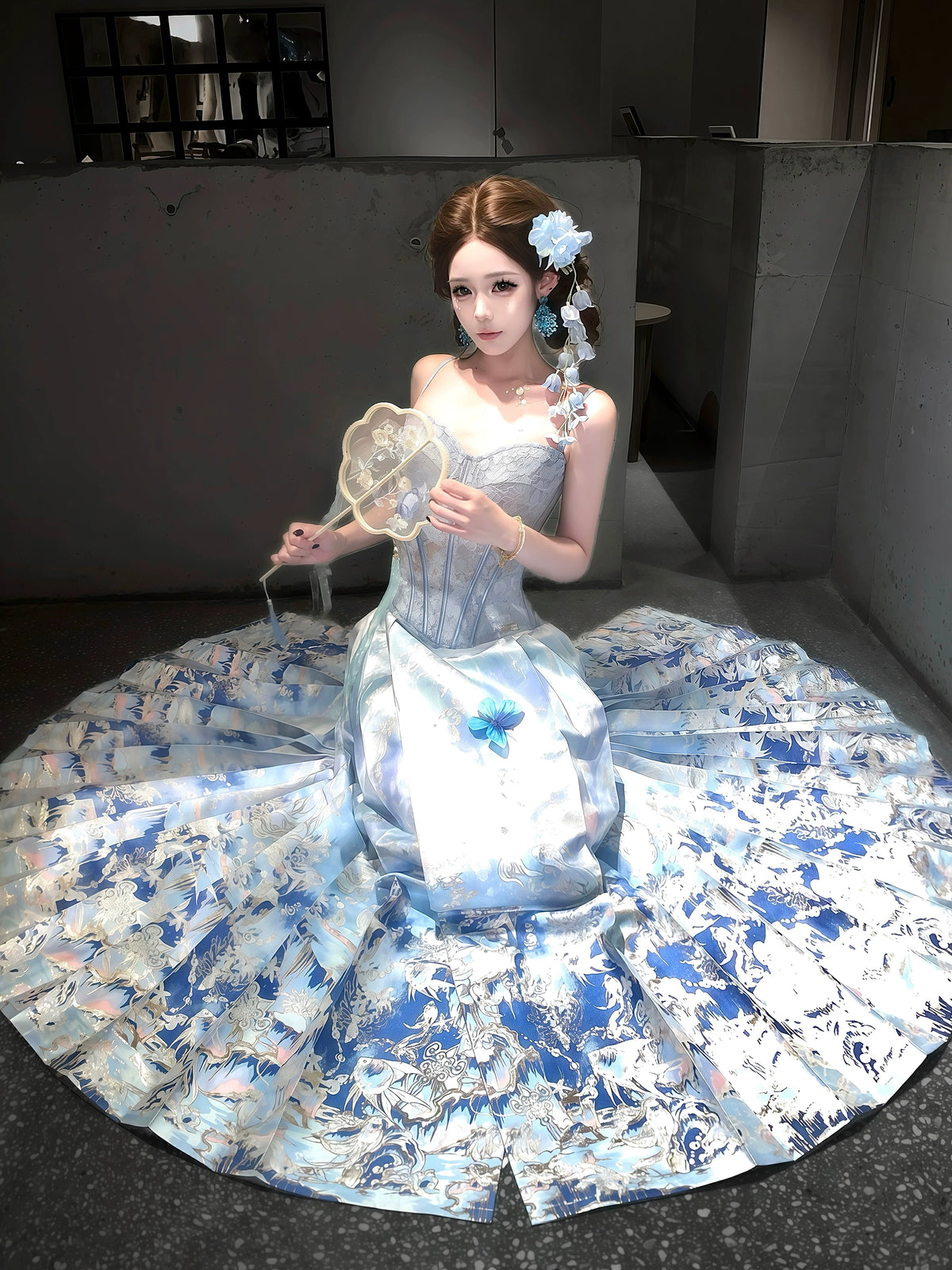
Celestial blue-teal Tang-dynasty styling — at a festival, you are not overdressed. You are exactly dressed.
👗 Recommended Styles
- Ming-dynasty (most formal, most recognized)
- Tang-dynasty daxiu shan wide-sleeve robe
- Wei-Jin style (atmospheric, poetic)
✨ Styling Notes
- Full traditional hair and makeup
- Traditional jewelry — jade, gold, enamel
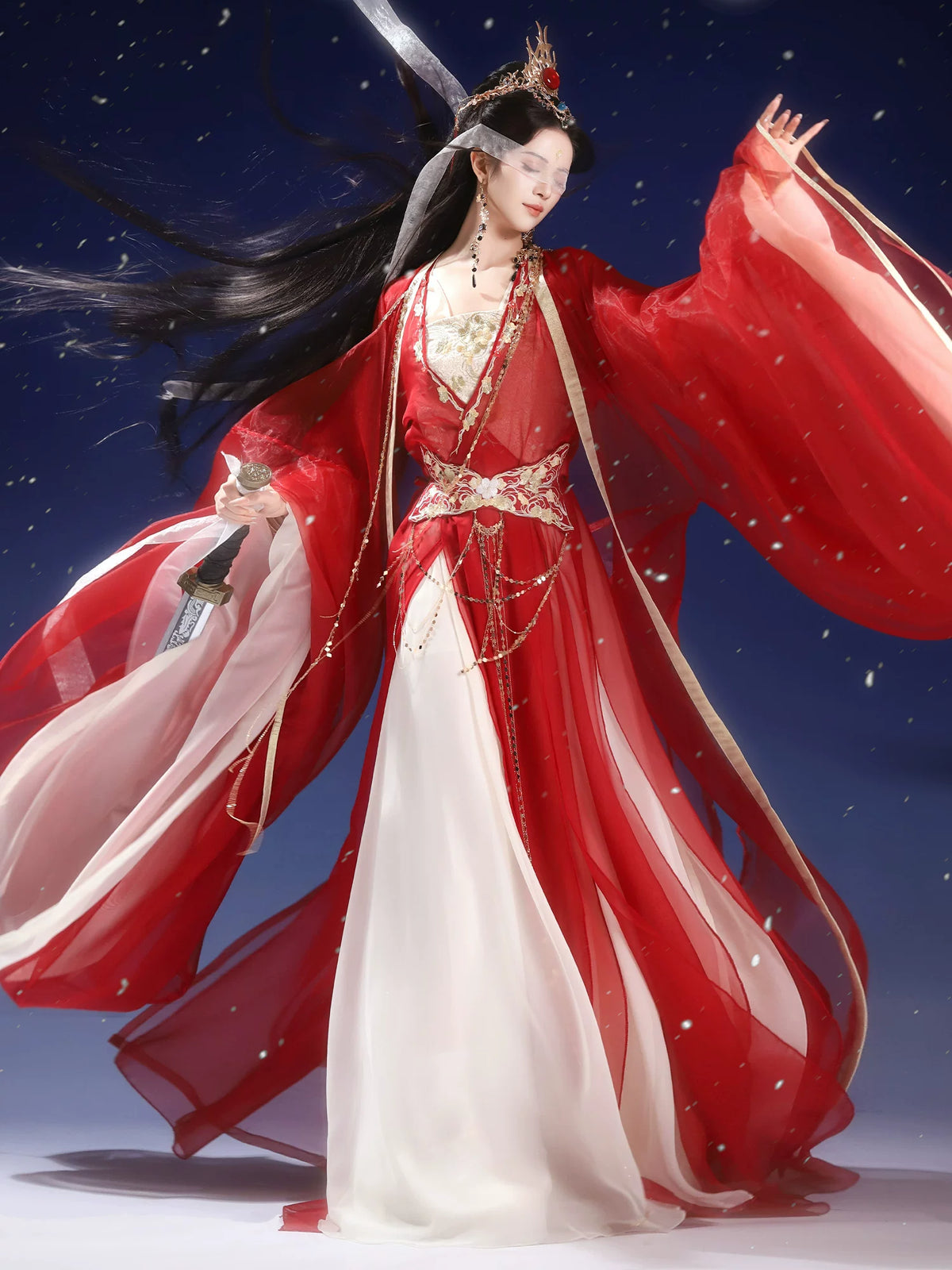
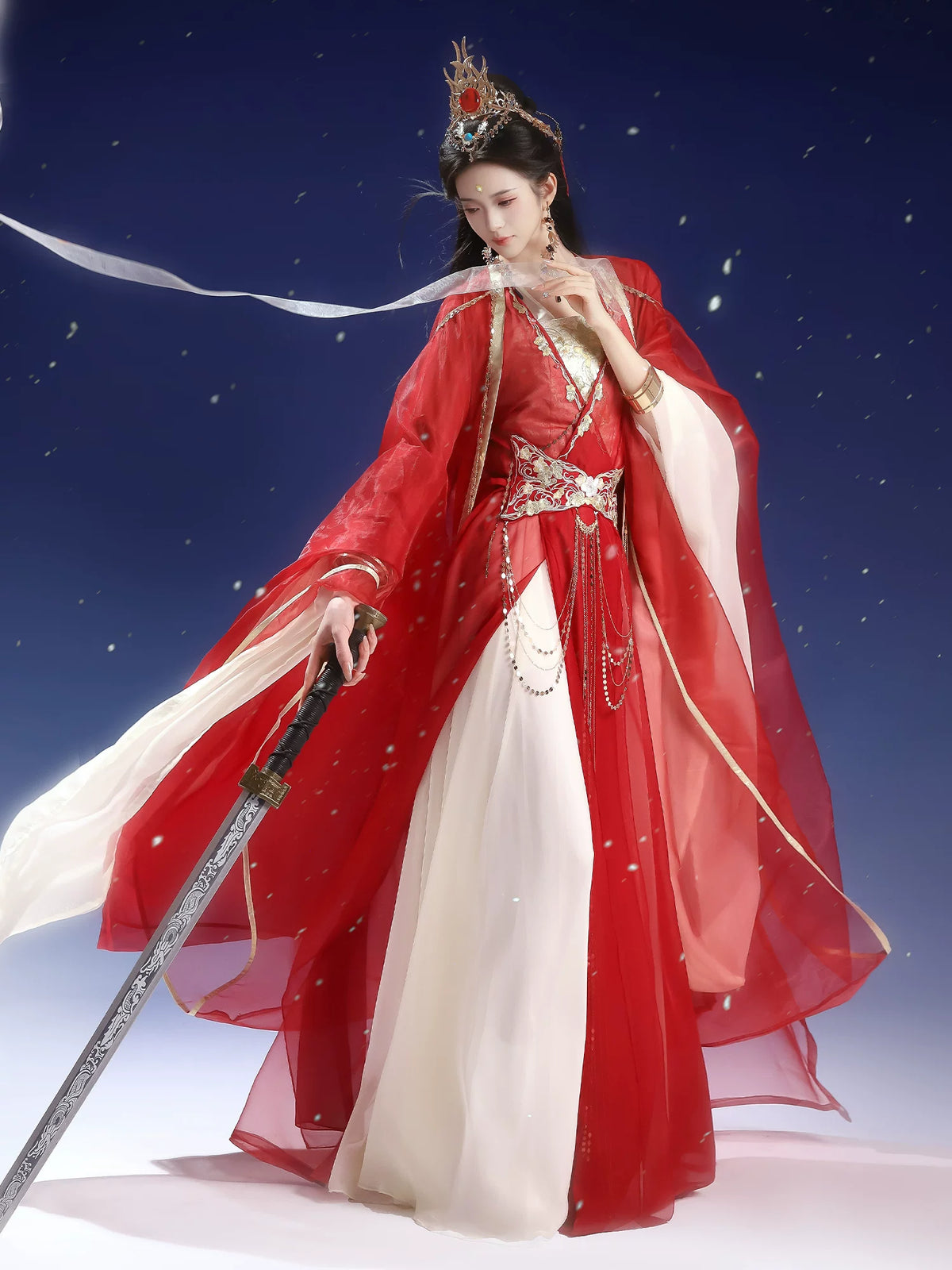
- Red and gold are not too much — they are exactly right
🌟 Why This Works
Festivals are the one context where wearing hanfu requires zero explanation. The occasion provides the reason. You are not overdressed — you are exactly dressed.
💡 The one-line pitch:
At a festival, you are not the most dramatic person in the room. You are the most appropriate one.
👉 The Prosperous Tang Dynasty Traditional Hanfu | Embroidery Gradual Change Flower Couple Hanfu — Spring Festival
💍 Occasion 5: Life’s Most Important Moments
Scenes: Traditional Chinese weddings, graduation ceremonies, coming-of-age rites
Ming-dynasty dragon-phoenix wedding ensemble — not just a wedding dress. A statement about who you are and where you come from.
👗 Recommended Styles
- Ming-dynasty wedding ensemble (fengguanxiapei)
- Song-dynasty formal ceremonial dress
- Hanfu-inspired contemporary bridal wear
✨ Styling Notes
- Full traditional hair and makeup styling
- Professional photography — this deserves documentation
- Every detail considered, nothing improvised
🌟 Why It Matters
A Western wedding dress carries no personal cultural meaning. A hanfu wedding ensemble carries thousands of years of it. The ceremony becomes something more than a party — it becomes a statement about who you are and where you come from.
💡 The one-line pitch:
Wear hanfu on your wedding day, and you are not just the bride. You are the lead in a story that has been told for a thousand years — and you are telling it in your own way.
👉 Ming Dynasty Hanfu Wedding Dress — Red Imitation Flower Couple’s Style | Original Song Dynasty Hanfu — Trailing Large-Sleeved Wedding Clothes
❤️ Closing: Hanfu Is a Way of Living, Not a Performance
There is no rule about when you are allowed to wear hanfu. There is no occasion that is too small, no setting that is too ordinary. The only question that matters is: when do you want to wear it?
Start with one piece. Start with the occasion that feels most natural to you — maybe it is a weekend brunch, maybe it is a festival, maybe it is a trip you have been planning. Wear it once. See how it feels to move through the world in something that carries this much history. Then decide if you want to do it again.
Most people who try it once find that the answer is yes.
Hanfu does not have a “right time.” It has your time.
Tell me in the comments: what occasion would you wear your first hanfu to? I read every single one. 💬
What are the main types of Hanfu?
Quick answer: “types of Hanfu” can describe a garment’s construction, a dynasty-inspired style label, or the way it is intended to be worn. For shopping, the most useful distinction is the actual set structure: where the waistline sits, how the top closes, whether the skirt wraps or pleats, how many layers are included, and whether the listing is a complete outfit or a separate piece.
Six useful Hanfu categories for shoppers
- Cross-collar top-and-skirt sets: these combine an overlapping cross-collar upper garment with a skirt. Check whether the top, skirt, sash, outer layer, and accessories are included in the selected variant.
- Chest-high skirt sets: often described as qixiong or chest-length styles, these place the skirt higher on the torso and may be sold with a short top, large-sleeve outer layer, or pibo. Compare the full component list rather than relying on the styled image.
- Jacket-and-skirt outfits: many Ming-inspired listings pair a jacket or long shirt with a pleated or horse-face skirt. Some pages sell the shirt and skirt separately, while others offer a coordinated set.
- Long outer layers and robe-based outfits: beizi, large-sleeve layers, round-collar robes, and other long silhouettes may be individual garments or part of a layered outfit. Length and sleeve measurements matter as much as the labelled size.
- Wedding and ceremonial sets: these can range from one-person outfits to bride-and-groom combinations, with standard-size, made-to-order, and customized options. Confirm every included piece, production time, measurements, and return conditions before ordering.
- Modernized Hanfu: these designs adapt Hanfu-related collars, skirts, layering, or proportions for contemporary styling. They are usually the clearest starting point for shoppers who want an everyday rather than ceremony-focused outfit.
How dynasty-inspired labels help you browse
Dynasty labels are useful navigation terms, but the product page remains the source of truth for construction, fabric, included pieces, and sizing. Compare the broad Traditional Hanfu collection, or browse the store’s Tang-inspired, Song-inspired, and Ming-inspired selections. For contemporary interpretations, use the Modern Hanfu collection.
Which type should a first-time buyer choose?
Choose by use case first, then by silhouette. For regular wear, begin with a shorter or simplified set whose selectable option clearly lists every component. For photography or festivals, compare fuller skirts and removable outer layers. For a wedding or fixed event date, contact us before ordering any customized or made-to-order option. Yandan provides free worldwide shipping with import duties included; processing time and carrier transit are separate.
Questions to check on every Hanfu product page
- Is the selected option a complete set, one garment, or an accessory?
- Which measurements describe the garment, and which describe the recommended body size?
- Is the option ready stock, made to order, or customized?
- Are the photographed outer layers and accessories included?
- What material is stated for the exact product or component you selected?
This classification is designed to help you compare purchasable options; a dynasty-inspired product name alone should not be treated as proof of museum-level historical reproduction.