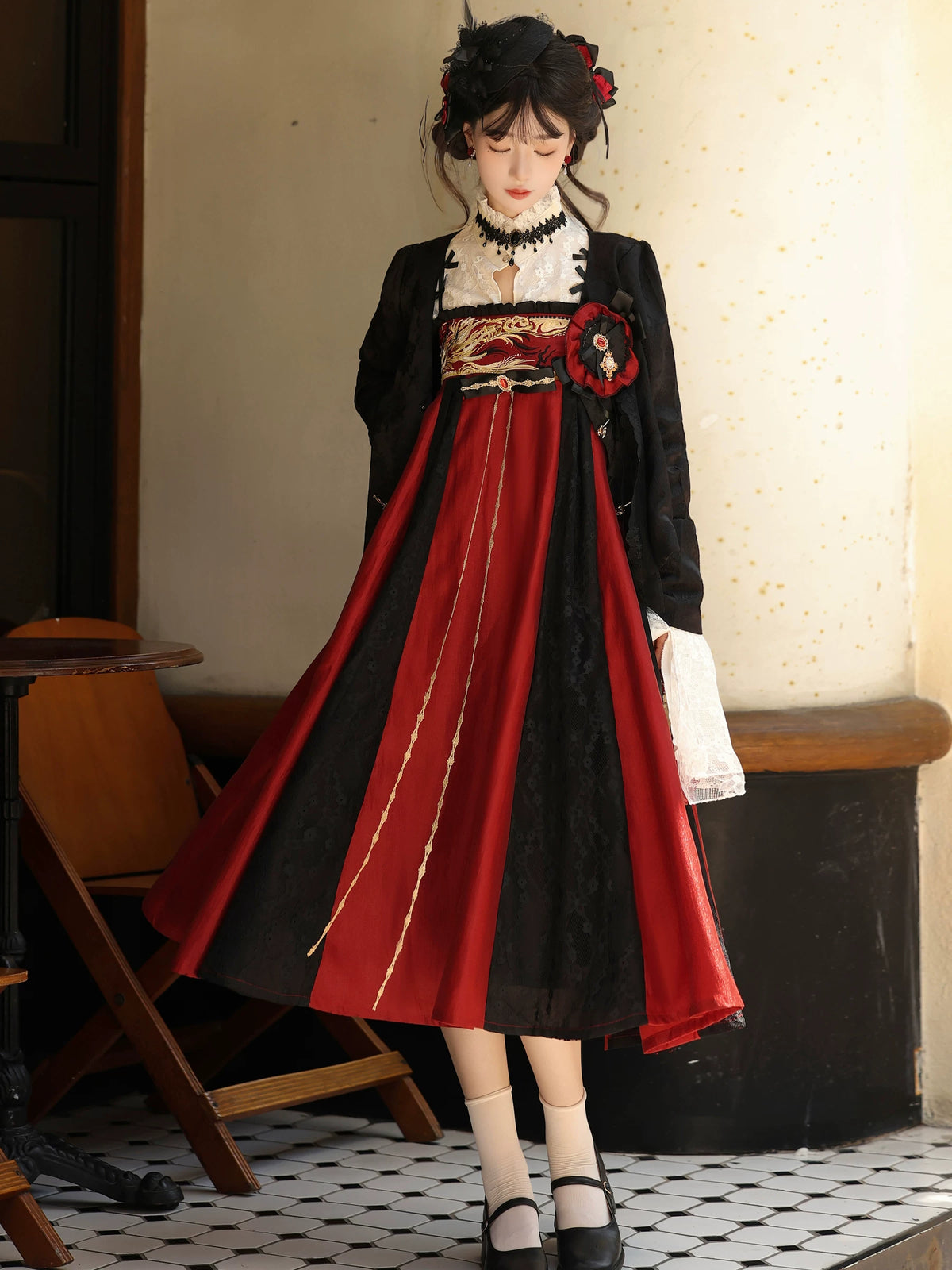
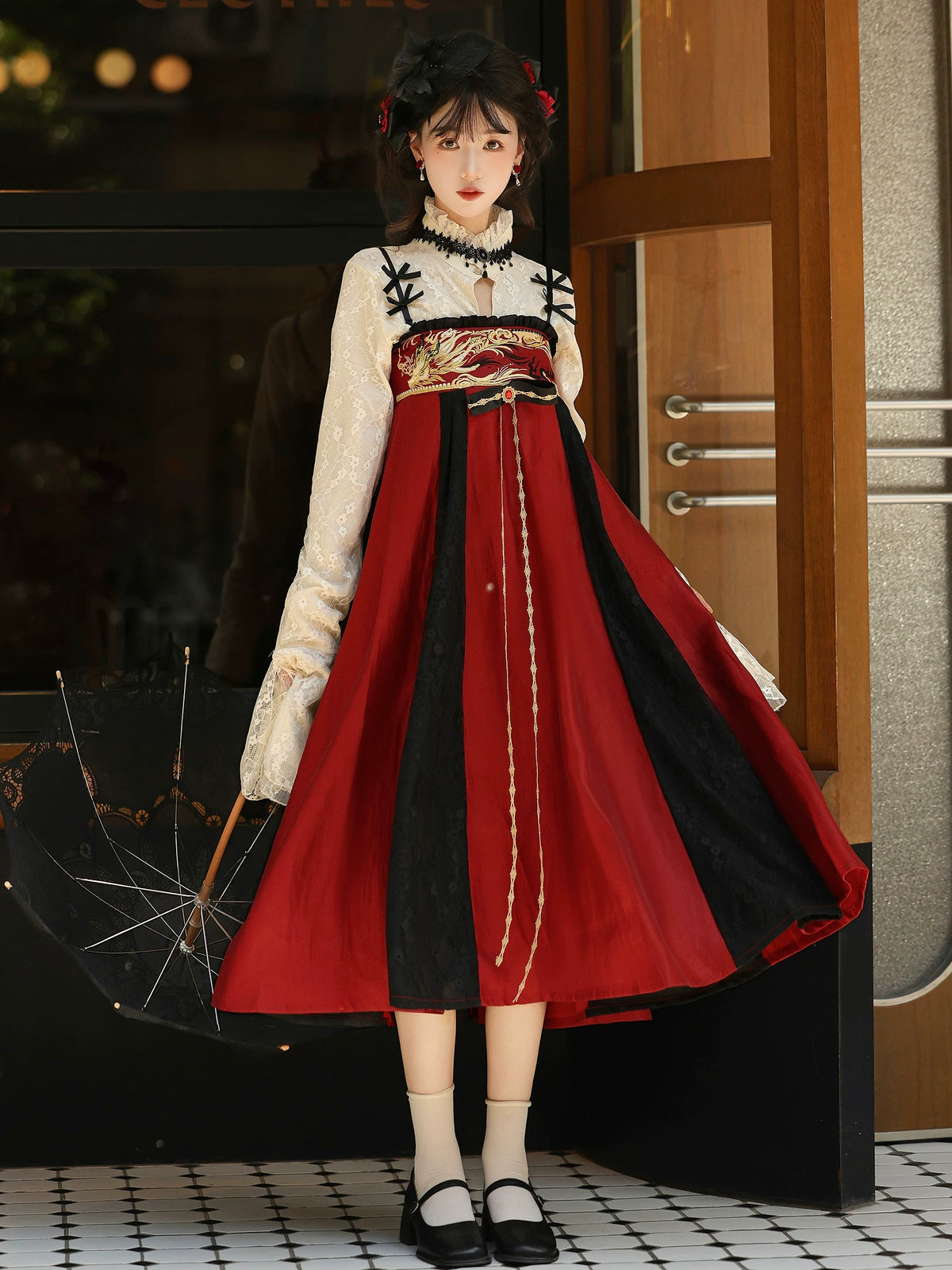
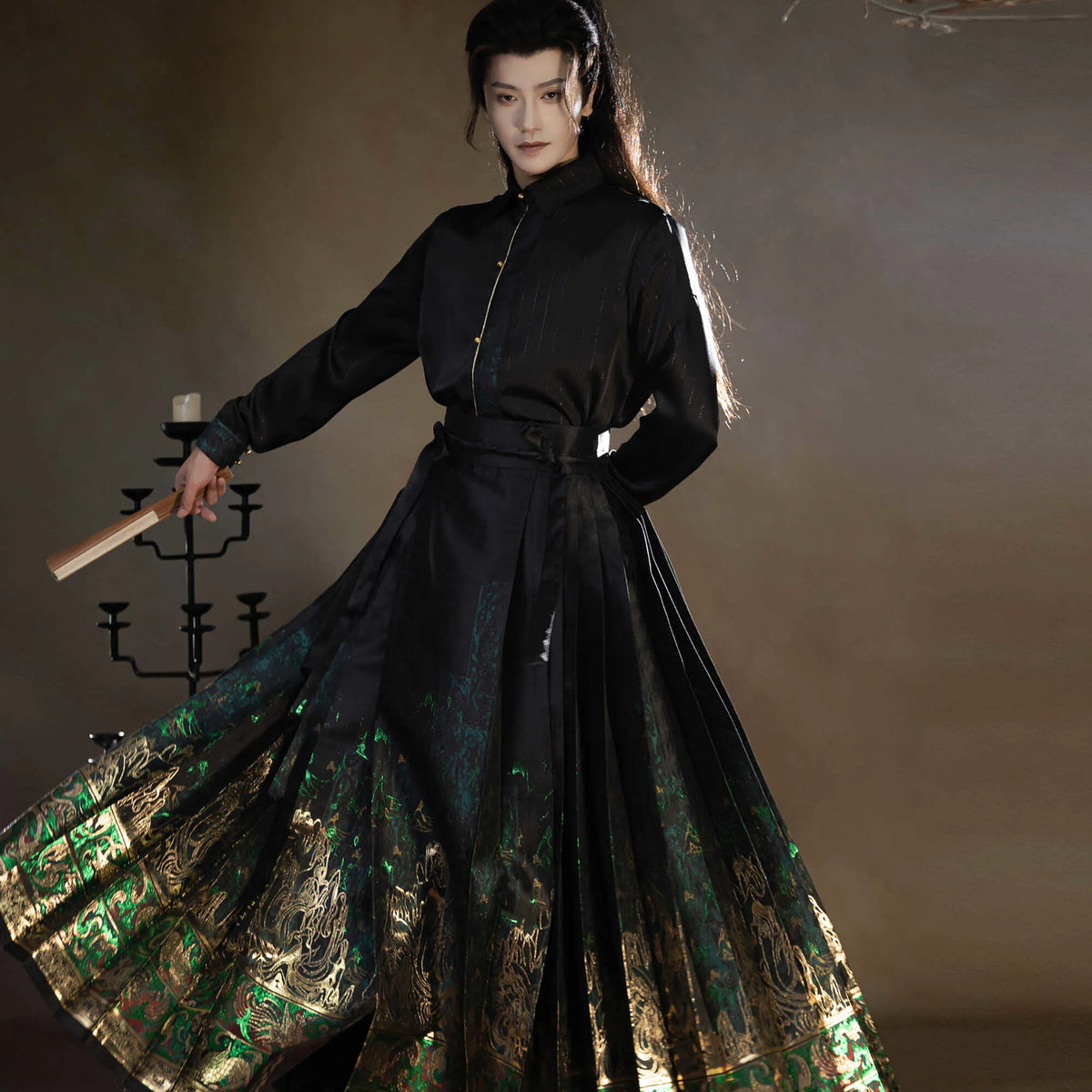
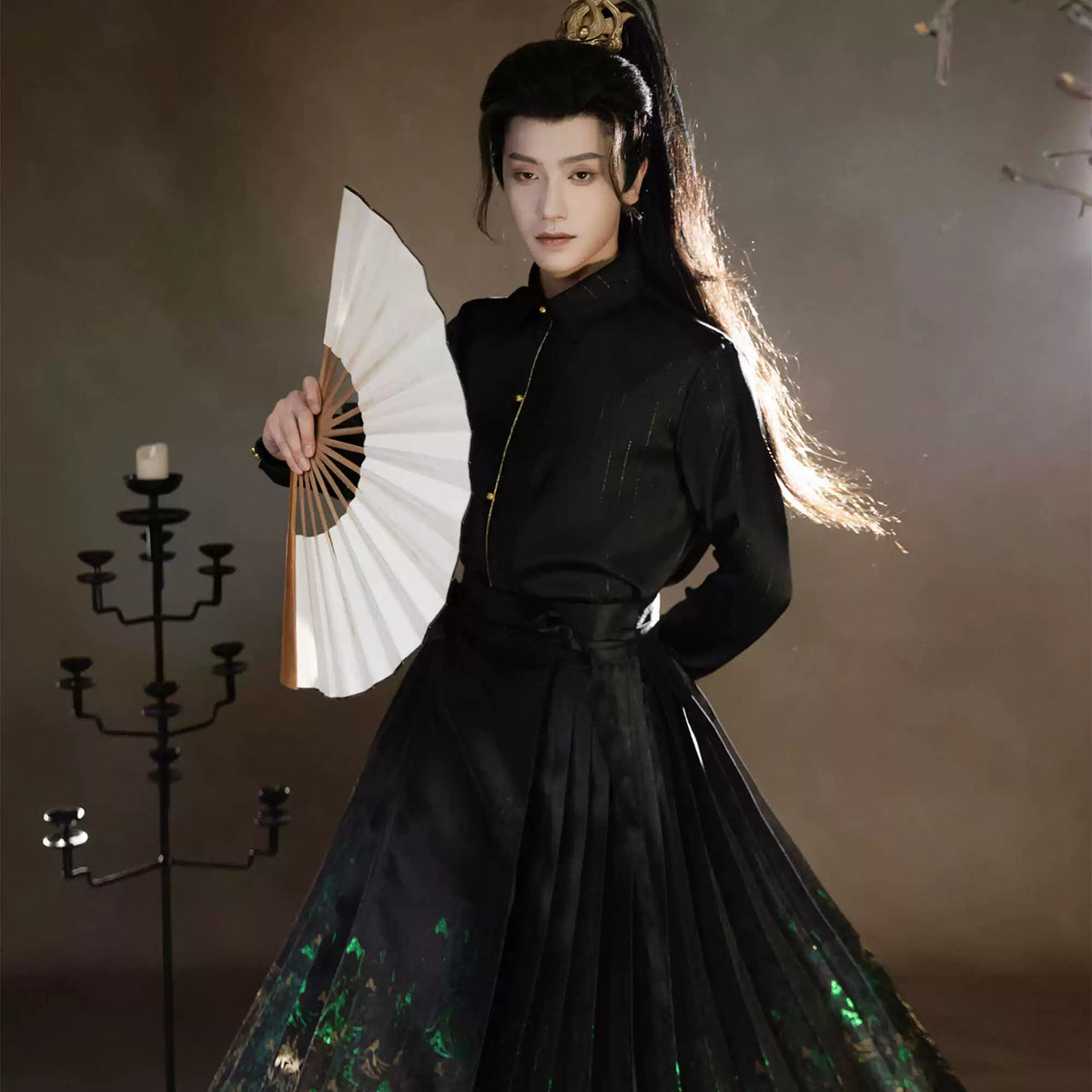
Hair · Accessories · Color
The hairstyle is not
an afterthought.
It is the final word.
Most people spend hours choosing the right silk hanbok — the color, the embroidery, the goreum ribbon. Then they do their hair in five minutes. This guide is about those five minutes, and why they matter more than you think.
The hanbok silhouette frames the face and neck with extraordinary precision. The white dongjeong collar creates a clean horizontal line just below the chin. The goreum ribbon draws the eye upward. The jeogori shoulder line frames the upper body. All of these architectural elements point toward the same place: the face, and above it, the hair.
This means that in hanbok styling, the hairstyle is not background. It is foreground. A hairstyle that contradicts the mood of the hanbok does not just look wrong — it unravels the entire composition.
Four principles that govern hanbok hairstyling:
- Overall beauty is not just about fabric and color — The hairstyle line and accessory tone are the details that unify the entire look.
- The color philosophy extends upward — The traditional five-color system extends naturally into the hair and accessories.
- Each color series calls for a specific hairstyle direction — There is no universal hanbok hairstyle. There is only the right hairstyle for your specific hanbok color.
- The balance principle — Elaborate garments call for simple hair. Simple garments invite layered, structured styling. Never in competition.
🌿 Part Two: How Your Hanbok Color Defines Your Styling Tone
Before choosing a hairstyle, understand the visual tone your hanbok color is already setting. Your hairstyle either reinforces that statement or contradicts it. The goal is always reinforcement.
🌸 Traditional Classic Palette
Red, blue, yellow-green, deep jewel tones. Calls for structured, formal hairstyling that matches its ceremonial weight.
🌊 Modern Low-Saturation Palette
Dusty teal, muted sage, warm ivory. Calls for hairstyling that is relaxed, textured, and quietly modern.
✨ Silk Sheen Consideration
High-sheen charmeuse calls for soft, voluminous hair. Matte silk calls for textured, defined hair.
⚖️ The Balance Principle
Elaborate embroidery + bold color = simple hair. Understated fabric + neutral palette = layered, structured styling.
💇 Part Three: Hairstyle by Color Series
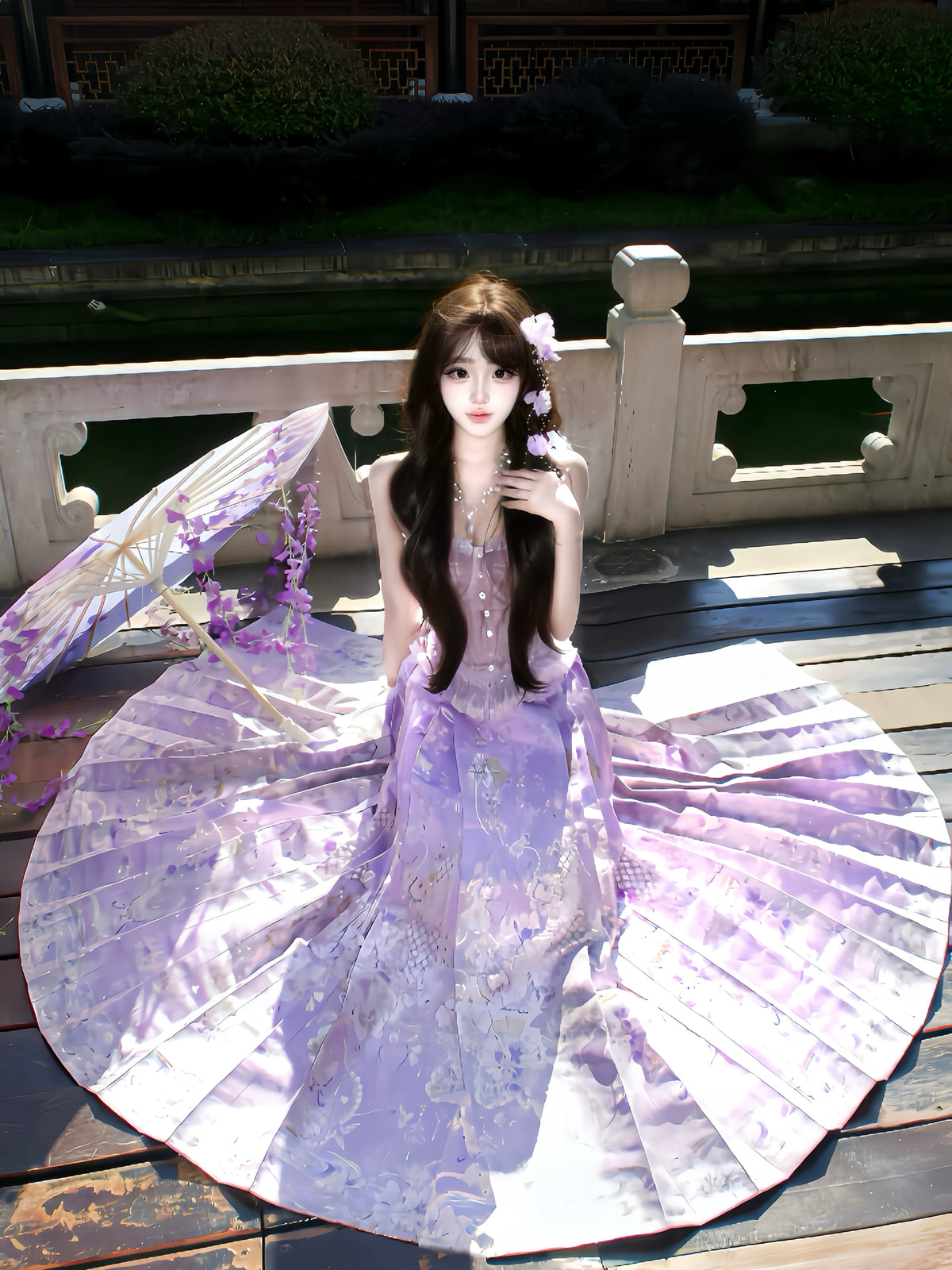
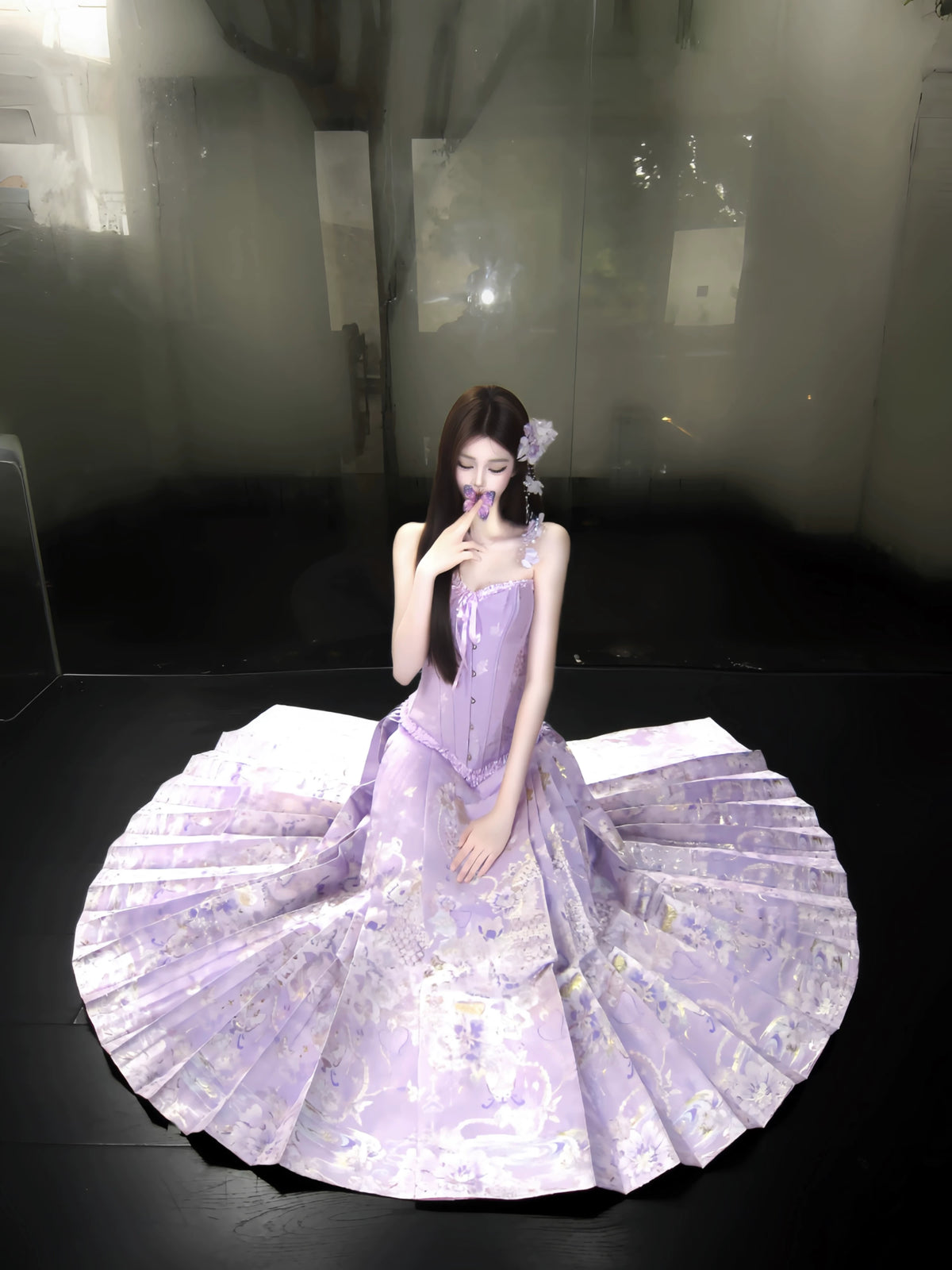
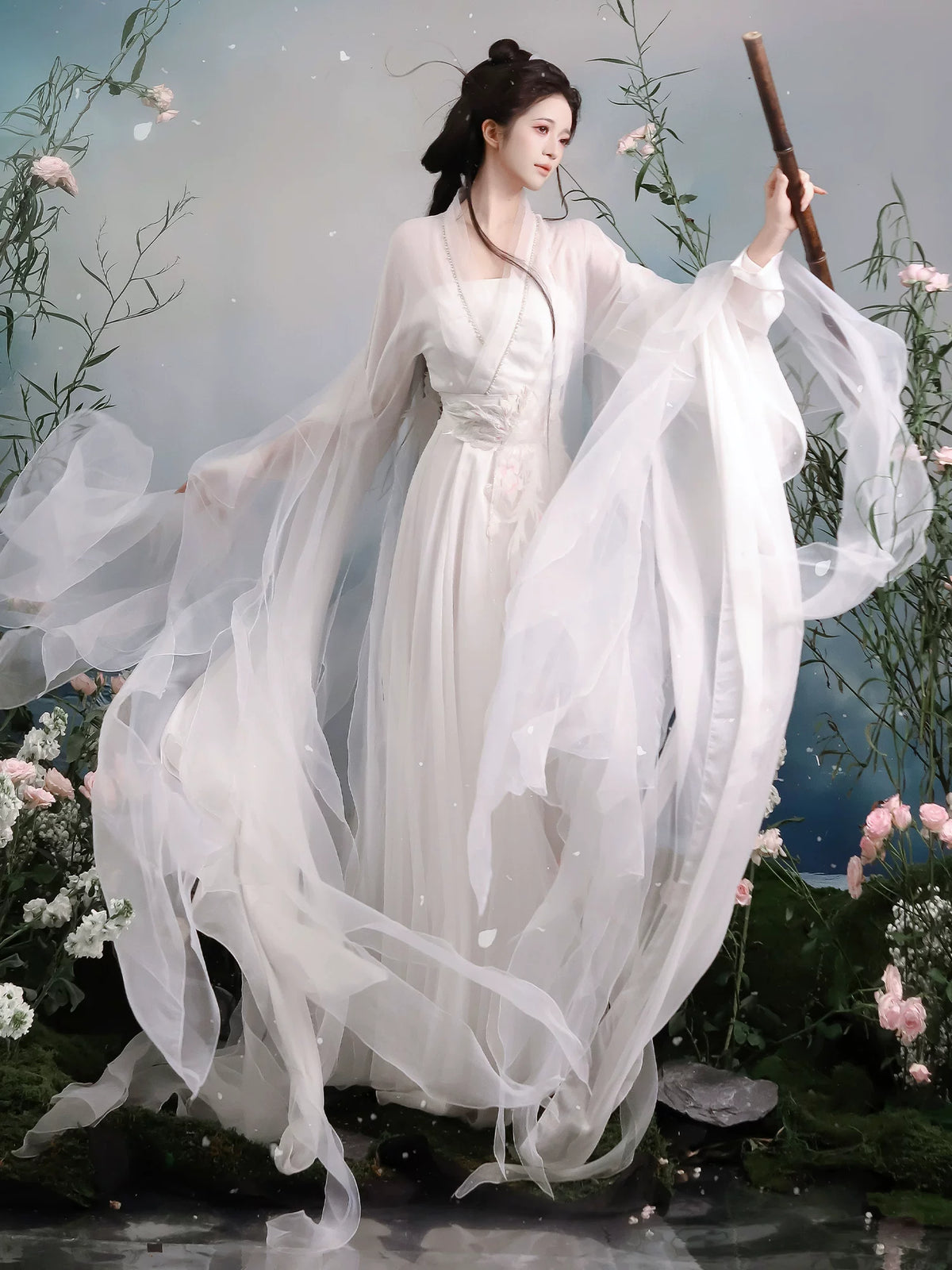
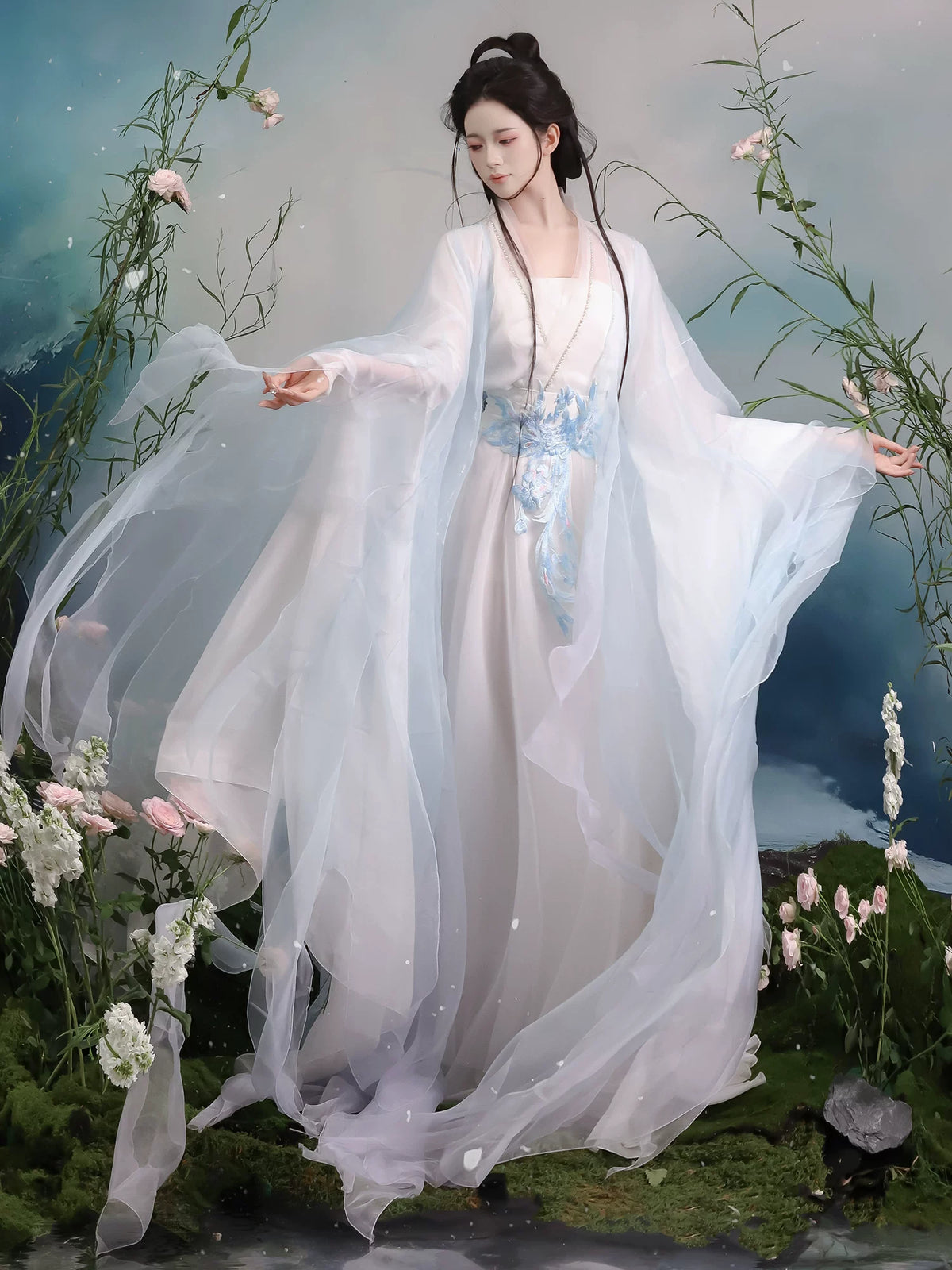
🌸 3.1 Soft Pastel Hanbok | Blush Pink / Pale Lavender / Ivory / Soft Apricot
Direction: Light, airy, romantic. Hair that breathes.
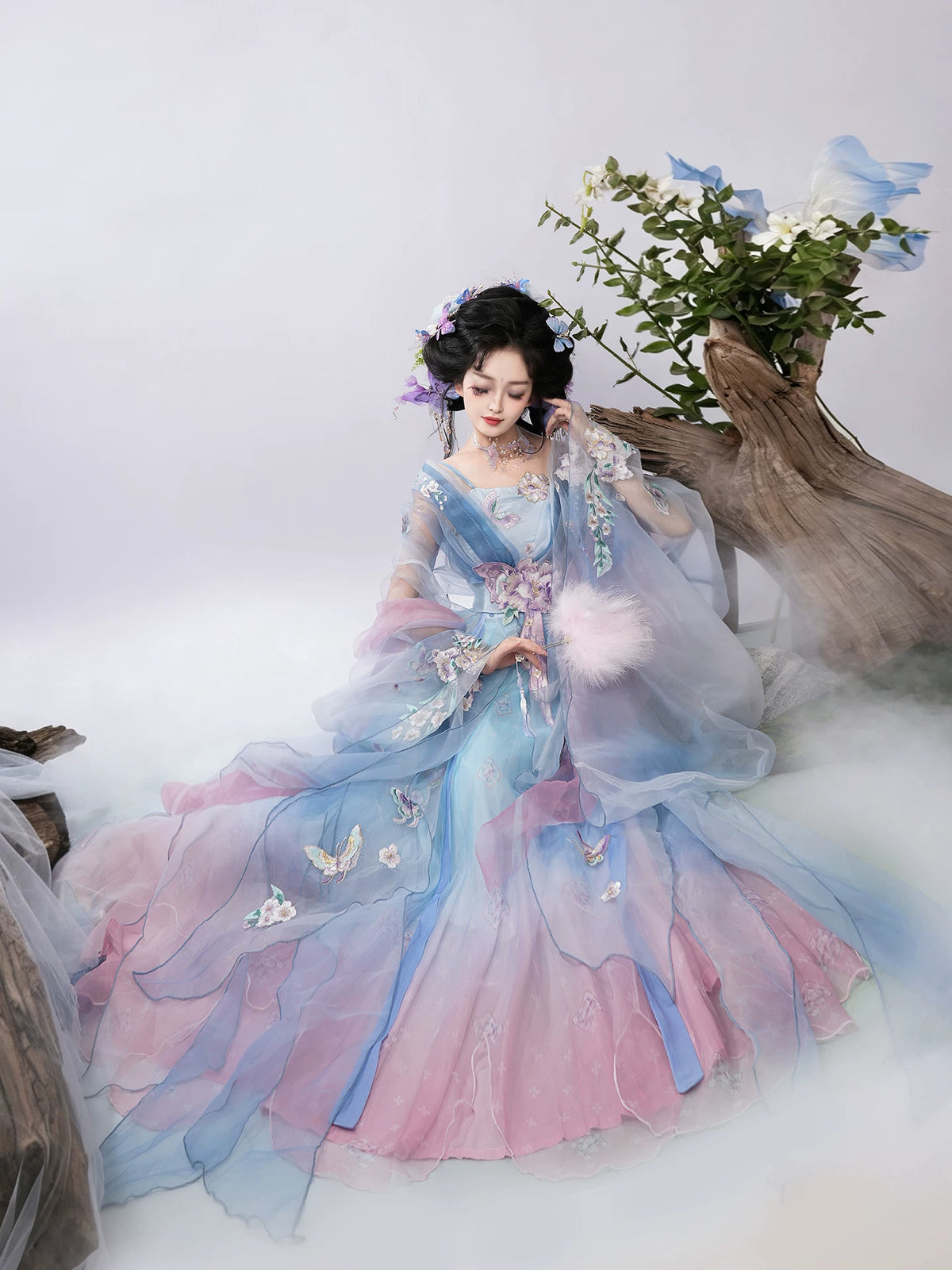
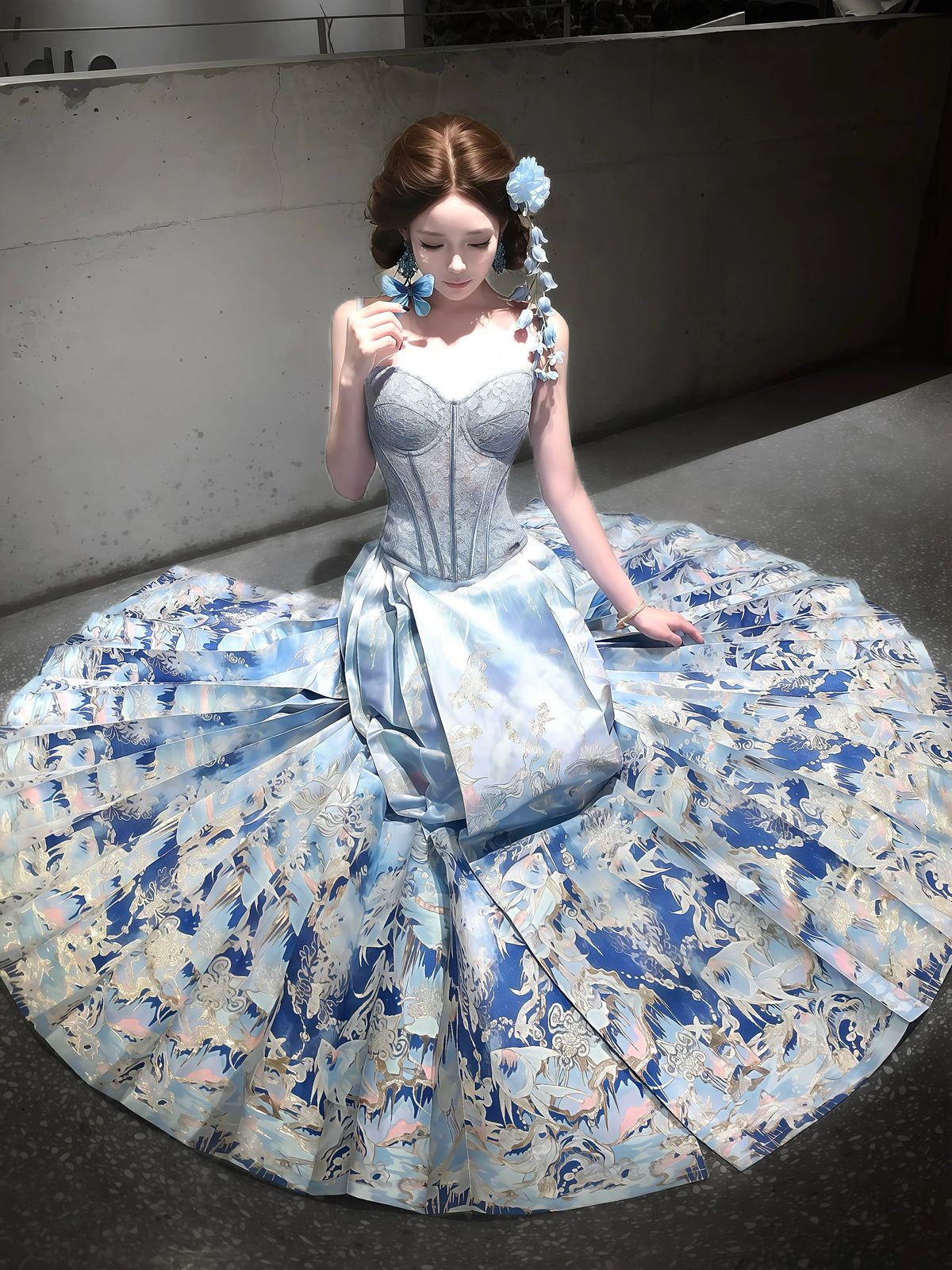
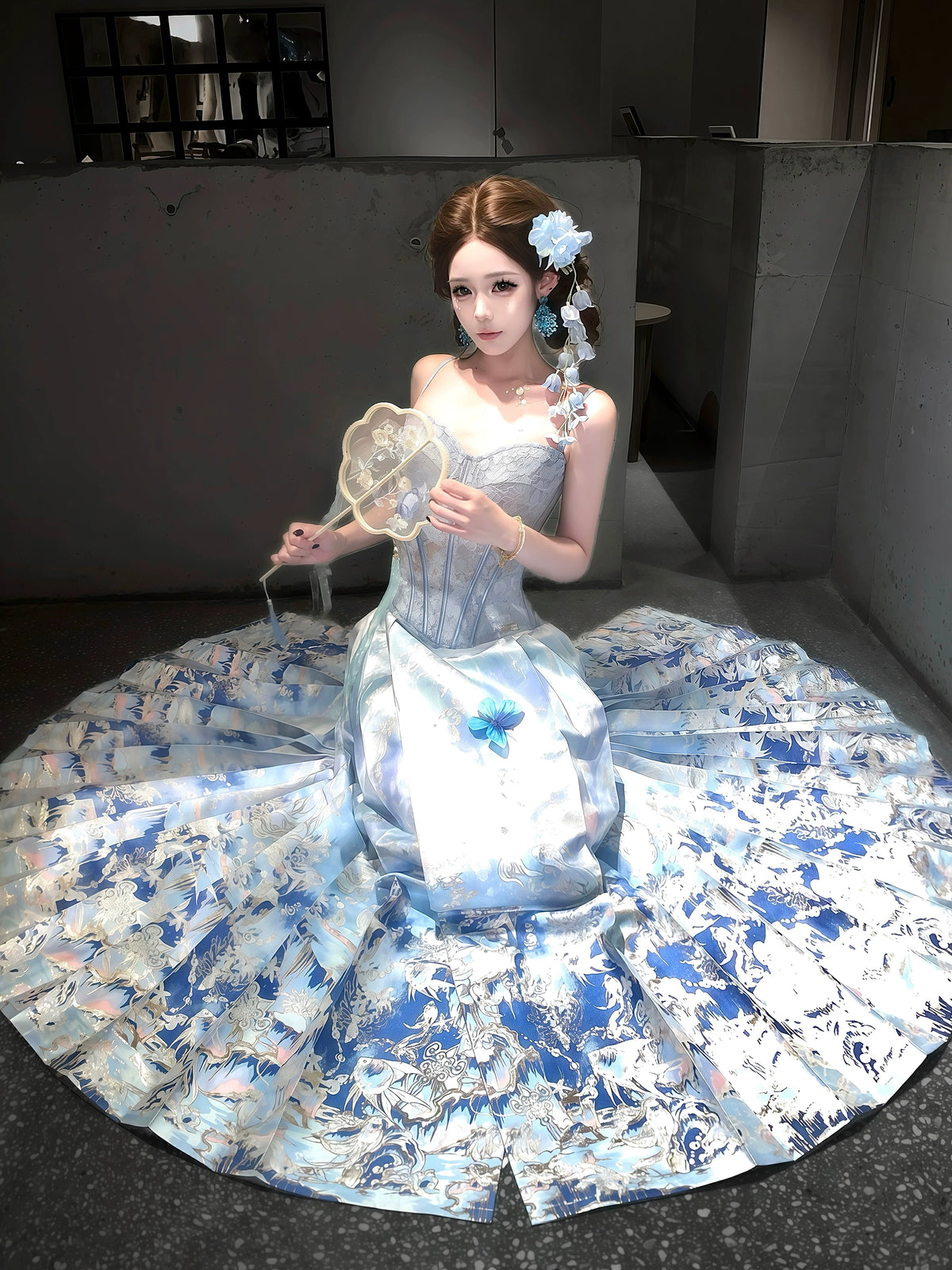
Pale blue silk hanbok — braided side plait, layered floral hair ornaments, luminous and romantic
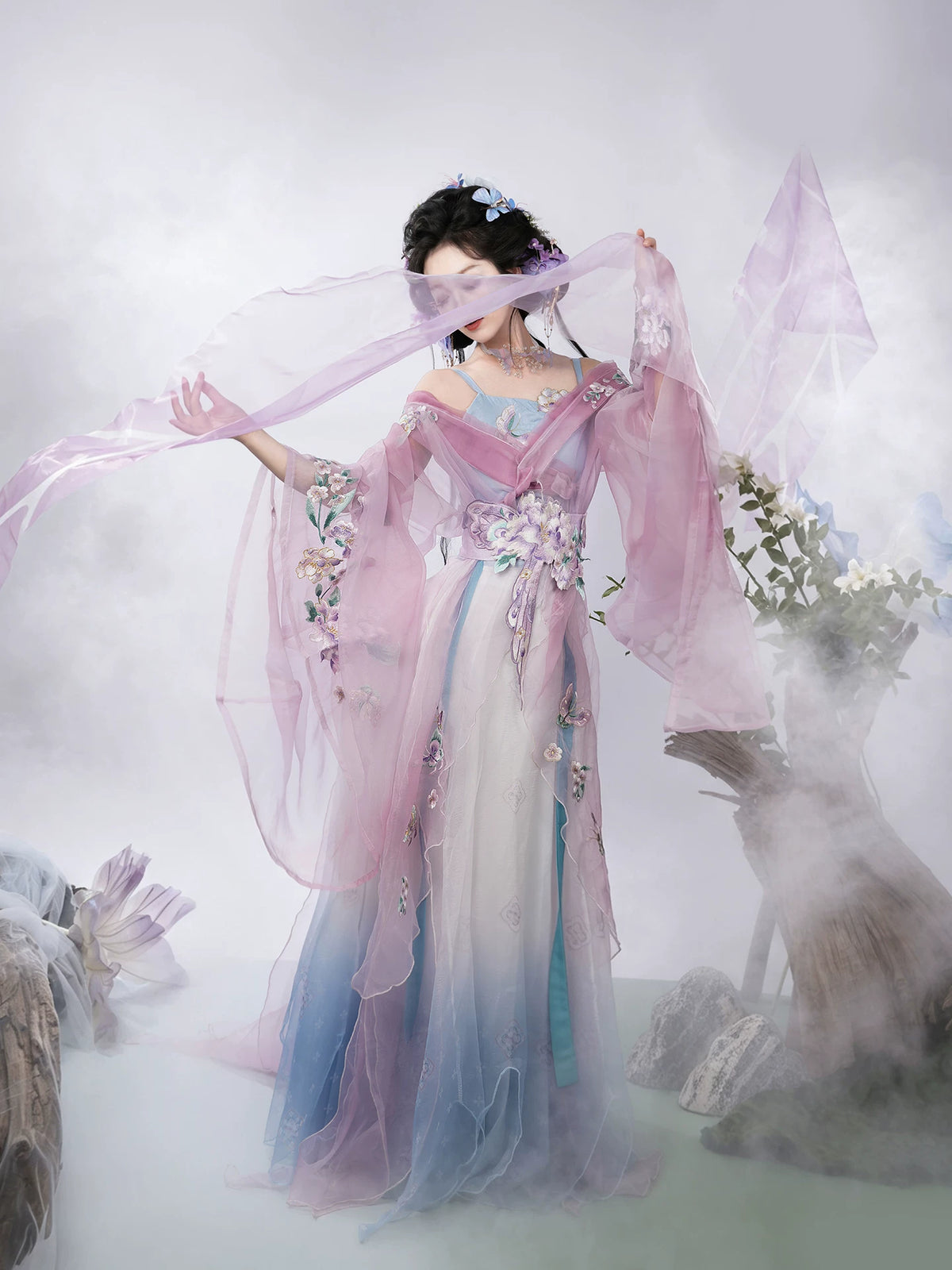
- Signature styles: Soft loose waves, relaxed half-up half-down, dreamy braided side plait with loose tendrils and layered floral pins
- Negative space principle: Leave deliberate space in the hair. Gaps and wisps are not imperfections — they are part of the aesthetic.
- Texture goal: Silky, slightly undone, luminous. Hair that moves when you move.
- Avoid: Sleek, high-tension styles. Anything lacquered or architectural.
💎 Accessories: Pearl hair pins, delicate crystal ornaments, thin silk ribbons in white or blush, pale jade norigae. Keep everything light, keep everything soft.
👉 Pastel Embroidered Korean Hanbok — Elegant Traditional Korean Dress
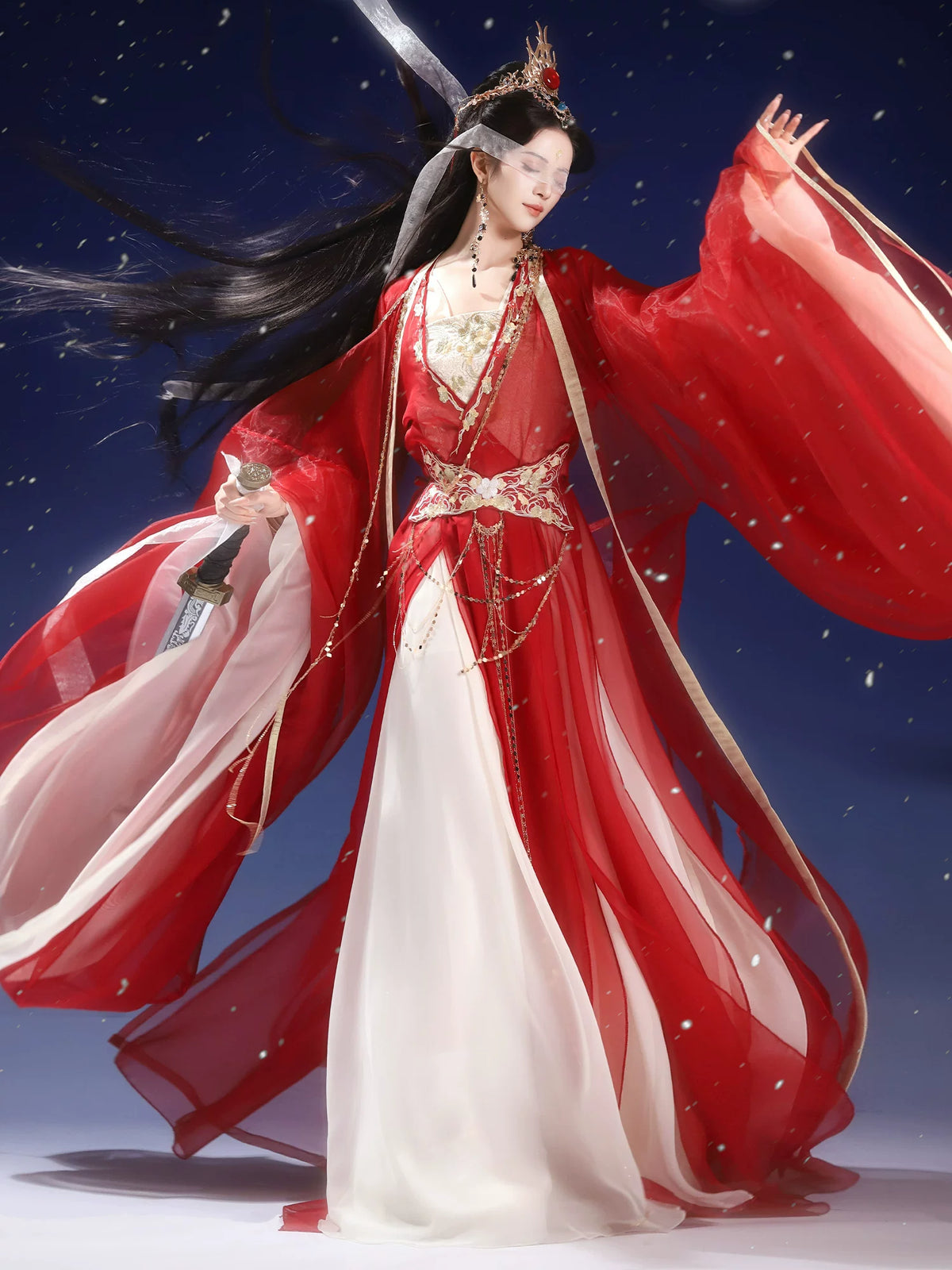
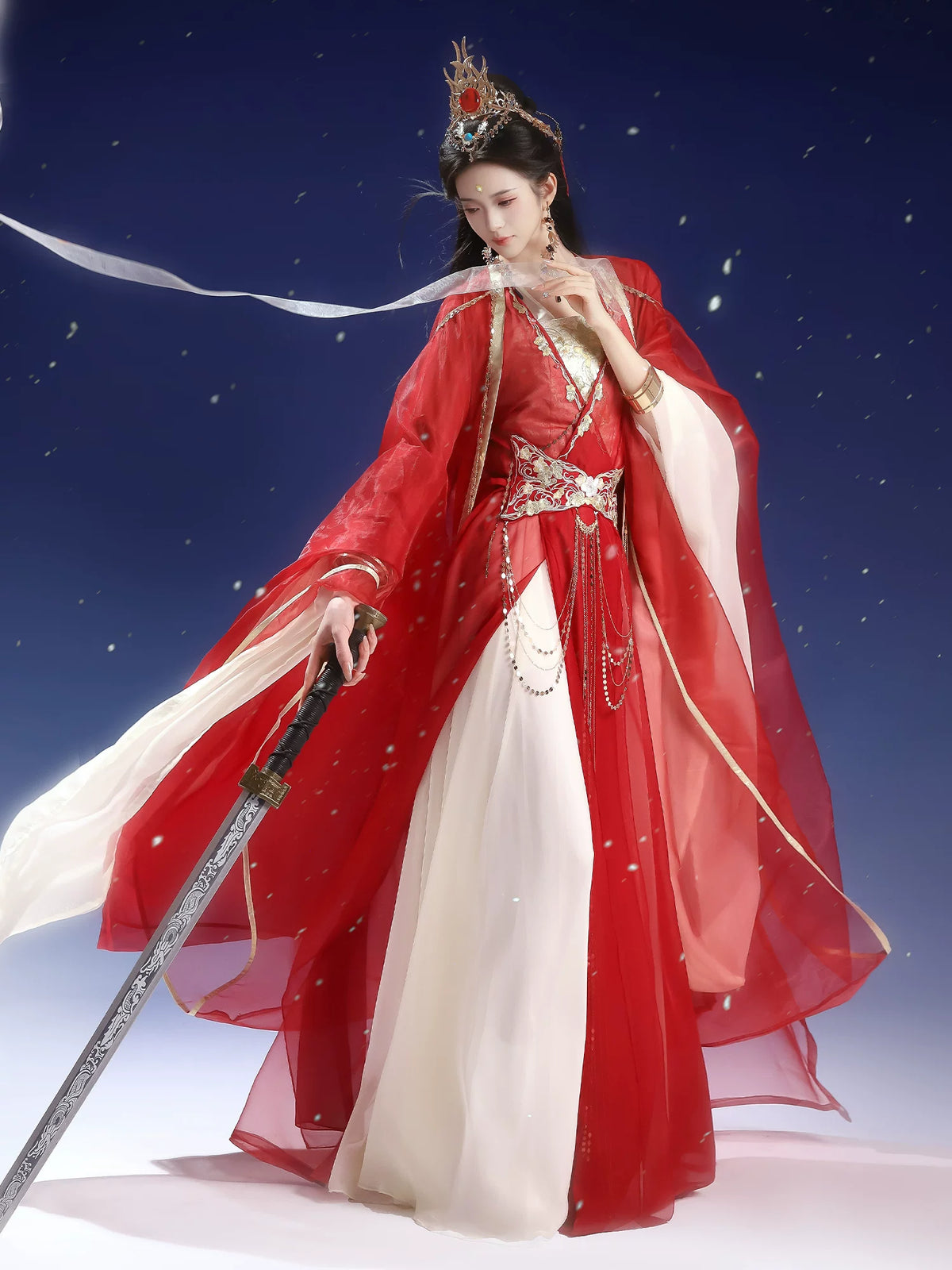
🔥 3.2 Traditional High-Contrast Hanbok | Yellow-Green / Red-Blue / Deep Jewel Tones
Direction: Formal, structured, ceremonially precise.
- Signature styles: Tight low bun (jjeok-meori), classical structured braid, full formal updo with no loose strands
- Precision principle: Every strand in its place. Clean lines, controlled silhouette, zero looseness.
- Texture goal: Smooth, controlled, polished. Hair that communicates intention.
- Avoid: Loose waves, undone braids, anything casual or relaxed.
💎 Accessories: Metal binyeo hair pins, heavy embroidered norigae, deep-toned vintage ornaments in gold or dark jade. Accessories should have weight and presence to match the garment.
👉 Red Hanbok with Floral Embroidery — Korean Traditional Dress | Timeless Korean Hanbok — Bold Yellow & Green
✨ 3.3 Neutral & Earth Tone Hanbok | Warm Caramel / Khaki / Mist Grey / Sand Beige
Direction: Relaxed, textured, quietly considered.
- Signature styles: Low loose bun at the nape, natural falling waves, effortless low chignon
- Texture-first principle: Deliberate, considered texture that adds visual interest without adding noise.
- Texture goal: Warm, natural, slightly imperfect. Styled with intention but not effort.
- Avoid: Overly polished or lacquered styles. Anything that looks like it required a lot of product.
💎 Accessories: Wooden hair pins, matte stone ornaments, natural linen norigae in amber or warm grey.
👉 Black & Pink Hanbok with Floral Patterns — Korean Traditional Dress
💎 Part Four: The Advanced Logic of Accessory Color
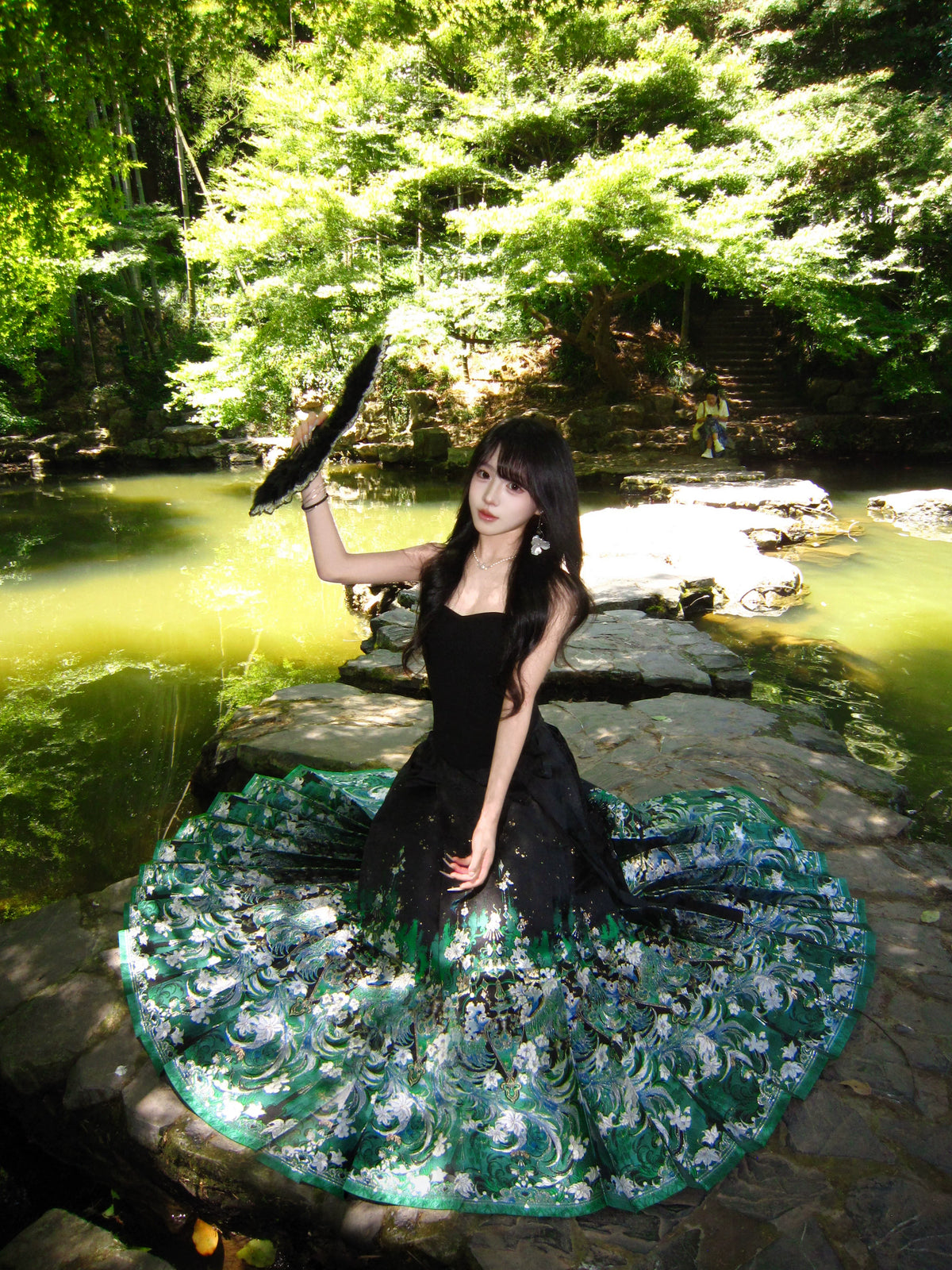
Crystal, jade, and pearl — the three material languages of hanbok hair accessories, each with its own color logic
1. Tonal Echo — Same Color Family
Choose accessories slightly deeper or lighter than the hanbok. A pale lavender hanbok with a soft purple ribbon. A warm caramel hanbok with an amber pin. Harmony rather than monotony.
2. Low-Contrast Neutral — Soft Overall Harmony
White jade, pale ivory, warm cream. The accessory recedes visually, letting the hanbok color remain the dominant voice. Ideal for bold or complex palettes.
3. Small Accent Contrast — Elevating the Composition
One small accessory in a contrasting color. A single coral pin in an ivory arrangement. Small in area, large in effect. Adds visual surprise without disrupting harmony.
4. No Accessories — The Negative Space Aesthetic
For understated silk hanbok in neutral tones, the most sophisticated choice is sometimes no accessories at all. A clean low bun. Natural hair. The beauty of deliberate emptiness.
✂️ Part Five: Long Hair vs. Short Hair
💇♀️ Long Hair
- Layered braided updo
- Multiple bun variations
- Atmospheric half-up styles
- Maximum versatility
✂️ Short Hair
- Simplified vintage styling
- Side-swept with ornament
- Adapted short traditional styles
- Best with contemporary palettes
🌀 Hair Texture
- Straight → clean, precise styles
- Wavy → soft, romantic styles
- Fine → volume-building techniques
- Work with texture, not against it
🎥 Part Six: Scene-Based Styling
🏗️ Hanok Village & Outdoor Photography
Structured updos, classical braids, and formal arrangements photograph beautifully against stone walls and wooden beams. Avoid styles that look too contemporary — they create a visual disconnect with the setting.
🎊 Traditional Festivals & Ceremonial Occasions
Seollal, Chuseok, doljanchi call for formal, elevated hairstyling. Full updos, structured braids, and formal accessories are appropriate and expected.
🌆 Everyday & Contemporary Wear
A simple low bun, natural waves, or a clean ponytail works beautifully with a contemporary or neutral-palette hanbok. The goal is ease and authenticity — a look that feels lived-in rather than performed.
⚠️ Part Seven: Detail Aesthetics & Common Mistakes
👁️ Crown Height & Hair Arc
A high, rounded crown reads as formal and traditional. A flat, low crown reads as modern and relaxed. Match the crown height to the formality level of your hanbok color series.
⚖️ Balancing Hair Complexity with Embroidery
A heavily embroidered hanbok needs a simple, clean hairstyle. A minimally embroidered hanbok can support a more complex, layered style. One element leads, the other supports.
❌ Common Mistakes
- Exaggerated accessories — One focal accessory, worn with intention. Never stack or compete.
- Puffy, oversized updos — Keep the updo proportionate to the head and the garment.
- Ignoring the nape — The nape is highly visible in hanbok styling. Always finish it cleanly.
- Mismatching formality levels — The formality of the hairstyle must match the formality of the garment.
❤️ Closing: Color + Hair + Accessories — One Unified Vision
The most beautiful hanbok looks are the result of understanding how color, fabric, hairstyle, and accessories speak to each other — and making choices that allow them to speak in the same voice. The hairstyle is not an afterthought. It is the final word.
Your hanbok color tells the world who you are. Your hairstyle tells the world how carefully you listened.
Which color series is your hanbok? Tell me in the comments how you style yours. 💬
🛍️ Shop the Hanbok Collection
- 🌸 Pastel Embroidered Korean Hanbok — Elegant Traditional Korean Dress — Soft Pastel Series → Braided side plait, floral pins, pearl accessories
- 🔥 Red Hanbok with Floral Embroidery — Korean Traditional Dress — Classic Contrast Series → Structured low bun, metal binyeo, gold ornaments
- 🌿 Timeless Korean Hanbok — Bold Yellow & Green with Hand-Embroidered Florals — Bold Traditionalist Series → Formal updo, jade accessories
- 🖤 Black & Pink Hanbok with Floral Patterns — Korean Traditional Dress — Neutral Series → Low chignon, wooden pins, matte stone norigae