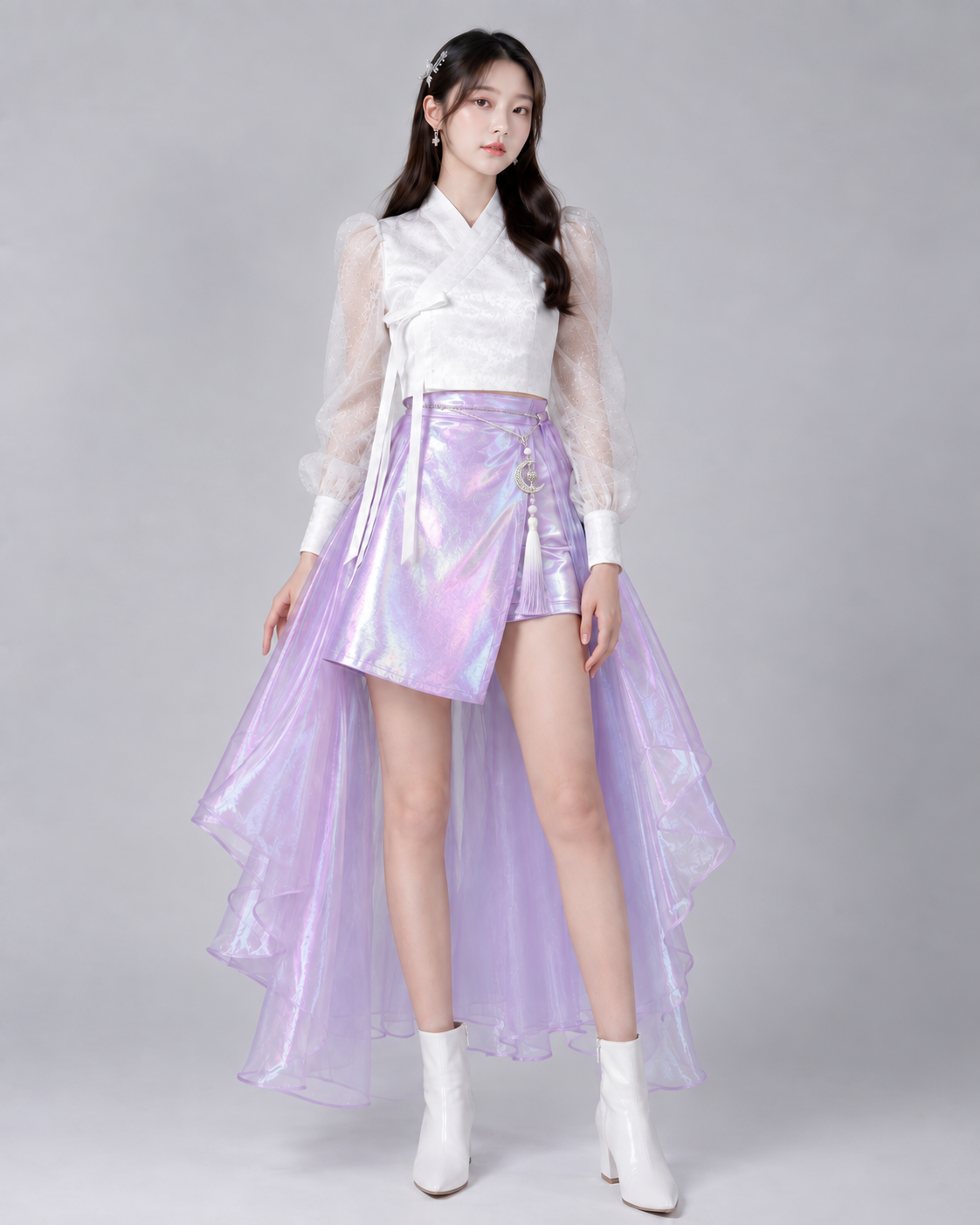
A hanbok is not a dress with a Korean aesthetic. It is a completely different cutting system, built on a completely different philosophy of how fabric should relate to the human body. If your pattern does not understand this, your hanbok will not look like a hanbok, no matter how carefully you sew it.
You have spent hours on the fabric. You have followed the instructions carefully. You have pressed every seam. And yet, when you put it on, something is wrong. It looks like a costume. It looks like a modified skirt. It looks like anything except what you were trying to make: a real, authentic hanbok sewing pattern result that carries the quiet dignity and unmistakable silhouette of traditional Korean dress.
The problem is almost never your sewing. The problem is almost always your pattern. This guide explains exactly why, and exactly what to look for instead.
✂️ Part One: Why Most Hanbok Sewing Patterns Get It Wrong
The most common mistake in hanbok sewing patterns is treating the hanbok as a variation of Western dress construction. It is not. The hanbok is a completely independent cutting system with its own logic, its own proportions, and its own relationship between fabric and body. When a pattern ignores this, the result is a garment that looks vaguely Korean but feels fundamentally wrong.
📌 The 3 Counter-Intuitive Design Principles of Traditional Hanbok
↑ A traditional hanbok jeogori laid flat: black silk brocade with gold chrysanthemum motifs, a crisp white dongjeong inner collar, and a long black goreum ribbon tie. Every element you see here, the collar width, the ribbon length, the sleeve cuff, is determined not by aesthetic preference but by structural and cultural specification. This is what a pattern built on traditional logic produces.
1. The waist is not at the waist. It is at the chest.
The chima skirt of a traditional hanbok is tied at the chest, not at the natural waist. This single decision creates the entire silhouette: the long, unbroken vertical line from chest to floor that makes the hanbok look so distinctive. A pattern that places the waistband at the natural waist will produce a garment that looks like a skirt with a short top, not a hanbok. The high chest tie is not a stylistic choice. It is the structural foundation of the entire garment.
2. The jeogori has almost no shoulder slope. It is a flat cut.
Western tailoring is built around the shoulder. Darts, shoulder seams, and sleeve heads are all designed to follow the three-dimensional curve of the Western-dressed body. The traditional hanbok jeogori does the opposite. It is cut almost entirely flat, with minimal shoulder slope, allowing the fabric to fall from the shoulder in a clean, unstructured line. A pattern with Western shoulder construction will produce a jeogori that sits stiffly on the shoulders and loses the characteristic flowing quality of the traditional garment.
3. The fullness of the chima is not about volume. It is about distribution.
More fabric does not mean a better chima. The fullness of the traditional chima is carefully distributed: more at the front, less at the back, with specific gathering ratios that create the characteristic forward-falling drape of the skirt. A pattern that simply adds volume evenly around the waistband will produce a chima that stands out stiffly rather than falling in the soft, forward-flowing folds that define the traditional silhouette.
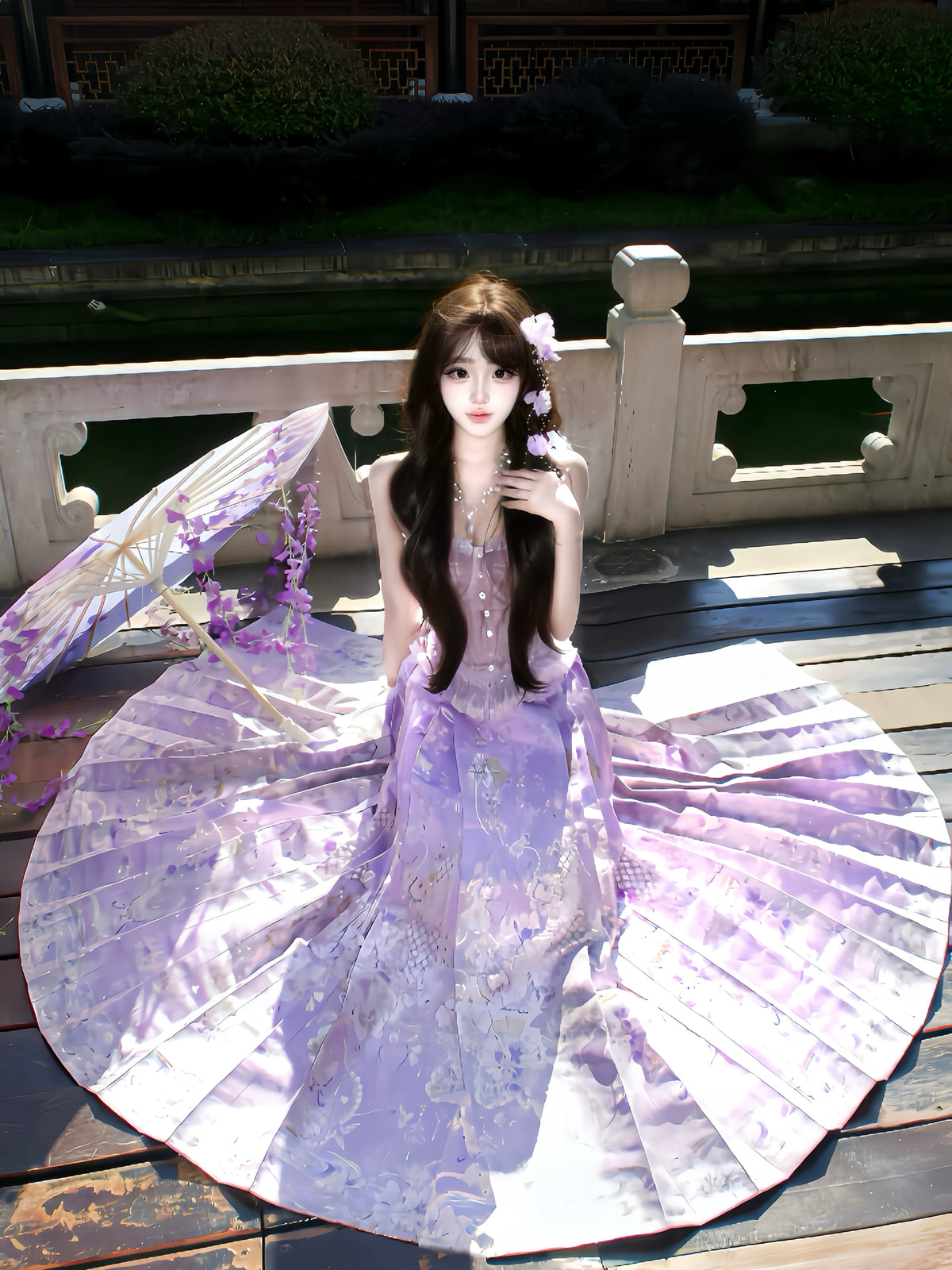
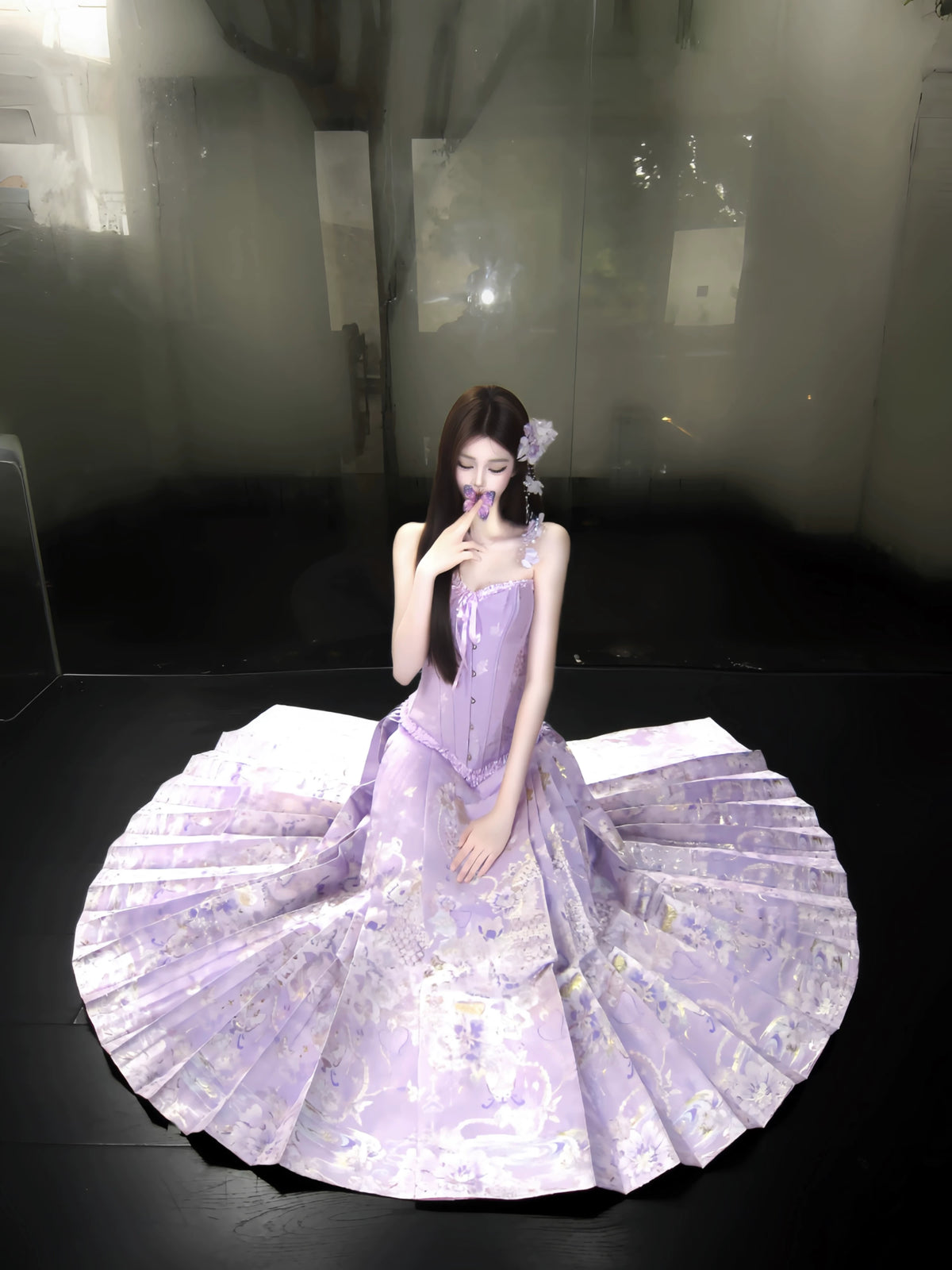
👉 Purple Korean Hanbok — Traditional Embroidered Hanbok for Weddings & Photoshoots | Red Hanbok with Floral Embroidery — Korean Traditional Dress
🧵 Part Two: What a Complete Hanbok Sewing Pattern Actually Contains
A complete, authentic hanbok sewing pattern is not a single sheet of paper with a few pieces on it. It is a comprehensive cutting system that covers every structural element of the garment, with clear guidance on the cultural details that make the difference between a hanbok and a costume.
👗 The Jeogori and Chima: Every Piece Explained
↑ A complete hanbok set laid flat: a lavender silk jeogori with ivory sleeves embroidered with wisteria blossoms, a deep purple goreum ribbon, and a finely pleated ivory chima. The precision of the pleating, the exact width of the white sleeve cuffs, the placement of the embroidery, all of these are determined by the pattern. This is what correct structural specification looks like in finished fabric.
A complete jeogori pattern should include all of the following:
- Front and back panels: The main body pieces, cut with the characteristic overlap at the centre front that creates the collar opening
- Sleeve pieces: Including the characteristic curved baerae line at the wrist, which creates the rounded sleeve hem that frames the hands elegantly
- Outer collar: The shaped collar piece that creates the V-opening of the jeogori
- Inner collar / dongjeong: The white inner collar that is always visible above the outer collar; its width and placement are culturally specific and structurally important
- Goreum ribbon: The long ribbon tie that closes the jeogori at the front; its length, width, and the method of tying are all traditional specifications
For the chima, the key pattern decisions are:
- Number of skirt panels: Traditional chima construction uses multiple panels rather than a single gathered rectangle; the number of panels affects the drape and the characteristic forward-falling fullness of the skirt
- Waistband width and placement: The waistband must be designed to sit at the chest, not the natural waist
- Overlap and gathering distribution: The specific ratio of gathering at the front versus the back determines whether the chima falls correctly or stands out stiffly
👉 Yellow & Green Hanbok with Hand-Embroidered Florals | Black & Pink Hanbok with Floral Patterns — Korean Traditional Dress
🔍 Part Three: How to Choose a Hanbok Sewing Pattern That Won't Let You Down
Not all hanbok sewing patterns are created equal. Here is exactly what to look for, and what to avoid.
✅ What a Good Pattern Must Have
- Traditional structural reference points, not just measurements: A good pattern marks the dongjeong placement, the goreum attachment point, the baerae curve, and the chima chest-tie position. These are the structural points that make the garment look correct.
- Seam allowance, gathering, and overlap specifications: A good hanbok pattern specifies exact seam allowances, the precise gathering ratio for the chima panels, and the overlap amount at the centre front of the jeogori.
- Fabric weight and type guidance: A good pattern tells you which construction methods work for cotton and linen, which work for silk and chiffon, and which work for brocade.
- Cultural construction notes: The best hanbok patterns include notes that explain not just what to do, but why. Why the dongjeong must be white. Why the goreum is tied in a specific direction. Why the baerae curves in the way it does.
❌ What to Avoid
- Patterns that only give measurements without structural guidance: A list of dimensions is not a pattern. Without structural reference points, you cannot reproduce the traditional silhouette.
- Patterns adapted from Western dress blocks: If the shoulder construction looks like a Western blouse, the result will look like a Western blouse with Korean-inspired details, not a hanbok.
- Patterns without fabric guidance: Hanbok construction is fabric-dependent. A pattern that does not acknowledge this will produce inconsistent results.
👉 Court Ancient Women's Wedding Dress — Korean Traditional Hanbok Suit | White Hanbok Palace Dress — Traditional Korean Women's Outfit
🌟 Part Four: The Cultural Details Hidden in the Pattern
A hanbok sewing pattern is not just a cutting guide. It is a cultural document. The details that make a hanbok look authentically Korean are encoded in the pattern itself, in the specific measurements and placements that have been passed down through generations of Korean tailors.
🎮 The Details That Make the Difference
- The white inner collar (dongjeong) — position and width: The dongjeong must be precisely wide enough to be visible above the outer collar, and precisely narrow enough not to overwhelm it. A good pattern marks this exactly.
- The goreum ribbon — length and tying method: The goreum is tied in a specific way, with a specific length ratio between the two ends, that produces the characteristic asymmetric bow of the traditional hanbok. A pattern that specifies only the total length without indicating the tying method will produce a bow that looks wrong even if the sewing is perfect.
- The collar overlap direction: The left collar overlaps the right in traditional hanbok construction. This is not arbitrary. It is a cultural specification with historical roots.
- The baerae sleeve curve: Too sharp and the sleeve looks stiff; too gentle and the characteristic framing of the wrist is lost. The curve is a precise specification, not an approximation.
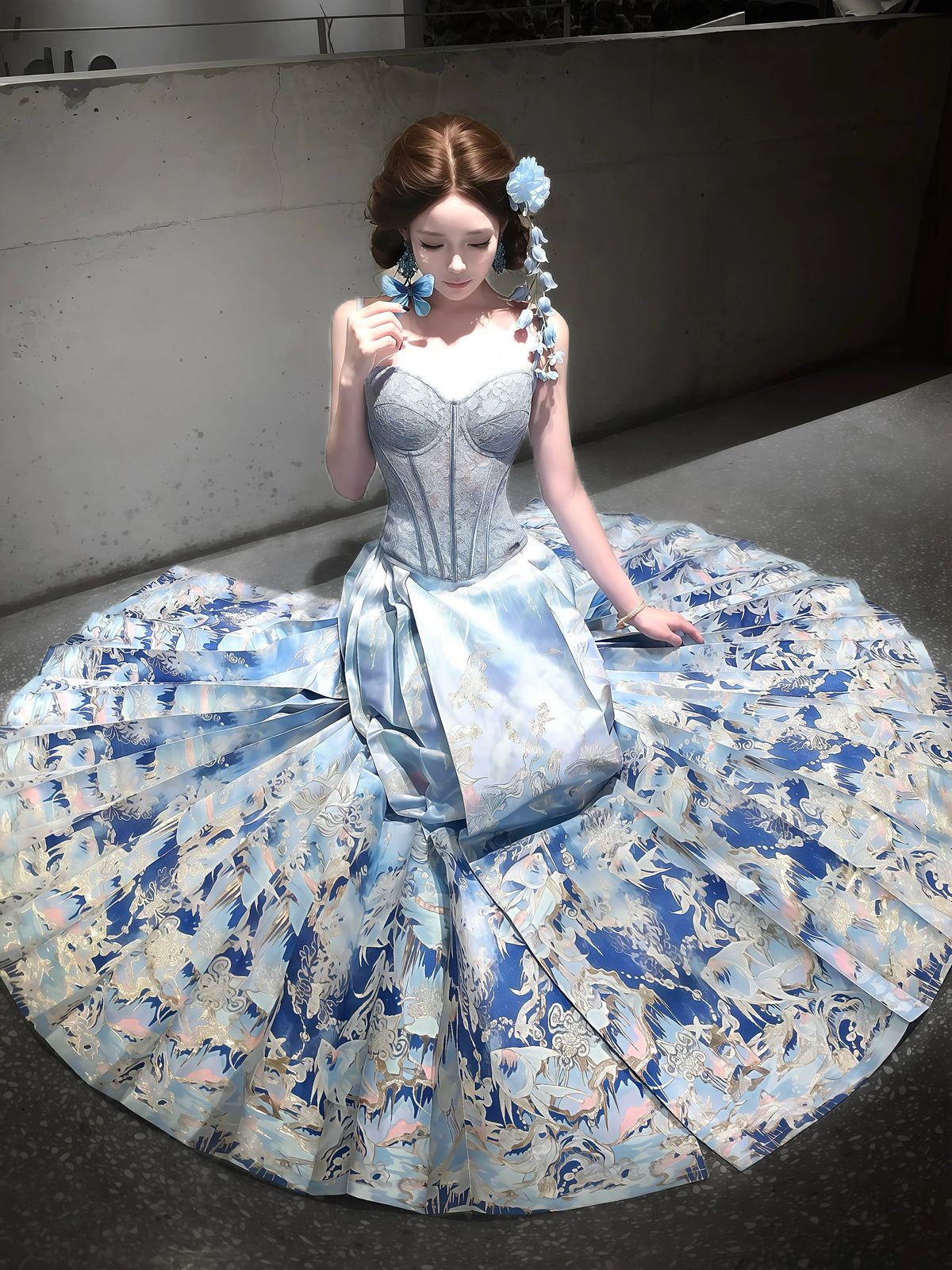
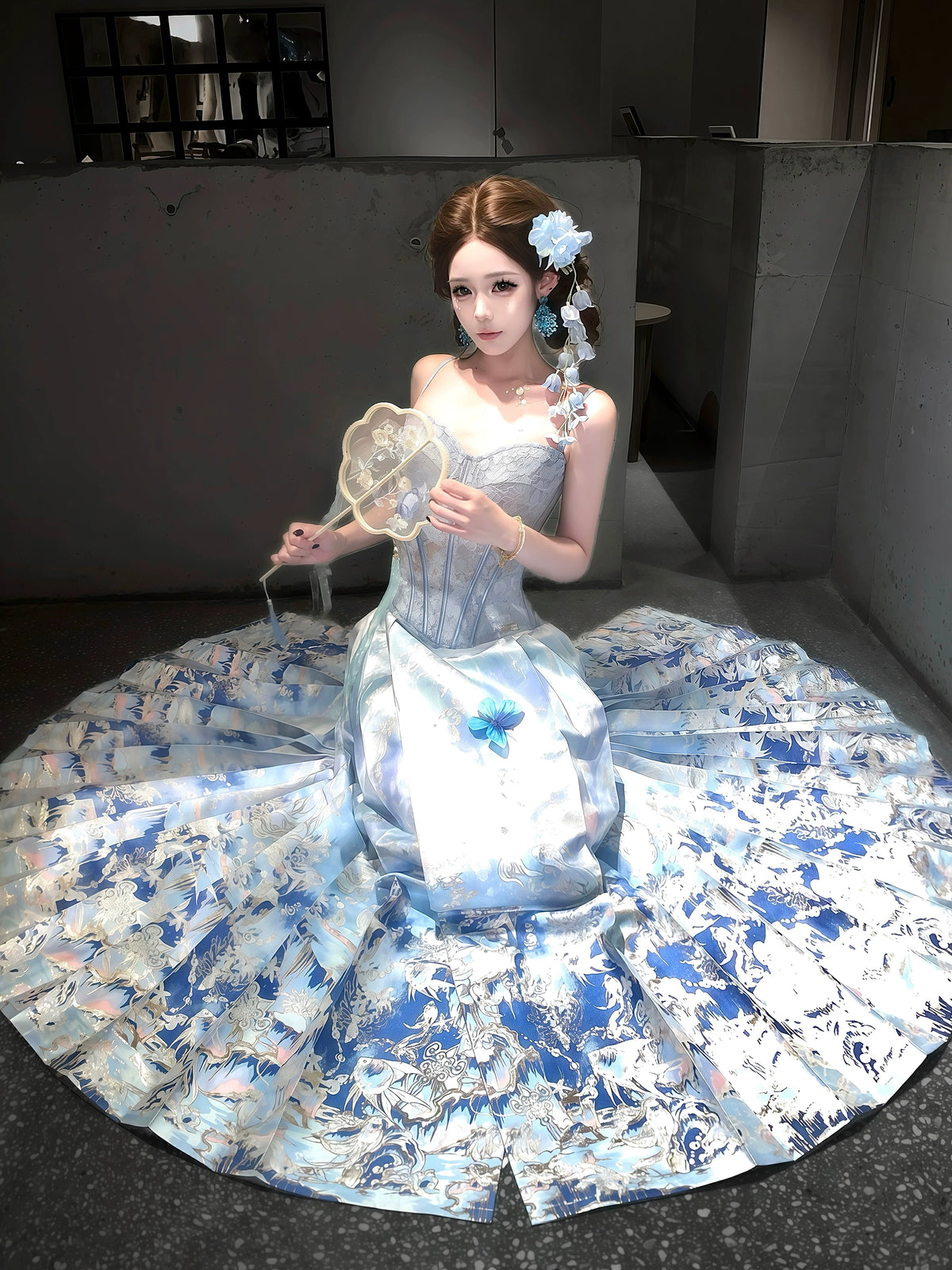
👉 Blue Hanbok Korean Princess Palace Dress | Mint Green and White Korean Princess Palace Hanbok — Royal Court Dress
🎨 Part Five: What You Can Make With One Good Pattern
One authentic hanbok sewing pattern is not a single project. It is a foundation. Once you understand the structural logic of the traditional hanbok, you can adapt it endlessly, for different occasions, different fabrics, different family members, and different levels of formality.
👨👩👧 The Occasions One Pattern Can Serve
- Parent-child matching hanbok: Scale the pattern proportionally for children's sizes; the structural logic remains identical, and the matching silhouette creates a visual harmony that is one of the most beautiful expressions of Korean family culture
- First birthday (doljanchi) hanbok: The most colourful hanbok a person will ever wear; the pattern pieces are the same, but the fabric choices and colour combinations follow specific traditional conventions
- Wedding and formal ceremony hanbok: The same jeogori and chima pattern, executed in heavier brocade or silk, with more elaborate embroidery and the addition of a ceremonial outer robe
- Festival and holiday hanbok: Seollal and Chuseok hanbok in coordinated family colours; the pattern is the same, the colour palette is chosen to create visual harmony across the family group
- Hanok travel photography and cultural events: A simpler version of the same pattern, in lighter fabric, for everyday cultural wear and photography
- Modern everyday adaptation: The jeogori worn as a standalone top with contemporary trousers; the chima worn as a high-waisted skirt with a simple blouse
👉 Red Blue Hanbok — Korean Court Dress, Traditional Wedding Performance Outfit | Court Ancient Women's Wedding Dress — Korean Traditional Hanbok Suit
❤️ Closing: One Pattern, Infinite Hanbok
The reason most homemade hanbok looks wrong is not a lack of skill. It is a lack of the right structural information. The traditional hanbok is not a complicated garment. It is a precise one. Its beauty comes not from elaborate construction but from the exact relationship between its parts: the height of the chest tie, the flatness of the shoulder, the distribution of the chima's fullness, the width of the white collar.
Get these relationships right, and the hanbok almost makes itself. The fabric falls correctly. The silhouette appears. The garment looks, for the first time, like what you were always trying to make.
One pattern. One set of structural relationships. Infinite hanbok. Stop guessing at the cut. Start with a pattern that knows what a hanbok actually is, and make something that is genuinely, unmistakably, beautifully Korean.
The right pattern is not just a cutting guide. It is a cultural inheritance, folded into paper, waiting to be made real in fabric.
🛍️ Not Ready to Sew? Shop Our Ready-to-Wear Hanbok Collection
Every piece in our collection is made with the traditional structural principles described in this guide, so you can see exactly what the right pattern produces.
- 💜 Purple Korean Hanbok — Traditional Embroidered Hanbok — for weddings, cultural festivals, and photoshoots
- 🖤 Black & Pink Hanbok with Floral Patterns — bold, contemporary, and traditionally structured
- ❤️ Red Hanbok with Floral Embroidery — vivid and ceremonial; the classic wedding colour
- 💛 Yellow & Green Hanbok with Hand-Embroidered Florals — joyful and distinctive; perfect for festivals
- 🤍 White Hanbok Palace Dress — pure and luminous; the formal ceremonial choice
- 💚 Mint Green and White Korean Princess Palace Hanbok — fresh and elegant; beautifully photogenic
- 💙 Blue Hanbok Korean Princess Palace Dress — regal and refined; a statement piece for special occasions